
20 October 2026
Slipped, Cracked And Missing Roof Tiles In Mansfield: Causes, Matching And Costs
Slipped or cracked tiles on a Mansfield roof? Why concrete and clay tiles let go, matching old profiles, how one tile is swapped and what it costs.
A slipped tile on a Mansfield semi usually announces itself in one of three places: the gutter, the front lawn, or the conservatory roof. On the estates built round the town from the 1950s onwards it is nearly always a concrete interlocking tile, several kilos of it, and a large one like the Marley Ludlow Major measures 420mm by 330mm. On older terraces and interwar houses it is more often a small clay plain tile. Either way, putting one back is not a big job. Our ladder-reach price for refixing or replacing a single slipped or cracked tile is £100 to £240, and the tile is the cheapest part of that. Whether it stays cheap comes down to why it moved. A rusted nail, a frost crack, a strong gust, ground movement from the old pits, or a satellite fitter’s boot can all look the same from the pavement, and each needs a different fix. This guide sticks to the tiles on the slope itself. Ridges, verges and the bigger repair-or-replace question already have their own guides, linked below.
Slipped, cracked or missing: reading your Mansfield roof from the pavement
Stand across the road, not underneath, and use your phone’s zoom. Each of the three faults looks a little different.
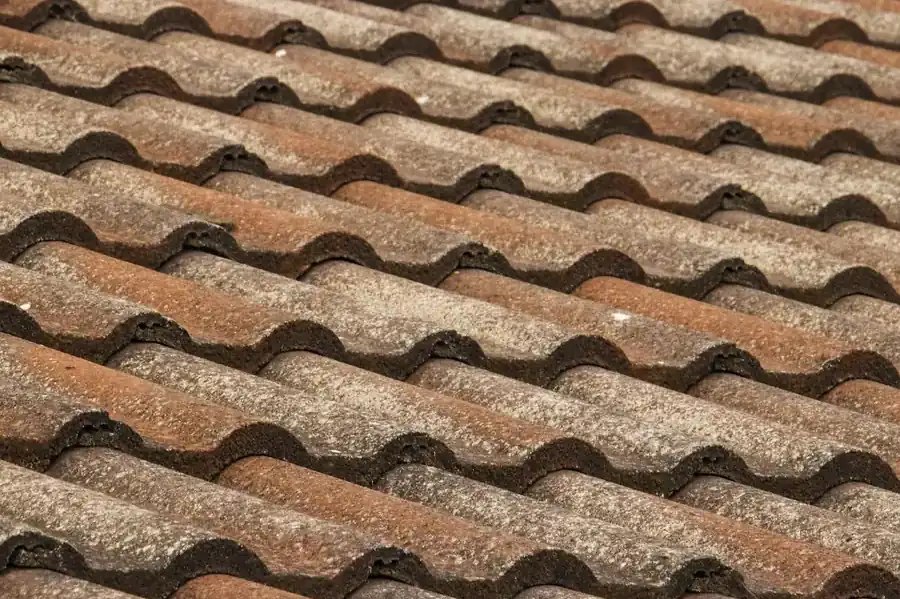
A slipped tile has slid down out of line with its neighbours. Look for a tile sitting proud of the row, or a dark gap above one where the course should be continuous. A cracked tile is harder to spot from the ground. Concrete tiles tend to crack across the middle or lose a corner at the bottom edge, and the crack can be no wider than a pencil line. A missing tile leaves a hole where you will see black or grey felt, or the timber battens if the felt has gone too.
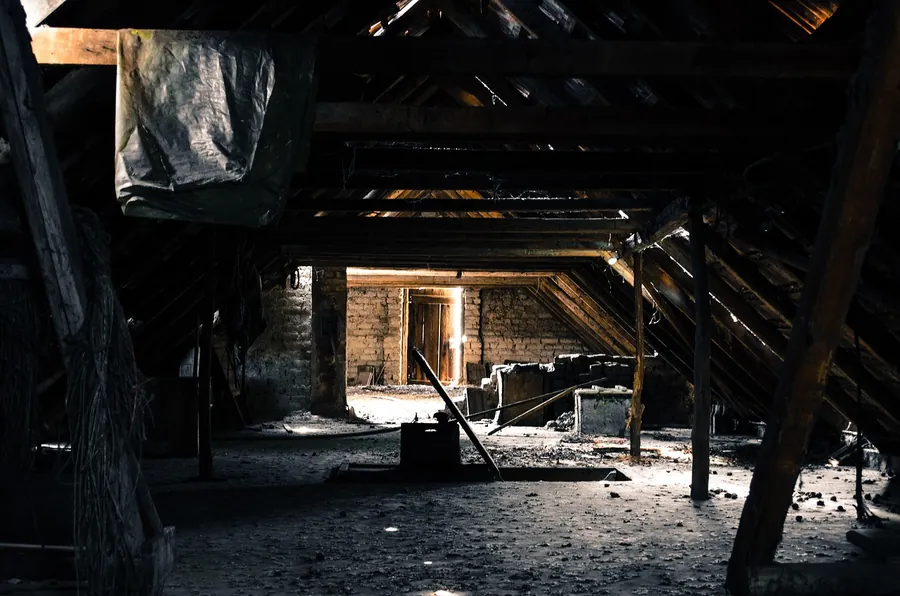
Then go into the loft with a torch on a dry afternoon. Daylight where it should not be, damp on the felt, or a tide mark on a rafter tells you whether water is already getting in. Our page on common roof problems in Mansfield shows what the other usual suspects look like, so you can describe what you have seen before anyone climbs up. If you rent from Mansfield District Council, the roof is the council’s to repair, so report it to them rather than paying a roofer yourself.
Concrete on the estates, clay on the older streets
Mansfield’s housing splits fairly neatly into two tile families, and they fail in different ways.
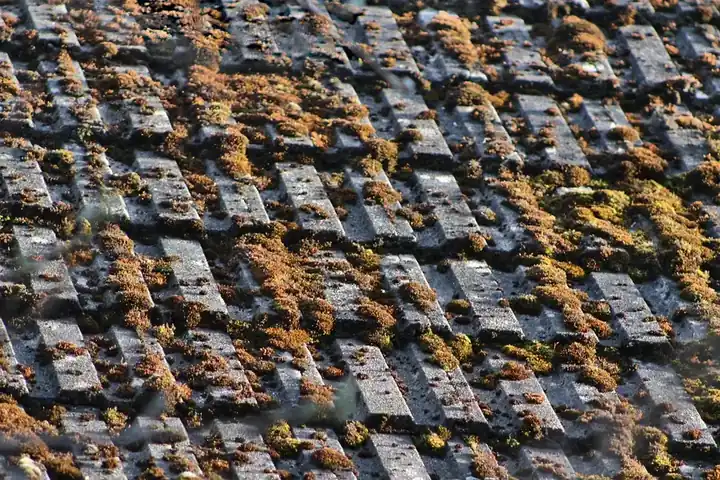
Concrete interlocking tiles became the standard after the war. You find them on council and Coal Board housing, on the private estates of the 1960s and 70s, and on a good number of pit-village houses whose original slate was stripped and replaced with concrete in the 1970s or 80s. Each tile hangs on a batten by two nibs, locks into the tile beside it through a channel down its edge, and overlaps the course below by around 75mm to 100mm, depending on the pitch. They are tough. They also lose their surface over time, go porous, hold moss, and crack where someone has stood on them. Plenty of older estate roofs were laid with only some courses nailed, so many tiles are held by their nibs and weight alone.
Clay plain tiles are the small flat ones, 265mm by 165mm, laid with a double overlap so three thicknesses cover any one point. They turn up on interwar private semis along the main roads out of town, on bay roofs, and on some older terraces. They are traditionally nailed only every fourth course or so, with the rest hanging on their nibs. When a plain tile goes, it is usually because the nib has snapped or frost has flaked its face, not because the tile slid.
Why tiles let go: nails, frost, wind and ground movement
Nearly every slipped tile we see has one of four causes behind it, and which one it is decides whether you need one repair or a plan for the whole slope.

Nail fatigue
Mild steel nails rust. On a roof tiled in 1958 they have been sitting in damp timber for more than sixty years. Once the shank rusts through, the tile is held by its nibs only. In windy weather it lifts a fraction and drops back, and over months it creeps down the slope until it clears the batten. If one rusted nail has failed, the others on that slope went in the same week and are not far behind.
Frost
Water that gets into a hairline crack expands by roughly nine per cent when it freezes, and a winter brings plenty of freeze-thaw cycles. On concrete tiles that widens existing cracks and breaks off the bottom corners. On clay plain tiles it flakes the face away layer by layer until the tile is too thin to shed water.
Wind
The tiles at the edges of a roof, along the eaves and the top two or three courses, take the most suction in a gale. A tile with no nail and a worn nib has nothing holding it down except its own weight, and it can lift clean off.
Ground movement
This is the Mansfield-specific one. The town sits on top of the old Nottinghamshire coalfield, and the government body that deals with mining subsidence claims, the Mining Remediation Authority, is based on Lichfield Lane in Mansfield itself. When a house moves, the roof is pulled out of square. The interlocks open up, tiles shuffle sideways, and you can sometimes see a wavy or stepped line running across the slope. If you think coal mining is behind it, the government’s guide to claiming for coal mining subsidence damage explains how to get a claim started, and our mining subsidence guide for Mansfield roofs covers what to look for on the house itself.
Aerial and satellite fitters: the footprints nobody mentions
A fair share of the cracked tiles we find in Mansfield were broken by boots, not weather.

A concrete tile is strong where it sits on the batten and weak in between. Step on the middle of one and it can snap, often with no visible damage until a hairline crack lets water through months later. A TV aerial or satellite installer who walks up the slope to a chimney bracket, rather than using a roof ladder or crawl boards, can crack half a dozen tiles on the way up and the same again on the way down. Cables pushed up under the tiles lift them out of their interlock, and dish brackets screwed through a tile give rain an easy way in.
The giveaway is the pattern: damage in a line from the eaves to the chimney, or clustered round the dish. If a fitter is due, take a few photos of the roof first and ask how they will reach the work. The Confederation of Aerial Industries, the trade body for aerial and satellite installers, has a find-an-installer service, which is a better start than a flyer through the door.
Can an old or discontinued tile still be matched?
With interlocking tiles, the profile has to match exactly. The side channel and the overlap need to line up with the tiles around it, and a near miss will leak.
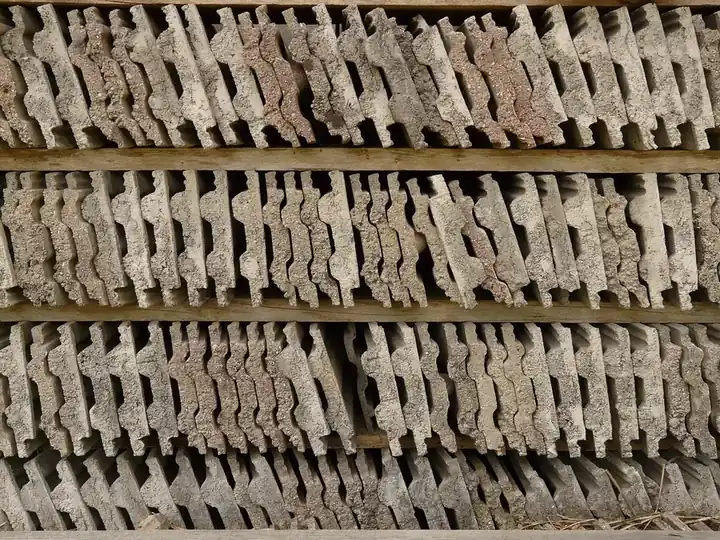
Some of the profiles laid in the 1960s and 70s are still in production. The Marley Ludlow Major concrete tile is one of them, and it is on a lot of Mansfield estate roofs. Others went out of production years ago, or changed size slightly along the way. Even a current tile in the right profile will look brand new beside fifty-year-old neighbours for a good few years. When the exact tile cannot be found, there are four options:
- A new tile in the same profile, accepting the colour difference for a while.
- A reclaimed tile of the same type from a salvage yard. These sometimes cost more than new ones, because they are scarcer.
- Borrowing from somewhere hidden. We take sound, weathered tiles from a rear slope or a porch roof, use them on the front, and put new tiles where nobody looks.
- Re-tiling a section in a modern profile, stopping at a natural break such as a valley, a hip or the line of the party wall.
Plain tiles are much easier. Their size has barely changed in a century, so second-hand ones almost always fit. The colour is the harder thing to match. Whichever type you have, keep a few spare tiles in the garage after any roof work. It saves a lot of hunting later.
How one slipped or cracked tile is actually replaced
On a sound roof, a single tile is a short job. Most of the time goes on getting up there safely.
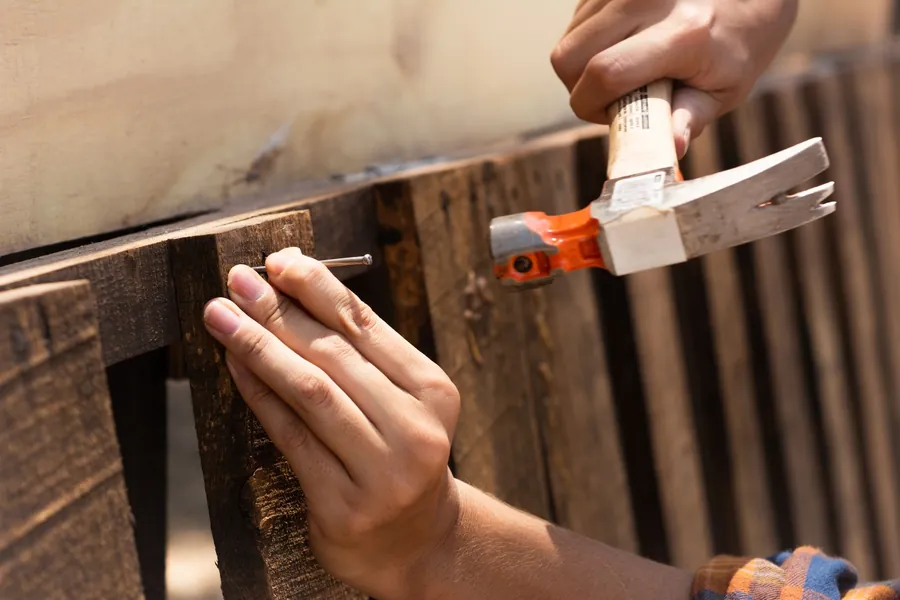
On a two-storey house with clear ground, the roofer usually works from a roof ladder hooked over the ridge. Taller or awkward elevations need a tower or scaffold. Then:
- The tiles in the course above are lifted slightly and held up with wedges, and the tile beside the damaged one is eased sideways to free the interlock.
- The broken or slipped tile comes out. If a rusted nail is still holding it, the nail is cut with a slate ripper.
- The felt and batten underneath get checked. A torn patch of felt can be repaired by sliding a strip of new underlay beneath it, and a soft length of batten can be cut out and replaced.
- The new tile goes on, nibs over the batten and locked into its neighbour, and the tiles above are lowered back down.
- Where the old fixing cannot be reached, a clip or hook holds the new tile down. The current British Standard, BS 5534, expects tiles to be mechanically fixed, and a replacement left hanging on its nibs alone is the first one to slip again.
Plain tiles work the same way, except two courses have to be lifted because of the double overlap. Either way, the roofer should show you a photo of the finished repair and of anything they found underneath.
When slipped tiles point to the slope, not the tile
One tile is a repair. The question is when a run of them is telling you something bigger, and the pattern usually gives you the answer.
- Odd tiles scattered across the slope, year after year, usually mean the fixings are failing everywhere at once. Two or three this year means more next year.
- A whole course sliding down together points at the batten, either rotten or let go by its own nails.
- A line of cracked tiles running from the eaves to the chimney or the dish is foot traffic. Repair it and move on.
- Wavy lines, and gaps opening up at the interlocks, mean the house has moved. Find out why before spending money on the covering.
- Tiles that come down on a still day are held by friction and not much else. That won’t last.
The first two patterns are where repair bills start to add up to a re-cover. Our repair-or-replace guide for pit-era, interwar and postwar Mansfield roofs works through that decision house type by house type. And if the problem turns out to be along the top or down the gable edge rather than on the slope, the ridge and verge repair guide covers that part of the roof.
What tile repairs cost in Mansfield
These are the bands our own quotes for the district mostly fall into. Access is the biggest swing factor, not the tiles.

| Tile job | Usual price band |
|---|---|
| One slipped or cracked tile refixed or replaced, ladder reach | £100 - £240 |
| Several slipped or cracked tiles on one slope, same visit | £150 - £350 |
| Scaffold where a tower or ladder will not do, per elevation | £450 - £1,100 |
| Leak traced and repaired after water has travelled | £150 - £900 |
| One slope of a semi re-covered, scaffold included | £3,200 - £4,800 |
| Complete re-roof, typical semi | £6,000 - £13,000 |
Hunting down a discontinued or reclaimed tile can add to a small job, and so can a soft batten found once the tile is out. A good quote names the cause as well as the fix, so you can see whether you are paying to replace a tile or to deal with what made it slip. For the wider picture, our roof repair cost page lists every job we price, and the guide to roof repair costs by Mansfield house type shows how terraces, colliery houses and estate semis compare.
If a tile has turned up on your lawn or a course looks out of line, send us a photo or book a visit. We will tell you what moved it, what the fix costs, and whether the rest of the slope is likely to follow.
Frequently asked questions
Can a single slipped tile on my Mansfield roof wait until spring?
Sometimes, but not for long. A tile that has slid a few centimetres usually leaves the felt beneath it exposed to rain and sunlight, and old bitumen felt on a 1960s or 70s estate roof was never meant to be the main waterproof layer. It also tends to come down altogether in the next strong wind, often onto a car or a conservatory. Get it looked at within a few weeks. If water is already coming through, treat it as urgent.
Will my home insurance cover cracked or slipped roof tiles?
Only when there is a clear one-off cause, such as a storm or something falling on the roof. Most buildings policies exclude wear and tear, so tiles that slipped because the nails rusted out over fifty years are normally your own cost. Photograph the damage and the date it happened before anything is moved, and keep the roofer's report. That report should say what failed and why, which is what the insurer will want to see.
Why do my concrete tiles keep slipping after they have been refixed?
Usually because the cause is spread across the whole slope and only the visible tile was fixed. If the original nails are rusting, the next tile along is on the same timetable. If a whole course keeps moving, the battens may be soft. And if the house has moved, the interlocks can pull apart again. Ask the roofer to lift a few tiles near the slipped one and tell you what the nails and battens look like, so you know whether you are paying for repairs or a re-cover.
Who pays if an aerial or satellite installer cracked my tiles?
If you can show the damage was caused during their visit, the installer should put it right, and a reputable firm will have public liability insurance for exactly that. The difficulty is proof. Cracks often show up weeks later as a damp patch. Take photographs of the roof before any installer goes up and ask how they plan to reach the chimney or the dish position without walking on the tiles.
Reading done - roof still needs looking at?
Free surveys across Mansfield and the towns around it, with a fixed written quote to follow.