
18 October 2026
Ridge And Verge Repairs In Mansfield: Rebed, Dry-Fix, And What It Should Cost
Loose ridge or verge on your Mansfield roof? Why the mortar fails, rebedding vs dry-fix, what BS 5534 asks for, local prices by house type, and how to spot a scare.
Ask anyone who mends roofs in Mansfield which job they quote most often after a windy week, and the answer comes back fast: the ridge, and then the verge. These are the two lines along the top and down the gable ends of a pitched roof, and on most houses here they were bedded in sand and cement and left alone. That bedding has a working life. On a colliery terrace or a 1950s estate semi it may be fifty or sixty years old now, and some of it was patched once in the 1980s and never again. A typical terrace ridge is only five or six metres long, so the job is small, usually somewhere between £200 and £450 to put right. It is also the job doorstep traders like best, because nobody can see their own ridge properly from the pavement. This guide covers what goes wrong up there, the two ways to fix it, what the British Standard now asks for, and what you should be paying.
Ridge, hip, verge: which line of your Mansfield roof is actually loose?
It helps to know what to call each part, because a quote that just says “roof repairs” covers a lot of ground.
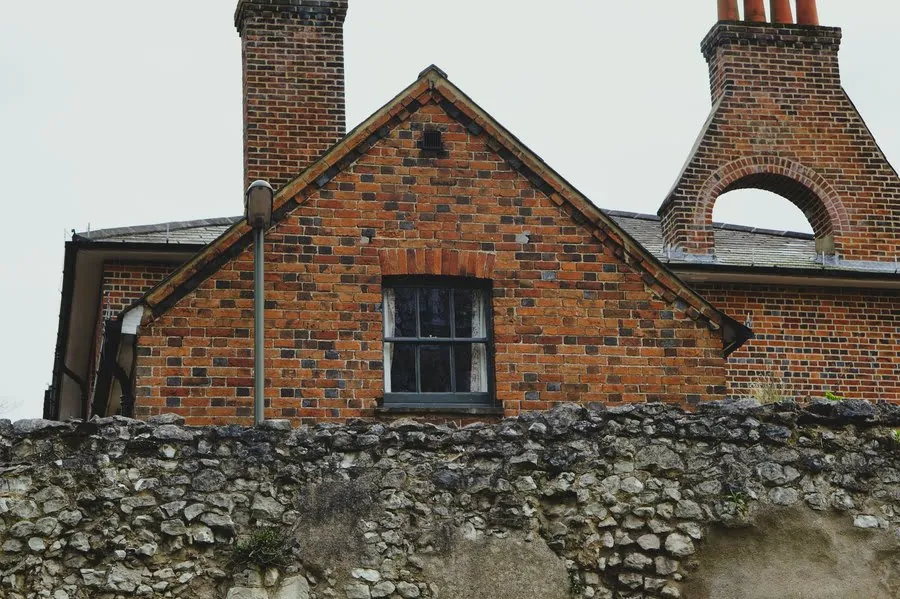
The ridge is the row of half-round or angled tiles running along the very top, where the two slopes meet. A hip is the same thing running diagonally down the corner of a hipped roof, which is the shape you see on a lot of interwar and postwar semis round Ladybrook and parts of Forest Town. The verge is the sloping edge at a gable end, where the tiles stop and the brick wall carries on. On a mortar verge, there is a strip of cement along that edge, sitting on a thin undercloak board or a row of slates. On a dry verge you will see plastic caps clipped over the end tile of each course.
All three close off the edges of the roof, where wind gets underneath and rain gets blown in sideways. When one fails, it rarely announces itself with a drip straight away. More often it starts with a gap, then a rocking tile, then a tile in the garden. If you are not sure which of these you are looking at, our team handling roof repairs across Mansfield will happily name it from a photo before anyone talks about money.
Why the mortar gives up on Mansfield houses
Sand and cement has a hard time of it on a roof. On houses round here it usually comes down to four things.

Start with age. Much of Mansfield’s housing went up in batches: pit housing in Forest Town and Mansfield Woodhouse, council estates between the wars and after 1945. Whole streets got their ridges bedded in the same few years, with whatever mix the gang used that week. A lot of those beds are on their first or second life, and old mortar does not crack so much as soften to grit.
Then there’s movement. A roof is never perfectly still. Timbers swell and shrink with the seasons, and the brittle bed along the top is the first thing to crack when they do. On some older houses in the district, historic settlement from coal working has added a twist of its own: a ridge with a gentle dip in it, or a verge pulled slightly out of line with the wall below. That is usually old and finished, and our guide to mining subsidence and Mansfield roofs explains how to tell old movement from the active kind. If you think a crack is new and growing, the Mining Remediation Authority, which handles coal mining subsidence claims, is the body to approach before you pay for the roof work yourself.
Wind is the third. It doesn’t take a named storm. Wind pulls up on the ridge and sideways on the verge, so the joints get worked over all winter, and a loose bed gets looser with every gale.
Frost finishes the job. Once a hairline crack lets water in, a hard night turns it to ice and the crack opens a little wider. A few winters of that and the joint is gravel.
Rebed in mortar or switch to dry-fix?
When the ridge or verge needs doing, you will usually be offered one of two repairs, and both can be done well or badly.

Rebedding
The roofer lifts the ridge tiles off, chips the old mortar away, cleans the tiles, and beds them back on fresh mortar. Done properly in 2026, that means mechanical fixings as well: a screw, clip or wire through or under each ridge tile into a timber ridge batten or a fixing bracket. The mortar is there to fill the gap and look right; the fixings are there to hold the tile down. Rebedding suits roofs where the owner wants the traditional look, and where the tiles are an older clay or slate that dry systems do not always fit neatly.
Dry-fix
A dry ridge system replaces the mortar entirely. A roll of breathable material runs along the top, clipped to a ridge batten, and each ridge tile is screwed down through it, with a union clip at every joint. A dry verge uses a plastic cap on each tile course, fixed to the batten ends, and each verge tile is nailed or clipped. Nothing on the roof needs repointing again, and the vented ridge roll lets moist air out of the loft, which helps on the older houses here where condensation is a regular nuisance.
Dry isn’t automatically better, mind. Cheap, untested verge caps that crack in a hard frost or blow loose in a gust are a real problem, and a dry ridge laid on a batten that was never fixed properly is no stronger than the mortar it replaced. The thing to look for is a named product tested to the right standard, which brings us to BS 5534.
What BS 5534 actually requires of a ridge and verge
BS 5534 is the British Standard code of practice for slating and tiling, and its 2014 revision changed how ridges, hips and verges are fixed.

Before that revision, a ridge sitting on nothing but mortar was normal practice on most domestic roofs. Since 2014, mortar on its own has not been accepted as the way to hold ridge and hip tiles down: they must be mechanically fixed, whether or not they are also bedded. Tiles at the edges of the roof, verges included, need proper fixings too. A later amendment, published as BS 5534:2014+A2:2018 by the British Standards Institution, tied dry ridge, hip and verge products to a separate test standard, BS 8612. Marley’s technical team gives a readable summary of the mortar versus dry-fix choice under BS 5534, including the mix the standard recommends where mortar is still used.
For a homeowner, two things follow from that. First, BS 5534 is a code of practice, not an Act of Parliament, and it was written for new work. Nobody will fine you because your 1962 ridge is mortar-only. But when a roofer takes a ridge off and puts it back, it makes no sense to re-create a fixing method the industry dropped over a decade ago. Second, there is a heritage exception. On listed buildings and some conservation-area cottages, a traditional bedded finish may be expected, and the fixings are hidden rather than left out.
Ridge and verge repair prices on Mansfield house types
These are the bands our own quotes for the district mostly fall into in 2026, including VAT. Your roof may land above or below them, but a figure miles outside them deserves a question.

| House and job | Typical length | Usual price band |
|---|---|---|
| Colliery-era mid terrace, ridge rebedded with fixings | 5-6 m | £200 - £450 |
| Gabled semi, ridge rebedded or dry-fixed | 7-9 m | £300 - £650 |
| Hipped interwar or postwar semi, ridge and all hips | 15-25 m in total | £400 - £1,100 |
| One gable verge, mortar or dry verge | 4-6 m per verge | £250 - £550 |
| Single slipped ridge tile refixed | one tile | £100 - £240 |
Per metre, most ridge work comes out somewhere around £45 to £90 once the time getting up and set up is spread across it. That is why one tile costs more per metre than a whole run. A dry ridge kit costs more in materials than a bag of sand and cement, but it is quicker to lay, so on a typical semi the two methods tend to sit within a hundred or two of each other.
The big variable is access. A ridge on a two-storey house with a clear front can often be reached with a roof ladder. A verge usually needs a tower or a scaffold lift at the gable, and scaffold on its own runs £450 to £1,100 per elevation round here, as our roof repair cost guide sets out. If the chimney or the gutters on that side also need attention, doing them under the same scaffold is the cheapest way to spend that access money.
Genuine fault or doorstep scare?
Ridges are the doorstep trader’s favourite subject for a simple reason: you cannot see the top of your own roof, so you cannot argue.
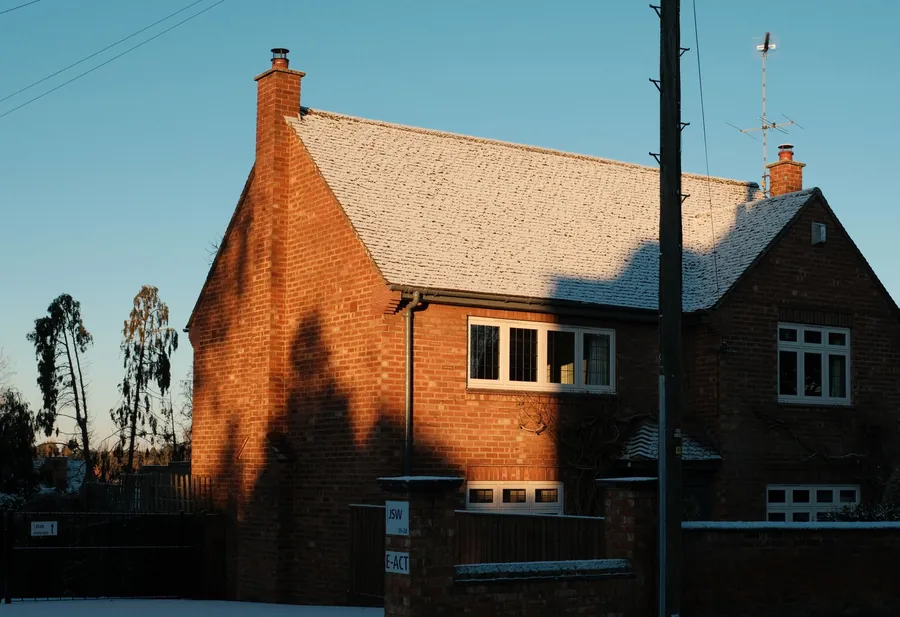
These are signs that something genuinely needs attention:
- A ridge or verge tile visibly out of line when you sight along the roof from across the street
- Lumps of mortar in the gutter, on the path or on a conservatory roof
- Daylight showing along the top of the loft, under the ridge, on a bright day
- Water staining on the ridge board or on the top of the gable wall inside the loft
- A tile that has already come down
And these are the signs of a scare rather than a fault: a stranger who “happened to notice” your ridge while passing, a phone photo of crumbling mortar that could be anyone’s roof, a price that only holds today, or a promise to “seal” the whole ridge with a coat of something. Hairline cracks in old mortar are common and are not an emergency on their own. We wrote a whole guide to roofing cold callers in Mansfield, covering the scripts they use and your right to cancel, so the short version here is just this: if somebody knocked on your door to tell you about your ridge, get a second opinion from someone you found yourself before anyone goes up a ladder.
What a ridge quote should spell out before you agree
A good quote for ridge or verge work fits on one page, and it answers six questions without you having to ask.

- Which lines are being done. Ridge only, ridge and hips, one verge or both, with rough lengths.
- Which method. Rebed with mechanical fixings, or a dry system, named by manufacturer.
- What happens to the tiles. Reused after cleaning, or replaced, and who supplies matching ones if some break.
- How it is fixed. Screws, clips or wire into a ridge batten, and whether a new batten is going in.
- How it will be reached. Roof ladder, tower or scaffold, with the access cost shown on its own line.
- What the guarantee covers. How many years, on what, and whether it is in writing.
If a quote cannot tell you how the tiles will be held on once the job is finished, that is the question to ask before you sign it. On older streets where neighbouring houses share one continuous ridge, also ask how the join at the party wall will be finished, because that is where a rushed job tends to fail first.
If your ridge or verge looks wrong from the street, or a caller has left you wondering whether it does, we will look at it from the roof, photograph what we find, and tell you which of the bands above it falls into.
Frequently asked questions
Do I need scaffolding for a ridge or verge repair in Mansfield?
Not always for the ridge. On a two-storey terrace or semi with safe ground at the front, a ridge can often be reached from a roof ladder hooked over the top, with edge protection where the job calls for it. Verges are different, because the work happens at the very edge of the gable, two storeys up, and that normally needs a tower or a scaffold lift on the gable end. Ask for access as its own line on the quote so you can see what it adds.
Is dry ridge better than mortar on an older Mansfield house?
On most estate and colliery-era roofs with concrete tiles, yes - a tested dry ridge system is screwed or clipped down, lets the roof breathe at the top and needs no repointing. Mortar still has a place: on some older clay or slate roofs, and in conservation areas where the look matters, a properly bedded ridge with mechanical fixings hidden underneath is the right answer. What you should not accept on either is mortar doing the job alone.
Can a roofer just point over my cracked ridge mortar?
They can, and it will look tidy for a season or two. The trouble is that a thin skin of new mortar over an old bed that has already let go is holding nothing. If the ridge tiles rock when pressed, or the old bedding crumbles behind the cracks, the honest repair is to lift the tiles, clean them, and re-fix them properly. Pointing over is only reasonable where the bed underneath is still sound and the cracking is surface-deep.
Will home insurance pay for ridge tiles that blew off?
If a named storm or an exceptional gust took them, many buildings policies will consider a claim. If the insurer's surveyor finds the mortar had been failing for years, expect the word 'wear and tear' and a refusal, because gradual deterioration is excluded almost everywhere. That is why it pays to rebed a tired ridge before the wind tests it rather than after.
Reading done - roof still needs looking at?
Free surveys across Mansfield and the towns around it, with a fixed written quote to follow.