
25 August 2026
Mining Subsidence And Your Roof: A Mansfield Homeowner's Guide
Mansfield sits on a worked-out coalfield. What that history actually means for your roof, chimney and ceilings - and what's claimable, from a local roofer's view.
Every so often a Mansfield homeowner rings us about a wavy ridge or a cracked chimney and asks, half-joking, whether the mines are to blame. It’s a better question than they think. This town sat on top of one of Britain’s great coalfields: Nottinghamshire had 49 collieries at nationalisation in 1947, and Mansfield was ringed by them - Crown Farm at Forest Town, Sherwood at Mansfield Woodhouse, Rufford at Rainworth, Warsop Main, Shirebrook, Clipstone. The last of the county’s deep mines, Thoresby at Edwinstowe, only wound up in 2015. A century of tunnelling doesn’t leave the ground entirely indifferent, and the buildings standing on it - many built quickly, for the pits, by the pits - carry the record. Here’s what that actually means for your roof, what it doesn’t mean, and what to do about the bits that matter.
What mining subsidence actually does to a house
When coal comes out of the ground, the strata above it eventually settle into the space. Done at depth, that settlement spreads and softens by the time it reaches the surface - but it rarely arrives perfectly evenly. One corner of a house drops a touch more than another, and the rigid brick box above has to accommodate the difference.
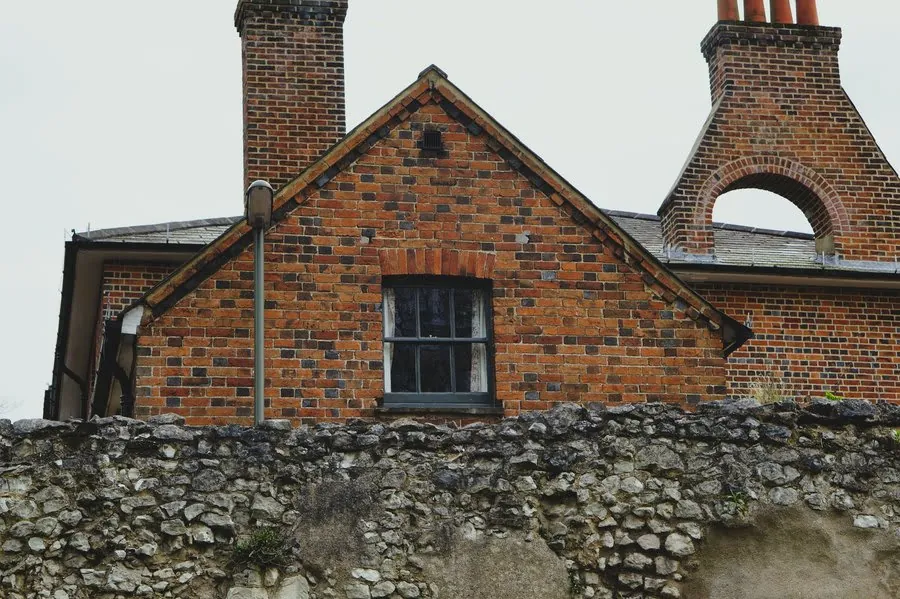
The classic symptoms are the ones the authorities themselves list: cracks in plaster, and doors and windows that stick because their frames have gone subtly out of square. But a house is tallest at its roof, and small movements at ground level get amplified with height. A structure that has settled 20mm differentially across its footprint will show it most visibly in the longest, straightest lines it owns - the ridge, the verges, and above all the chimney.
If you’re weighing up whether your own home sits over old workings, the government’s free coal mining property checker answers it in a couple of minutes. For most addresses around Mansfield, the answer is some version of yes - which sounds alarming and mostly isn’t, for reasons worth spelling out.
Why “yes, there’s mining under you” is usually fine
Two facts take the drama out of the situation. First, deep mining subsidence largely happens within a few years of the coal being worked - and around Mansfield the working stopped decades ago. Crown Farm closed in 1988, Sherwood in 1992, Rufford and Shirebrook in 1993. The ground under most of the town did its settling while the houses’ current owners were at school, and what you see today is the finished record of that movement, not a live process.
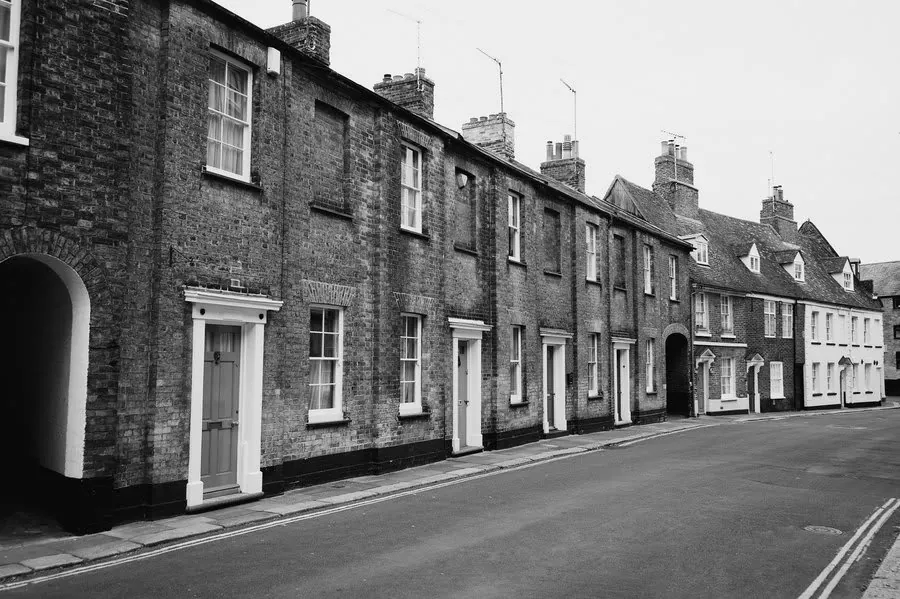
Second, buildings are more tolerant than they look. The colliery rows and terraces of Forest Town, Warsop Vale and the Woodhouse were built with lime-rich mortars that flex a little, and a century on they’ve long since made peace with their ground. A roof repair on this stock simply respects the geometry that exists: battens follow the real rafters, tiles course to the real ridge, and the result is weathertight even where nothing is quite square. Ask anyone who works on old Mansfield houses - dead level is the exception, and it doesn’t need to be the goal.
The roof-level signs worth taking seriously
So when does the mining history deserve genuine attention? At roof level, we’d separate the signs into the settled and the suspicious.
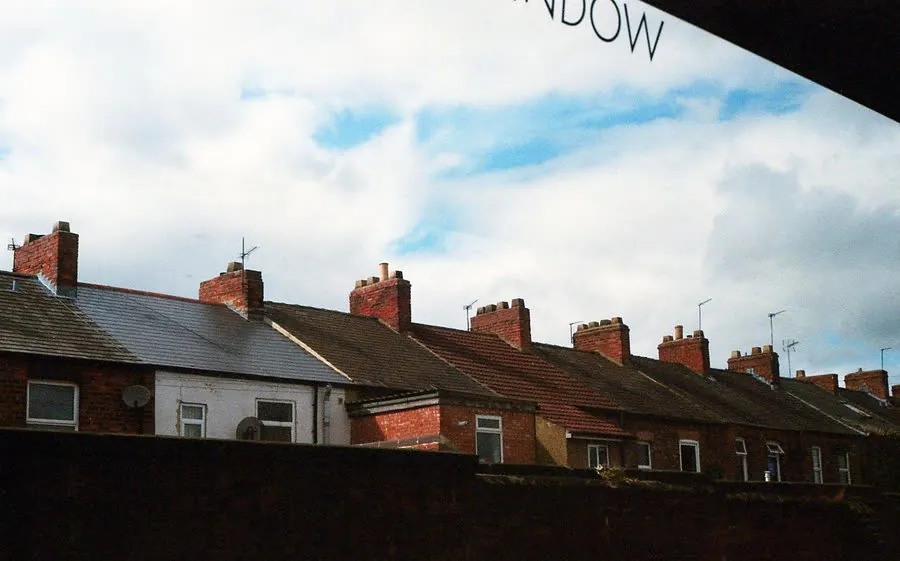
Settled, and normal for the housing’s age: a ridge with a gentle, consistent sag; a chimney a degree or two off plumb that photographs the same year after year; hairline cracks in ceilings that were filled once and never returned. These are the building’s old scars. They want noting, not treating.
Suspicious, and worth a survey soon: cracks that reopen after redecorating, or that step diagonally through brickwork joints; a chimney whose lean is visibly increasing; gaps newly opening where the roof meets a party wall; doors upstairs starting to catch when they never used to. None of these proves active movement - thermal cycles and failed lintels produce lookalikes - but together they justify getting educated eyes on it. The useful habit costs nothing: photograph your ridge and stack square-on from the same spot once a year. Comparison beats memory every time.
The chimney question, answered honestly
Chimneys deserve their own section because they’re where “is it subsidence?” gets asked most - and where the answer is most often no. A leaning stack on a coalfield house has a prime suspect that has nothing to do with the ground: the coal it burned. Decades of flue gases loaded the mortar with sulphates, the weather works one face of the stack harder than the others, and the masonry slowly develops a curl. It’s so common on pre-war housing that structural engineers treat it as the default explanation.
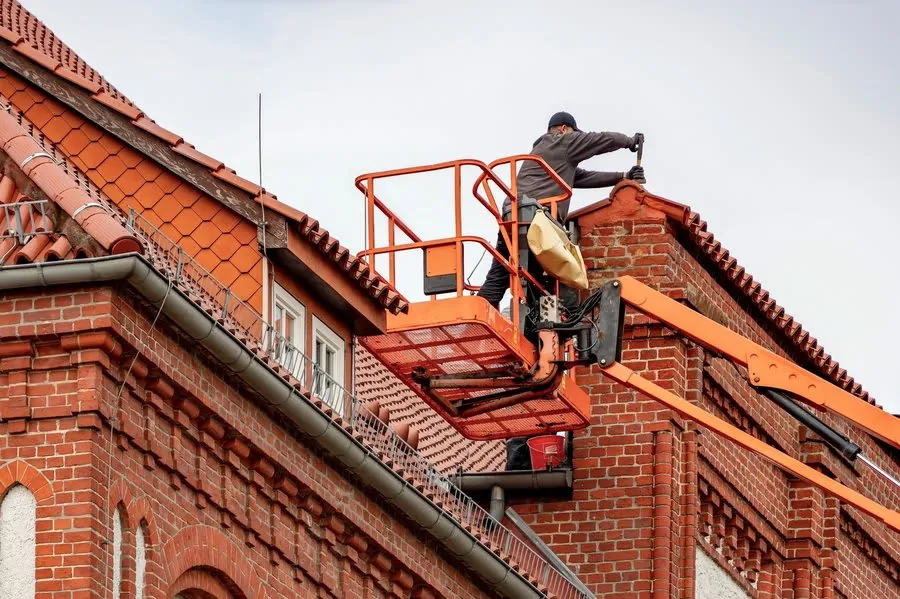
Why does the distinction matter? Because the remedies are different. A sulphate-curled stack is a masonry job - rebuild the affected courses, point in the right mortar, cap the dead flue - and it’s work we quote for regularly. A stack moving because the building under it is moving needs the building question answered first. A decent surveyor or an honest roofer can usually tell the two apart from the pattern: sulphate lean curves along the stack’s height, while foundation movement tilts it from the base like a mast.
Making a claim when mining genuinely is the cause
Here’s the part surprisingly few local homeowners know, despite the relevant organisation being based in the town: coal mining subsidence damage has a statutory remedy. Under the Coal Mining Subsidence Act 1991, the Mining Remediation Authority - the body formerly called the Coal Authority, headquartered on Lichfield Lane at Berry Hill - has a duty to repair, or pay for the repair of, property damage caused by coal mining subsidence.
The process starts with a damage notice - a form describing the damage, supported by photographs. Submitting one costs nothing. The authority then investigates whether mining subsidence is the cause; where it is, the remedy is repair or compensation. Be prepared for the honest statistics of it: most modern claims on long-settled ground don’t succeed, because most damage on old houses has more mundane causes. But where the evidence genuinely points underground, the route exists, it’s free to pursue, and no insurance excess is involved.
Two practical notes from the roofing side. First, dated photographs are the currency of any claim - which is one more reason we photograph everything we survey. Second, don’t let a repair wait on a claim: water coming in does damage daily, and making the roof weathertight doesn’t prejudice anything so long as the damage is documented first.
What we do differently on settled houses
When we repair or re-roof a house with a settlement history, a few habits earn their keep. We measure and photograph the existing lines before stripping anything, so the rebuilt roof sits naturally on its structure instead of fighting it. We favour repairs and fixings with a little tolerance in them - rigid modern systems on flexible old buildings are how new cracks get made. And on chimneys we’re conservative about condemning: a stack that’s leaned the same amount since the pit closed has proven its stability more convincingly than a plumb-line ever could.
Above all, we’re straight about the boundary of our trade. If a survey turns up evidence that looks like live structural movement, you’ll be told to get a structural engineer before you spend roofing money - because tiles over a moving structure is decorating a problem. That call costs us work occasionally. It’s still the right call.
The short version
Mansfield’s mining past is written into its ground and its houses, but for the overwhelming majority of local roofs it’s history, not threat. Know your building’s old scars, photograph the long lines once a year, treat changing movement as the signal worth acting on, and remember that the statutory claims route exists for the genuine cases - administered, with pleasing irony, from an office ten minutes from the Market Place.
And if a mark on a ceiling or a lean on a stack is nagging at you, the cheapest reassurance in town is a survey that costs nothing and comes with photographs.
Frequently asked questions
How do I find out if my Mansfield house is over old mine workings?
The definitive answer comes from a coal mining report, known as a CON29M, which solicitors order as standard during conveyancing anywhere on the coalfield. If you already own the house, the government runs a free online checker showing whether a property sits in a former mining area, and the Mining Remediation Authority can supply a detailed report for a modest fee. Given that Mansfield was ringed by pits - Crown Farm, Sherwood, Rufford, Warsop Main and more - most local addresses will show some historic workings nearby. That is normal and usually nothing to lose sleep over.
Can I claim for subsidence damage caused by old coal mining?
Yes, and the route is statutory rather than a matter of goodwill. Under the Coal Mining Subsidence Act 1991 the Mining Remediation Authority has a duty to repair or compensate for property damage caused by coal mining subsidence. You start by submitting a damage notice with photographs and a description of the damage. It costs nothing to submit, and the authority's headquarters happen to be on Lichfield Lane in Mansfield itself.
Is a leaning chimney always subsidence?
No - in our experience it usually isn't. Chimneys on coalfield housing lean for a much more ordinary reason: decades of coal fires left sulphates in the mortar, one face of the stack weathers faster than the others, and the masonry slowly curls. Old settlement is one possible cause among several, and a survey can normally tell which story a particular stack is telling. What matters most is whether the movement is finished or still happening.
Will old mining stop me getting a roof repaired or replaced?
Not at all. Roofers work on settled coalfield housing constantly - a repair or re-roof simply follows the roof's actual lines rather than the theoretical ones. The only situation that changes the plan is evidence of active movement, which is a structural matter to resolve before spending serious money on the covering above it.
Reading done - roof still needs looking at?
Free surveys across Mansfield and the towns around it, with a fixed written quote to follow.