
12 October 2026
Repair Or Replace Your Mansfield Roof? Deciding On Pit-Era, Interwar And Postwar Houses
Should you repair or replace your Mansfield roof? How the answer changes for colliery terraces, 1930s semis, ex-council estates and 1970s houses, with local costs.
Every roof in Mansfield eventually reaches the same fork: repair or replace. Most people try to answer it by counting leaks. A better starting point is the year the house was built, because the roofs here arrived in four distinct waves and each wave fails in its own way. Pit-era terraces from the early 1900s, private semis from between the wars, council estates from 1947 onwards and the private estates of the 1960s and 70s all reach the fork for different reasons, at different ages and at different prices. Get the era right and the decision usually makes itself.
Repair or replace in Mansfield? Start with when the house was built
Some quick sums before the house types. A full re-roof on a typical Mansfield semi costs £6,500 to £9,000 at our current prices. Refixing a few slipped tiles is £150 to £350. Rebedding a ridge runs £200 to £450. With a gap that wide, it is easy to keep picking the small number every time something goes wrong, and plenty of people do that for a decade without ever stopping to add up what they have spent.
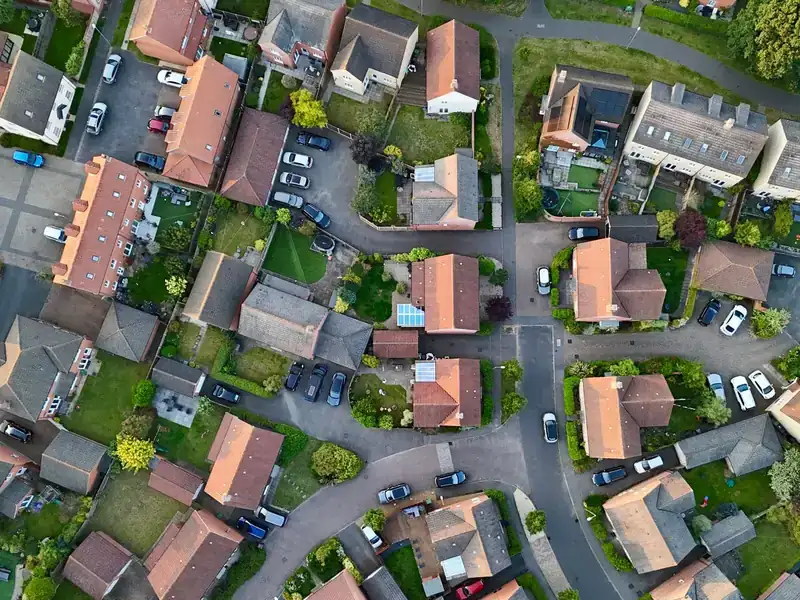
Look down on almost any street here and you can read its history in the tile colours. One house has a bright new roof, the one next to it is faded and spotty with lichen, and the one beyond that has a patchwork slope where somebody has been replacing a tile at a time since 1995. The bright one probably wasn’t the most expensive of the three. Somebody added up the repair bills, looked at what a full roof replacement actually cost, and decided once instead of paying in instalments.
So here is how we judge it on the four main house types in and around Mansfield, followed by the signs that matter on any roof whatever its age.
Pit-era terraces and colliery semis, 1905 to the late 1920s
Forest Town went up for the new Mansfield pit from 1905, and the same company-housing pattern repeated over the following twenty years at Clipstone, Rainworth, Warsop Vale and Ollerton. They were built fast, to a budget, by colliery companies who expected to house a workforce rather than sell the houses on. Where the original covering survives it is usually Welsh slate on slender rafters, often with no underlay at all.
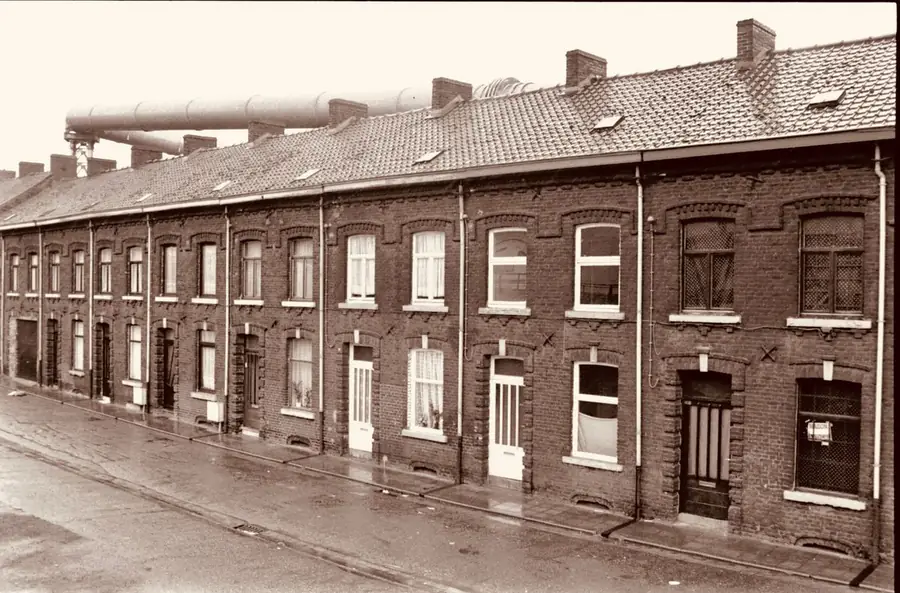
On these roofs the slate is rarely what gives up. A good Welsh slate laid in 1910 can still be perfectly usable today. What gives up is the iron nail through it. Once the nail heads rust away, slates start sliding down the roof in ones and twos, then in dozens, and the roofer who comes out to refix them with copper tingles is treating the symptom. When we see more than a couple of tingle strips per square metre, or slates that rattle when we press them, the whole slope is on borrowed time even if most of it looks fine from the pavement.
The other common story on pit-era houses is the roof that has already been replaced once, in heavy concrete, sometime in the 1970s or 80s. That roof is now forty-odd years old itself, and the rafters underneath were sized for slate. If you see a dip along the middle of the slope, replacement is the honest answer, ideally back to something lighter. Our guide to how long each roof covering lasts goes into the slate and concrete lifespans properly.
While the nails hold, we repair. Once they don’t, we re-slate the slope.
Interwar private semis: clay plain tiles and hipped bays
The privately built semis of the 1930s line the old main roads out of town and fill the streets behind them. Hipped roofs, a bay at the front with its own little roof, and in many cases small clay plain tiles, the flat rectangular ones that hang on two nibs and only get a nail every few courses.
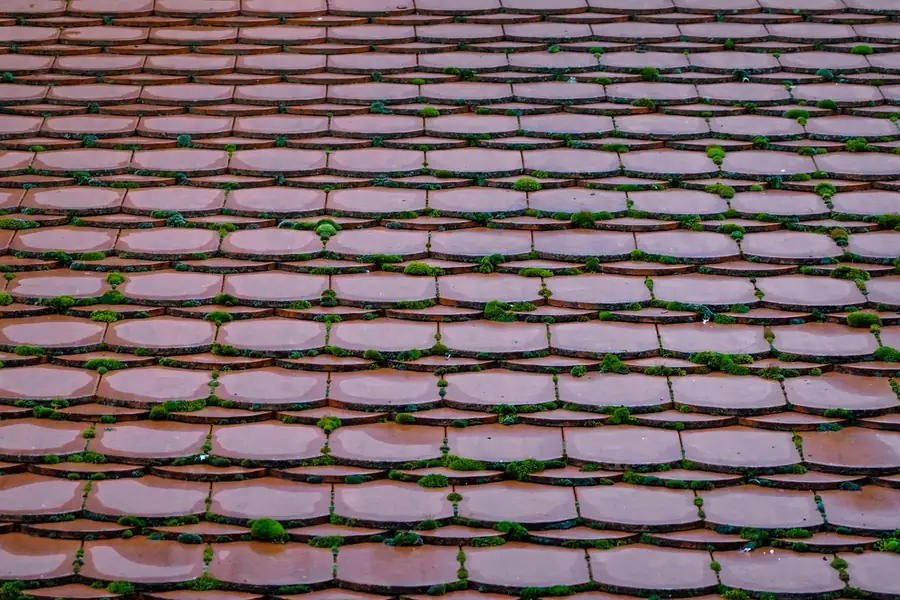
Plain tiles are great for repairs. They are small, they are easy to slot back in, and reclaimed ones in a matching red-brown are not hard to find in the East Midlands. A plain tile roof with a few cracked or slipped tiles is cheap to sort out and we would almost never recommend replacing it on that evidence alone.
The trouble starts when the tiles themselves begin to break down. Clay that has taken ninety winters of frost can start to flake on its face, and once the nibs snap the tile has nothing left to hang from. You can see it from the garden: chips of red tile collecting in the gutter, and pale patches where the outer skin has come away. A scattering of those is a repair. Whole courses gone soft is a re-tile, because no amount of refixing stops the next frost doing the same to the tiles either side.
Ex-council estates from 1947: the concrete tile generation
Ladybrook took its first tenants in 1947, and Bull Farm, Bellamy Road and the estates out towards Rainworth and Warsop followed in the same mould. Brick semis and short terraces, a single straightforward pitch, and concrete interlocking tiles almost everywhere. Those tiles are some of the toughest things on any Mansfield roof. They don’t crack easily, they shrug off wind, and even once the coloured surface has worn back to grey aggregate they still keep most of the rain out.
So on these houses the decision is nearly always about what is under the tiles. Plenty of the early postwar roofs were laid with only some courses nailed, and with bitumen felt that has now had seventy years to dry out. Push a finger into the felt where it drapes into the gutter and if it crumbles, rainwater that blows under the tiles has nowhere to go but into the eaves and the top of the wall.
There is also the half-and-half problem. Where one side of a semi was bought under Right to Buy and the other stayed with the council, the two halves have often been looked after on completely different timetables. If that is your house, read who owns which half of an ex-council roof before you get anything quoted, because the answer changes what can be done.
On these estates the tiles often outlast the felt by decades, so it’s the underlay that should set the date, not how faded the tiles look.
1960s and 70s estates: shallow pitches and tired felt
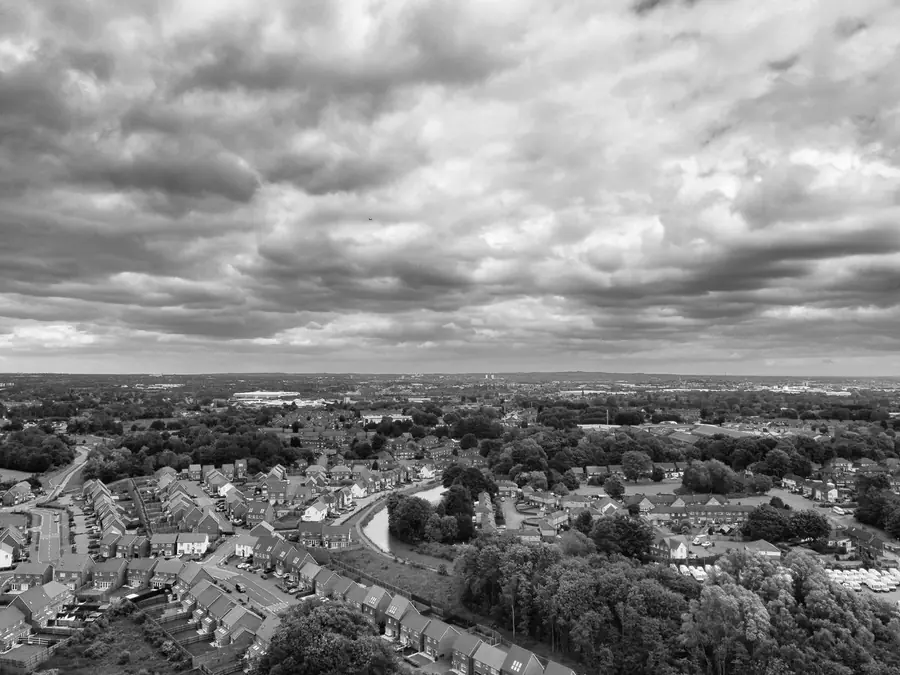
By the 1960s housebuilders around Mansfield had moved to factory-made trussed rafters and low-pitched roofs covered in large-format concrete tiles. Oak Tree, built in 1976 and 1977, is the obvious local example, but the same style of roof sits on private estates right round the edge of town. Many of those roofs are now around fifty years old and still wearing their first covering.
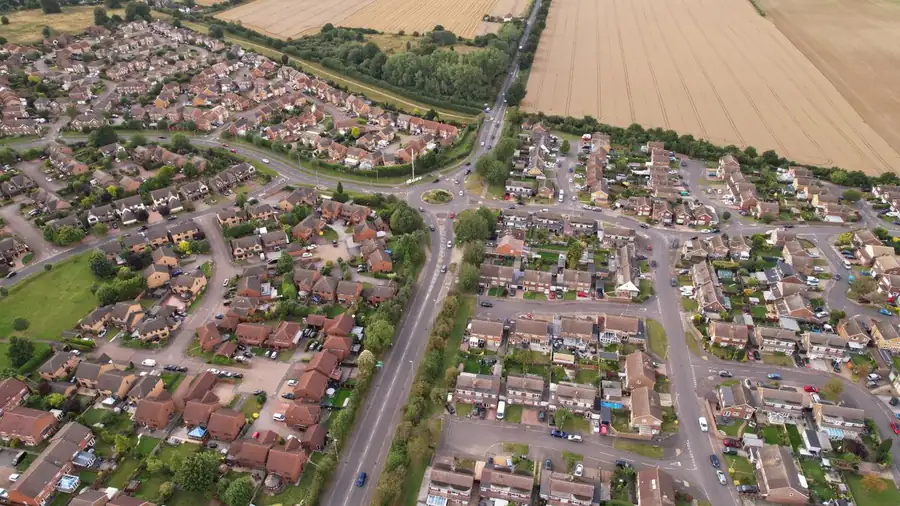
A shallow pitch depends heavily on the tile’s interlock and its overlap to keep water out, so it has less margin for error than a steep Victorian roof. A slightly lifted tile on a 22-degree slope lets in far more wind-driven rain than the same fault on a 45-degree one. Add the original felt, which on these roofs was generally the cheap reinforced type that sags between rafters and holds water in the dip, and you get leaks that appear in a gale, vanish for a month, and come back in a different room.
The trusses usually stay in good order, though some early trussed roofs went up with less bracing than a modern one would get, and any re-roof is a good time to add it. For the covering, the decision usually comes down to the felt and the fixings again.
One slipped tile on an otherwise tight roof is a repair. Fifty-year-old felt plus leaks that keep moving rooms every time the wind changes is a new roof.
Four tipping points that mean a Mansfield roof needs replacing, not repairing
Whatever era your house belongs to, these tell us more than the leak you rang about.

How much of the slope needs touching
One or two tiles is a repair on any roof. Once roughly one tile or slate in six on a slope is slipped, cracked or loose, you are paying a roofer to handle most of the roof anyway, without getting new felt or battens for the money.
What the battens and felt look like from the loft
From the loft, with a torch, look at the underside. Black felt that is torn, sagging or flaking at the eaves, daylight between the tiles, or battens that feel soft when pressed with a screwdriver all point the same way. No repair on the outside fixes rotten timber or failed underlay.
Nail fatigue
Rusted fixings fail across the whole roof at much the same rate, because they all went in on the same week. When we lift a slipped slate and the nail has rusted to a stub, the nails either side are usually close behind.
The patch history
Count the visible repairs: tingles, odd-coloured tiles, fresh mortar on an old ridge, a strip of flashing tape. Then dig out the invoices. Based on the roofs we price, roughly one owner in four who rings for a repair has already spent a third or more of a new roof’s cost on that same roof in the last five years. At that point another patch is the expensive option.
One more check before any full strip, especially near Sherwood Forest. Bats are protected, and the government’s guidance on bat surveys and mitigation names buildings near woodland, with uneven tiles and big roof timbers, as likely roost sites. Plenty of older roofs in Forest Town, Clipstone and Edwinstowe fit that description, so tell your roofer if you have seen signs.
Half a roof, one slope or the lot: Mansfield costs side by side
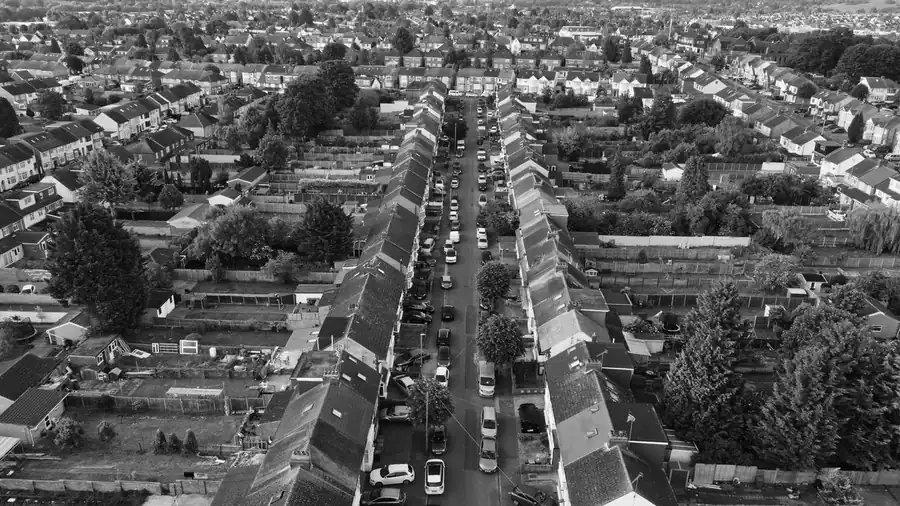
There is a middle option that rarely gets offered, and on Mansfield’s semis it is often the right one. The rear slope on most streets here takes the brunt of the south-westerly rain and the afternoon sun, and it regularly fails a decade before the front. Replacing that one slope, and using the best tiles from it to patch the front so the street view still matches, can push a full re-roof back by ten years or more.
Rough bands from our own quotes this year, including VAT and scaffold:
- Refixing slipped tiles or slates: £150 to £350
- Ridge rebed or dry ridge conversion: £200 to £600
- One slope of a mid-terrace re-covered: £2,600 to £3,900
- One slope of a semi re-covered: £3,200 to £4,800
- Full re-roof, mid-terrace: £5,000 to £7,000
- Full re-roof, semi: £6,500 to £9,000
- Full re-roof, detached with hips: £9,000 to £14,000
The single-slope figure looks steep against half the full price, and that’s because the scaffold and the setting-up costs barely shrink. That is the case for doing the lot if the front is only a few years behind. If you go for one slope, remember it is roughly half your roof, which puts the job at or near the line where Approved Document L of the Building Regulations expects the whole roof’s insulation to be brought up to the current standard where that’s practical. Building control will want to know either way, and the Planning Portal’s re-roofing guidance explains when approval is needed.
If replacement wins, our new roof quote, broken down line by line shows where the money in a full re-roof actually goes. If repair wins, good: you have kept the bigger bill a few years off. Either way, have someone get up there, lift a few tiles and look at the nails before you decide.
Frequently asked questions
How do I know whether to repair or replace my roof in Mansfield?
Look at what is failing rather than how much is failing. If a handful of tiles or slates have slipped and the nails, battens and underlay behind them are sound, a repair is the right call and will hold for years. If the fixings themselves have rusted through, the battens are soft, or the felt has rotted along the eaves, every repair just moves the problem a few feet along the roof. As a rough guide we start talking about replacement once more than about one tile in six on a slope needs attention, or once the repairs you have paid for over five years add up to a third of what a new roof would cost.
Can I replace just one side of my roof?
Yes, and on a lot of Mansfield houses it is the sensible middle option. The rear slope, which on most streets here faces the south-westerly weather, often fails a decade before the front. Re-covering one slope of a semi typically costs £3,200 to £4,800 including scaffold, against £6,500 to £9,000 for the whole roof. Good tiles from the stripped slope can be kept to patch the front so it still matches the street. On a semi, one slope is roughly half the roof, so tell building control about the job and expect the loft insulation to come into the conversation.
Are the concrete tiles on ex-council houses in Mansfield worth repairing?
Often yes, for a while. The concrete interlocking tiles on estates like Ladybrook, Bull Farm and Bellamy Road are heavy and tough, and a tile that has lost its surface still keeps most of the rain out. What usually decides it is underneath: the age of the felt, whether the tiles were ever nailed or clipped, and the state of the mortar ridge. Where those are sound, a rebed of the ridge and some refixing can buy ten years or more. Where the felt has turned to powder at the eaves, replacement is the better spend.
Do I need to check for bats before replacing a roof near Sherwood Forest?
It is worth thinking about. Bats and their roosts are protected by law, and government guidance on bat surveys lists buildings close to woodland, with uneven roof tiles and large roof timbers, as the kind bats tend to use. Plenty of older roofs in Forest Town, Clipstone, Rainworth and Edwinstowe fit that description. If you have seen droppings in the loft or bats leaving at dusk, mention it before the job is booked, because finding a roost halfway through a strip means stopping work until an ecologist has been out.
Reading done - roof still needs looking at?
Free surveys across Mansfield and the towns around it, with a fixed written quote to follow.