
14 October 2026
Roofers In Warsop, Shirebrook And Clipstone: Three Pit Villages, Three Different Councils
Roof repairs in Market Warsop, Shirebrook and Clipstone: colliery houses, postwar estates, typical faults, prices and which council handles what. Free surveys.
Draw a ten-mile circle north and east of Mansfield and you catch three villages that were barely villages at all until the coal companies arrived. Shirebrook went from fewer than 600 people to nearly 7,000 between 1896 and 1901. Clipstone’s model village of roughly 650 houses went up in the 1920s. Warsop got its colliery housing in two waves, one in the 1890s and one in the 1920s. Most of those roofs are now somewhere between 100 and 130 years old, plus a ring of postwar council housing around each. What surprises people is that the three villages answer to three different councils, in two different counties. Here’s how that works for a roof repair, what we actually find up there, and what it costs.
Which council signs off a roof in Warsop, Shirebrook or Clipstone
For most repairs the answer is nobody. Replacing broken tiles, rebedding a ridge or renewing a flashing like for like needs no planning permission and no building regulations application, wherever you live. The council only matters once a job gets bigger: a full re-cover, a different roofing material, a rooflight or dormer, taking down a chimney, or anything on a listed building or inside a conservation area.
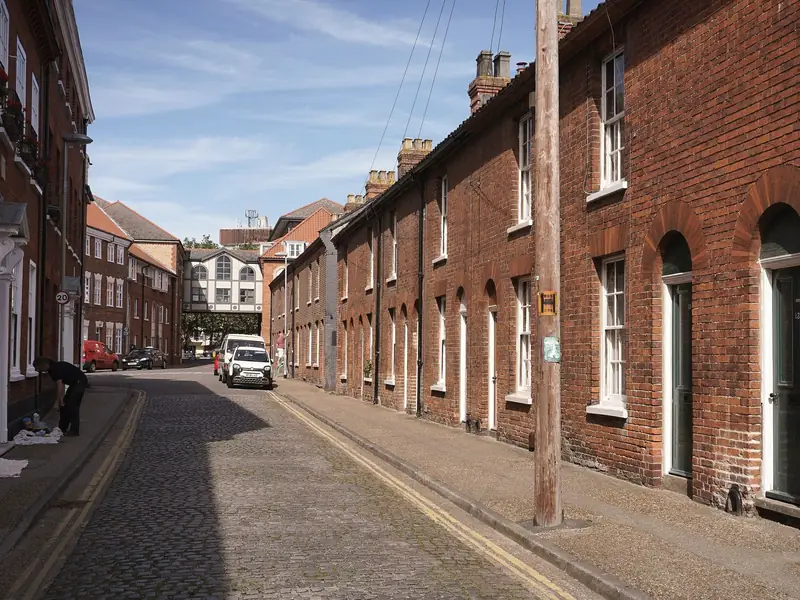
When it does matter, this is who you’re dealing with:
| Village | Planning authority | Building regulations | Conservation area to check |
|---|---|---|---|
| Market Warsop | Mansfield District Council | Erewash and West Nottinghamshire Building Consultancy | Market Warsop (old core); Church Warsop is separate |
| Shirebrook | Bolsover District Council (Derbyshire) | Derbyshire Building Control Partnership | None we know of over the colliery streets; ask Bolsover |
| Clipstone | Newark & Sherwood District Council | East Midlands Building Consultancy | Check the district’s heritage map |
All three councils have handed building control to a shared service, which is why the right-hand names look unfamiliar. Mansfield’s guidance on whether your work needs building regulations approval sets out the Erewash arrangement. In practice, if your roofer belongs to a competent person scheme they can self-certify a re-cover and none of these bodies needs to be contacted at all. If you’re having a full strip and re-roof, our roof replacement quotes say which route the job will take, so you don’t find out at the end.
Market Warsop: Staveley’s houses and the old village core
Warsop’s mining story belongs to the Staveley Coal and Iron Company, which sank Warsop Main in the early 1890s and kept it working until 1989. Its first houses went up around 1896 at what is now Warsop Vale, in short rows arranged around three sides of a green rather than the usual grid. A second, larger estate followed at Church Warsop in the mid-1920s.
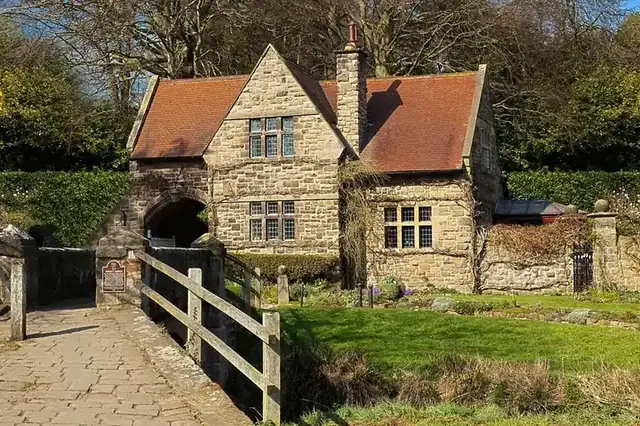
Market Warsop itself is older than any of that. The medieval village core around High Street, Church Street and Sherwood Street is a conservation area of roughly six hectares, and Mansfield District Council updated its Market Warsop conservation area appraisal and management plan in 2015. It’s worth a skim before any job that changes the look of a roof there. Several buildings on Church Street and High Street are Grade II listed, and the council’s own landscape guidance for the edges of the parish names pale local stone and orange pantiles as the materials that fit.
What does that mean for a repair? A matching clay tile, a rebedded ridge or new lead in the same place is fine. Concrete tiles on a stone cottage, a new rooflight facing the street or a chimney taken down to the roofline is the kind of change that needs a conversation with the council first. Warsop’s colliery streets at the Vale and Church Warsop sit outside the old core, so their roofs are treated like any other house.
Shirebrook: the Model Village and the 1890s rush
Shirebrook is the one that catches people out. It has an NG20 postcode, buses run straight to Mansfield and most residents shop there, but it’s in Derbyshire. Planning goes to Bolsover District Council, and building regulations go to the Derbyshire Building Control Partnership, a joint service Bolsover shares with several other Derbyshire councils.
The colliery was sunk in 1896 and the company started its Model Village straight away, with around 150 houses up by 1897 out of 420 planned. It wasn’t close to enough. Builders threw up streets in the main village as fast as they could to keep pace with thousands of new arrivals, and some of that speed shows in the roofs. Rafters are often lighter than you’d expect, the original battens were never treated, and a lot of terraces share chimney stacks across the party wall.
Shared stacks are the most common source of a dispute we get asked to settle. If the stack leans or lets in water, it’s usually both owners’ problem, and fixing one side alone rarely holds. We’ll quote both halves so the neighbours can split the cost. The pit closed in 1993 and the Sports Direct warehouse now stands on the old colliery land, but the houses built for it are still the bulk of the town.
Clipstone: a 1920s company village under the headstocks
Clipstone was built from scratch by the Bolsover Colliery Company. Shaft sinking was held up by the First World War, coal was first wound in 1922, and the company laid out a model village of roughly 650 houses through the 1920s. Those houses are newer than Shirebrook’s and better built, with proper overhangs and more generous timbers. But they’re still a century old.
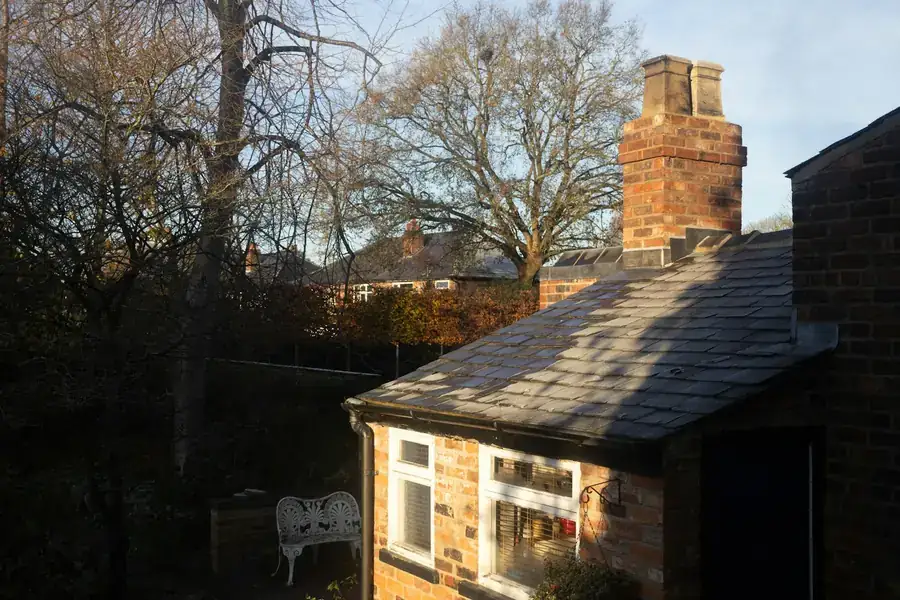
The headstocks that tower over the village date from the early 1950s and were Grade II listed in 2000. The colliery closed in 2003, so Clipstone was over working coal much more recently than Warsop or Shirebrook. If you’ve noticed a crack that wasn’t there when you moved in, our guide to mining subsidence and roofs explains how to tell old, settled movement from the sort worth reporting.
Clipstone comes under Newark & Sherwood, and building regulations there go through East Midlands Building Consultancy, which the council’s building control page explains. The council’s own planning documents treat the setting of the model village as a heritage consideration, so anything bigger than a like-for-like repair is worth checking against its heritage map first. On these roofs, the jobs we see most are perished mortar on ridges and hips, and valley linings that have reached the end of their life.
The postwar estates around all three villages
After the war, each village grew a ring of council housing. Most of these houses are semis and short terraces with plain gabled roofs, covered in the concrete interlocking tiles that went on almost everything from the 1950s to the 1970s.
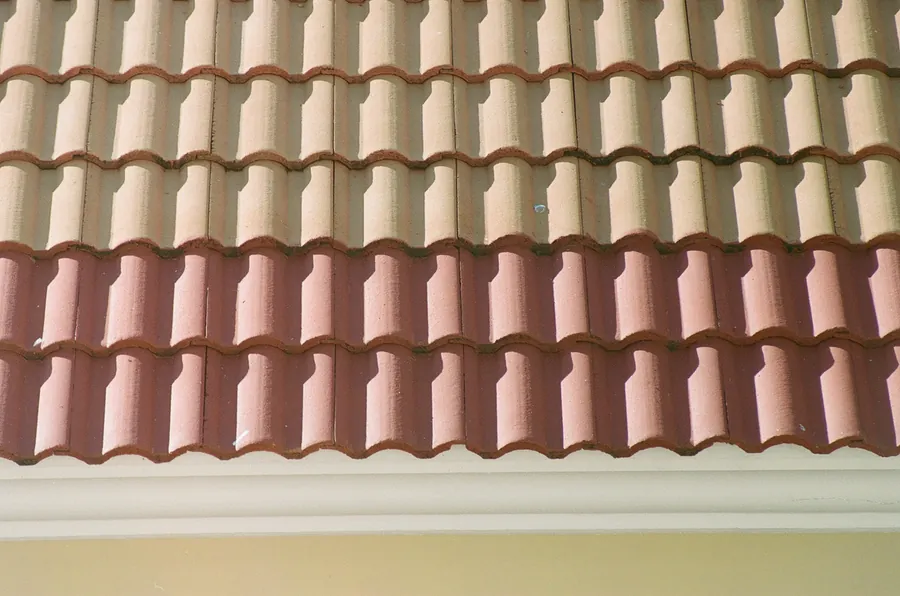
Concrete tiles wear slowly. Their surface erodes, they get heavier as they soak up water, and the felt underneath (if there is any) goes brittle long before the tiles themselves fail. A lot of the original roofs were re-covered by the councils in the 1980s and 90s, which is why two identical semis on the same street can be a generation apart on top.
Many of these houses have since been bought under Right to Buy, which means one half of a pair is privately owned while the other is still a council tenancy. In Warsop that’s Mansfield’s housing stock, in Clipstone it’s Newark & Sherwood’s, and in Shirebrook it’s Bolsover’s. If you own one half, our post on Right to Buy and ex-council roofs covers where your responsibility stops and how to handle a roof that runs across both.
What usually goes wrong, house by house
After enough surveys in these villages, you could almost write the report before climbing the ladder.

Slipped tiles on the 1890s terraces come first by a distance. In Shirebrook and Warsop Vale the original nails have rusted through, and tiles slide down one at a time after a windy night. One or two is a repair. A dozen across one slope means the fixings have gone everywhere, and you’re really looking at a re-roof in instalments.
Next is the chimney nobody uses. Every pit house was built around a coal fire and most stacks have been cold for decades. A stack that never warms up stays damp, the pointing goes soft, and the flashings pull away where the brick has moved.
On the 1920s houses in Clipstone and Church Warsop, there are more hipped roofs, so more mortar-bedded ridge and hip tiles to crack and let go. Then there are the lean-to kitchens and bathrooms bolted on in the 60s and 70s, which often meet the main roof with a cheap junction that’s been patched three or four times since. And on postwar roofs, early bitumen felt sags and tears between the rafters, so rain blown under the tiles lands on the ceiling instead of running to the gutter.
What roof repairs cost in Warsop, Shirebrook and Clipstone
We charge the same rates in all three villages as in Mansfield. Warsop and Shirebrook are about a quarter of an hour from Mansfield, and Clipstone is closer. What changes the price is access, the age of the timbers and how much of the original roof is still there.
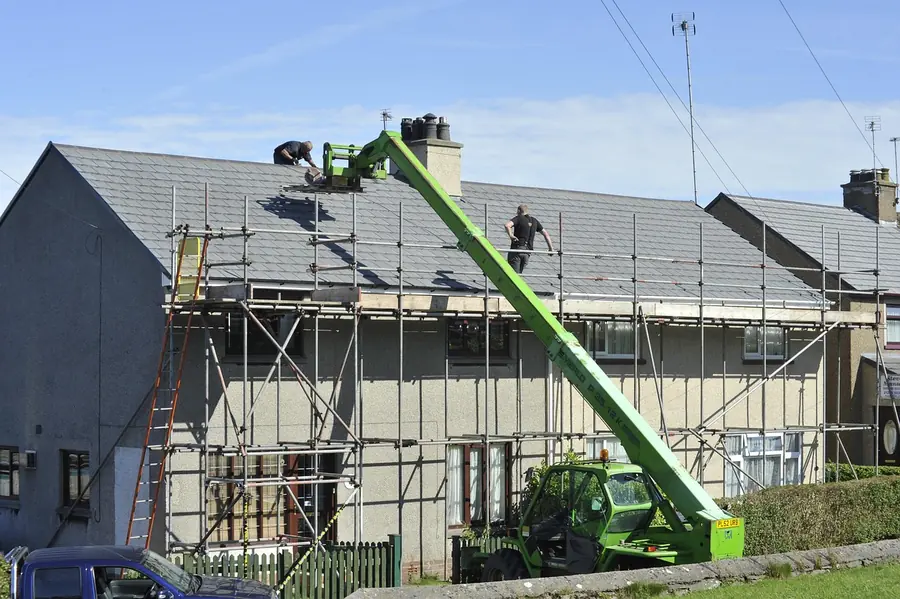
Typical figures from recent work in the area:
- A few slipped or broken tiles, reachable from a ladder: £180 to £400
- Ridge rebed on a colliery terrace or semi: £350 to £900, more on a hipped Clipstone roof
- Chimney repoint with new lead flashings: £700 to £1,900, most of it scaffold
- Shared stack across two terraced houses: often £1,200 to £2,800 in total, split between neighbours
- Valley relining: £600 to £1,500 per valley
- Full re-roof of a two-storey semi: £6,500 to £12,500, depending on covering, timbers and whether the stacks stay
If you’re a few slipped tiles away from deciding between repair and replacement, ask for both prices on the same visit. On a 120-year-old roof with nail fatigue across every slope, a run of small repairs can cost more over five years than doing it properly once. We’ll tell you honestly which side of that line your roof is on, and which council, if any, needs to hear about the work.
Frequently asked questions
Is Shirebrook covered by Mansfield District Council?
No. Shirebrook is in Derbyshire and comes under Bolsover District Council, even though its postcode is NG20 and it sits closer to Mansfield than to Bolsover. Planning questions go to Bolsover, and building regulations are handled by the Derbyshire Building Control Partnership, which Bolsover runs jointly with several other Derbyshire councils. Your roofer can be from either side of the county line; the paperwork follows the house.
Do I need permission to re-roof a house in Market Warsop?
Outside the conservation area, replacing a roof like for like on an ordinary house needs no planning permission, although a full re-cover usually needs building regulations sign-off, which a roofer in a competent person scheme can self-certify. Inside the Market Warsop conservation area, around the old core of High Street and Church Street, changes to how the roof looks from the street need more care, and a listed building needs consent for almost anything. Church Warsop has its own separate conservation area.
Which council deals with roof work in Clipstone?
Newark & Sherwood District Council handles planning for Clipstone, despite the village being about ten minutes from Mansfield town centre. Building regulations in that district are run by East Midlands Building Consultancy. Most ordinary repairs need neither, but a change of roof covering or a full re-roof may need building control involvement.
How much does a roof repair cost in Warsop, Shirebrook or Clipstone?
Small jobs such as replacing a few slipped tiles usually come in between £180 and £400 when they can be reached by ladder. Rebedding a ridge on a typical colliery semi or terrace tends to run from £350 to £900, and a chimney repoint with new flashings is often £700 to £1,900, mostly depending on access. A full re-roof of a two-storey semi is generally somewhere between £6,500 and £12,500. We charge the same rates in all three villages as in Mansfield itself.
Reading done - roof still needs looking at?
Free surveys across Mansfield and the towns around it, with a fixed written quote to follow.