
10 October 2026
Roofers In Ollerton, Edwinstowe And Rainworth: Pit Houses, Forest Trees And Newark & Sherwood Rules
Colliery housing, Sherwood Forest trees, conservation areas and who to ask at Newark & Sherwood - a roofer's guide to Ollerton, Edwinstowe and Rainworth.
Three collieries were sunk on the Sherwood side of Mansfield within fourteen years of each other. Rufford went down at Rainworth in 1911, Ollerton in 1923 and Thoresby, at Edwinstowe, in 1925. Each one came with hundreds of company houses built in a hurry, roofed in whatever the colliery firm chose, and all now somewhere around their hundredth birthday. Put a royal forest next to them, add a district council based twenty miles away in Newark, and a roof repair in NG21 or NG22 involves a few things a job in central Mansfield doesn’t. The houses come first, because everything else follows from when they were built.
Three pits, fourteen years: why these roofs are wearing out together
A colliery village wasn’t built house by house. The company put up whole streets in a few seasons, so the roofs on them started ageing on the same day and have been doing it in step ever since.
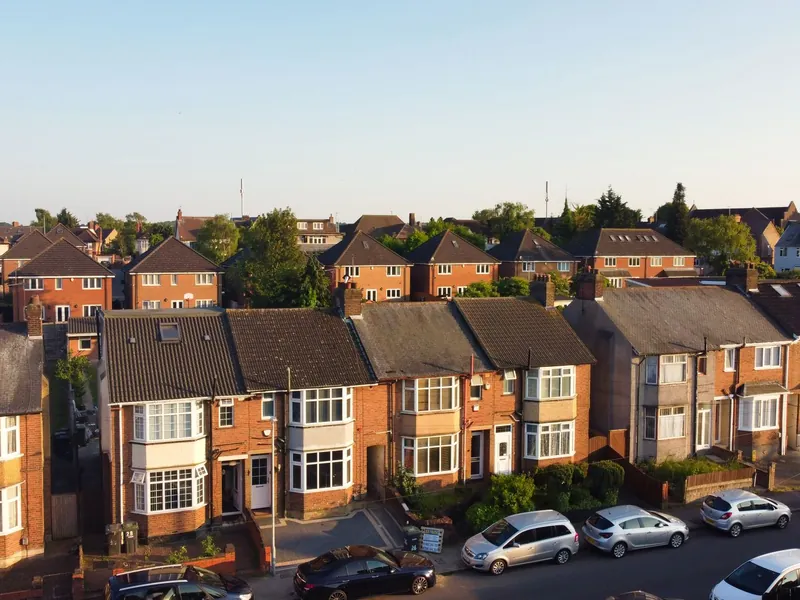
That timing is the reason a neighbour’s re-roof should get your attention. The battens on most of these houses are the original softwood, a century old, and nail fixings that age don’t fail one at a time. When three houses in a row on a Rainworth avenue have had scaffolding up in the same year, that isn’t a cowboy working the street. It is the date on the deeds catching up with all of them.
Not every hundred-year-old roof needs replacing. Plenty have been re-covered once already, often in concrete tiles during the 1970s or 80s, and those coverings still have life in them. But on houses still wearing their first clay tiles, or a re-roof done cheaply without felt, repair stops being good value eventually. When that point comes our roof replacement service quotes the strip and re-cover with every rafter checked, so you can see the patch-and-wait figure and the replacement figure side by side.
New Ollerton, the Thoresby avenues and Rainworth’s two estates
The three villages share an industry, but their colliery companies built differently, and that shows up on the roof.

New Ollerton was the Butterley Company’s model village, and many of its semis sit under hipped roofs. A hip has a ridge line running down every corner as well as along the top, so there’s far more mortar-bedded tile per house than on a simple gable. Once that mortar perishes, hip tiles creep downward and water gets in at the top of each hip. Rebedding or dry-fixing them is the most common big repair we quote there.
Edwinstowe’s Thoresby houses went up in the late 1920s for the Bolsover Colliery Company, on the western side of the High Street, plainer in style and mostly gabled. Rainworth has two generations: the cottage-style rows between First and Fourth Avenue from before and during the First World War, and the bigger 1920s estate over the boundary that locals called the White City, which was designed with steep pitches for pantiles. Pantiles that steep shed water well but blow about if their fixings have gone.
One thing they all share is the chimney. Every house was built for a coal fire, often fed by a miner’s concessionary coal, and very few still burn any. A stack that no longer gets warmed from inside stays damp, the pointing goes soft and the pot fills with rain. Thoresby also kept producing until July 2015, so some Edwinstowe houses were sitting over working coal far more recently than anywhere in Mansfield. If you see a crack you don’t remember, our guide to mining subsidence and roofs explains how to tell old, settled movement from something worth reporting.
Roofing under the Sherwood canopy
Edwinstowe backs straight onto Sherwood Forest, Ollerton and Rainworth both have woodland on their doorsteps, and plenty of gardens in all three have oaks, birches or pines older than the house.
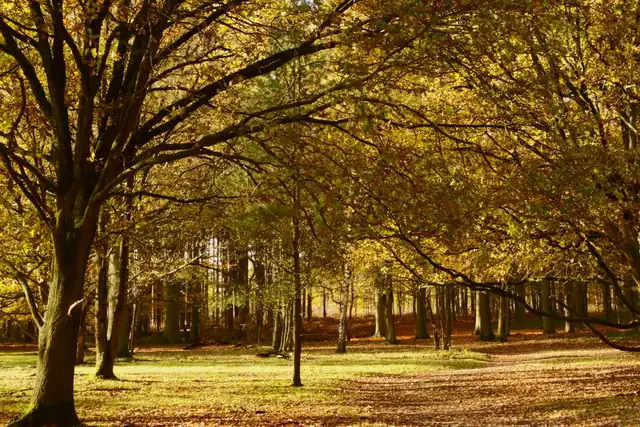
Everyone thinks of gutters, but the valley is where trees do the expensive damage. That’s the internal corner where two roof slopes meet or where an extension joins the main roof. Leaves and pine needles collect there, pack into a wet mat and hold water against the valley lining long after the rain stops. Lead sitting under wet oak leaves for half the year pits and splits well before a valley that stays clear, and the leak tends to show up on a bedroom ceiling well away from the actual fault.
Shade does slower harm. A slope that never gets sun dries slowly, so the tile surface stays damp, frost has more water to work on in winter and any moss gets a head start. On older clay tiles that means flaking faces and laps that wick water further up than they should.
Then there’s the branch itself. A limb rubbing on the eaves wears through tiles and bends gutter brackets a little more each windy day, and one that comes down in a gale can break a dozen tiles at once. If you can see daylight through the canopy onto your roof in summer, the tree is close enough that someone should look at the ridge and valleys every couple of years.
The tree is the problem, and you may not be allowed to touch it
This is the part that catches people out. The obvious fix for a roof under a tree is to cut the tree back, but around Sherwood a lot of trees are protected.
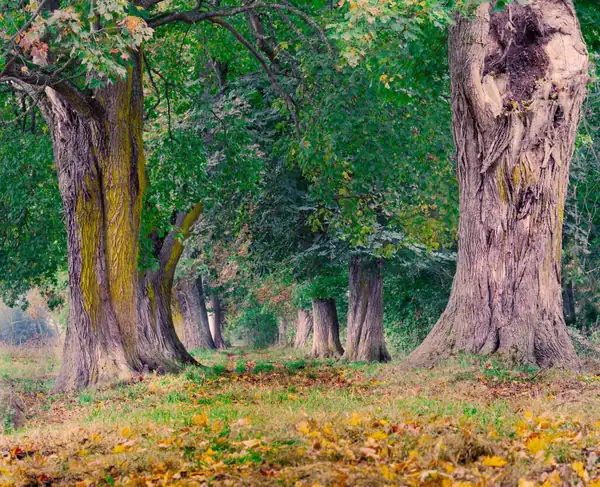
Some carry a Tree Preservation Order, which means pruning or felling needs the district council’s written consent first. Inside a conservation area the rule is wider still. Under section 211 of the Town and Country Planning Act, anyone planning work on a tree with a trunk over 75mm across, measured 1.5 metres up, has to give the council six weeks’ notice even if no order exists. The council then either lets the work go ahead or protects the tree. The government guidance on tree preservation orders and trees in conservation areas sets out the process and the narrow exemptions, and cutting without permission can mean a fine.
In practice that means planning a roof job around the tree rather than the other way round. If an overhanging branch has caused the damage, we’ll repair the roof and tell you it’ll happen again unless the branch goes. Then you, or a tree surgeon on your behalf, check whether it’s protected and send in the notice or application. Six weeks feels like a long time when a valley is leaking, but a temporary repair will hold the roof while the paperwork goes through.
Old Ollerton and Edwinstowe: the two conservation areas
Rainworth’s housing is mostly colliery-era or later. Ollerton and Edwinstowe both have older cores that are protected.
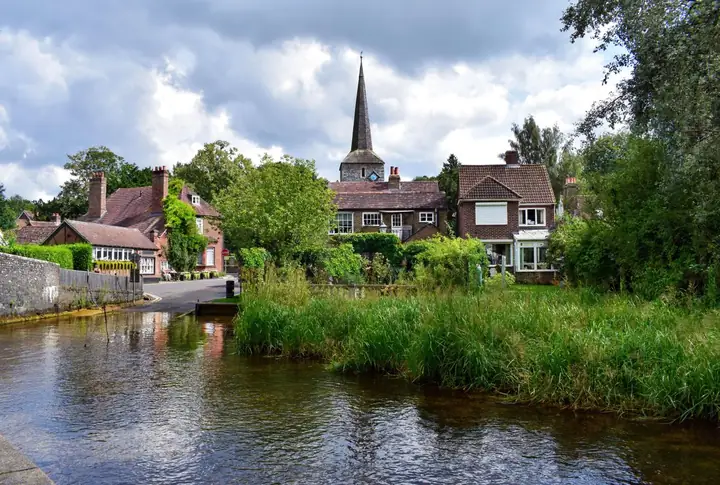
Old Ollerton, the village by the River Maun with its watermill, coaching inn and Ollerton Hall, was made a conservation area in 1972. Historic England’s 2017 survey placed it on the at-risk list, mainly because the Grade II* Hall had stood empty and neglected, and the district council reviewed the boundary and adopted a new appraisal in March 2022. Edwinstowe’s conservation area dates from 1970, centred on St Mary’s and Church Street, was extended along the High Street in 1989 and had its boundary revised again in 2019.
For a roof inside either area, replacing like with like is normally fine. Swapping a broken pantile for a matched one, rebedding a ridge or renewing a flashing in the same material doesn’t need permission. What does need thought is anything that changes how the roof looks from the street: a different covering, a rooflight on the front slope, a dormer, or taking down a chimney. If a listed building is involved, almost everything needs consent. The council’s conservation areas page for Newark & Sherwood has the maps and the conservation team’s contact details, and a five-minute email to them before work starts costs nothing.
Who you deal with at Newark & Sherwood, and the Rainworth boundary
Ollerton and Edwinstowe are a short drive from Mansfield but they don’t come under Mansfield District Council. Planning, protected trees and conservation areas all go through Newark & Sherwood at Castle House in Newark.
Building regulations work differently. Newark & Sherwood doesn’t run its own building control any more. According to the council’s building control page, the work is done by East Midlands Building Consultancy, a partnership with Rushcliffe Borough Council and South Kesteven District Council. A full re-cover, or a change from one roofing material to another, usually counts as building work, so either your roofer self-certifies through a competent person scheme or someone applies to East Midlands Building Consultancy. Ask which route your quote assumes.
Rainworth is the oddity. The district boundary runs through the village, so some houses are Mansfield’s and some are Newark & Sherwood’s, depending on which side of the line along Southwell Road East they stand. Most of the original First to Fourth Avenue houses fall on the Mansfield side, while the 1920s estate is over the line. For a repair it changes nothing, but if your job needs an application, check your address with the council before anything is sent.
What roof work costs out in the forest villages
There’s no village premium here. We charge the same for a job in Ollerton as in Mansfield, and the drive out to Edwinstowe or New Ollerton is under twenty minutes. What changes the price is the roof shape, the trees and how easy it is to get scaffolding in.
Hipped roofs cost more to rebed than gabled ones, simply because there’s more of the line to do. On a hipped New Ollerton semi, rebedding the ridge and all four hips usually sits in the £400 to £1,100 band, towards the top if the tiles need replacing rather than reusing. A stack that needs repointing, a new lead flashing and a cap on a dead flue typically runs £800 to £2,200, and a lot of that is the access. A complete re-roof of a typical colliery semi falls somewhere in the £6,000 to £13,000 range, depending on covering and timber.
Trees add cost in two ways. Valleys that have been sitting under leaves for decades more often need relining than clearing. And if a branch is in the way of the scaffold or needs to come off before the roof will stay sound, the tree surgeon’s bill is separate from ours. It also has to fit around any notice period, so we’ll tell you at the survey if the job depends on tree work. For the full breakdown of every line on a re-roof quote, our new roof cost guide covers it item by item, and none of it changes on the Newark & Sherwood side of the boundary.
We work in Ollerton, Edwinstowe, Rainworth, Clipstone and Blidworth every week. If the roof under your trees needs looking at, we’ll come out, tell you what it needs, and tell you which council, if any, has to know about it.
Frequently asked questions
Which council deals with roof work in Ollerton and Edwinstowe?
Newark & Sherwood District Council, even though both villages are closer to Mansfield than to Newark. Planning, conservation areas and protected trees all go through the district council. Building regulations for the district are run by East Midlands Building Consultancy, a shared service the council operates with Rushcliffe and South Kesteven. Most roof repairs need neither planning permission nor building control, but a full re-cover, a change of roofing material or work in a conservation area can bring one or both into play.
Is Rainworth in Mansfield or Newark & Sherwood?
Both. The boundary between Mansfield District and Newark & Sherwood runs through the village, crossing Southwell Road East close to the Rainworth Water bridge, and your address decides which council you deal with. For a straightforward repair it makes no difference, because like-for-like work on an ordinary house needs no consent from either. If a job needs planning or building regulations approval, confirm the authority for your exact address before anything is submitted.
Can I cut back a tree that overhangs my roof in Edwinstowe?
Check first. If the tree has a Tree Preservation Order you need the district council's consent before pruning it. If it stands inside the Edwinstowe or Ollerton conservation area and has a trunk more than 75mm across at 1.5 metres off the ground, you have to give the council six weeks' written notice of the work, even without an order on it. Pruning without consent or notice is an offence. A tree surgeon who works locally will normally check and submit the paperwork for you.
Do Thoresby colliery houses in Edwinstowe need conservation area consent for roof work?
Generally not. The conservation area covers the old village around St Mary's church, Church Street and the main run of the High Street, and the Thoresby avenues on the western side were left outside it when the boundary was reviewed in 2019. Re-roofing a colliery semi there is treated like any ordinary house, so like-for-like work needs no planning permission. A full strip and re-cover may still need building regulations sign-off, which your roofer can usually self-certify.
Reading done - roof still needs looking at?
Free surveys across Mansfield and the towns around it, with a fixed written quote to follow.