
6 October 2026
Gutters, Fascias And Soffits In Mansfield: Repair And Replacement Costs, And Why Capping Rot Doesn't Work
What gutter, fascia and soffit work costs in Mansfield, when capping over old boards goes wrong, cast iron on the terraces, and the law on bats and nesting birds.
Most of the roofline jobs we price in Mansfield start with a question that has nothing to do with the roof. Someone has noticed a brown streak down the brickwork under the front gutter, or a bit of soffit hanging loose over the porch, or sparrows going in and out of a hole by the downpipe. They want to know what it’ll cost and whether it’s urgent. The honest answer to both depends on what’s behind the board, and on whether the house is a 1900s colliery terrace, a 1950s Ladybrook semi or a 1980s estate house wearing its first set of plastic. This guide covers the prices, the one shortcut worth refusing, the gutter shapes you’ll find around town, what the job involves, and the wildlife law that can stop it halfway through.
What the roofline is doing on a Mansfield house
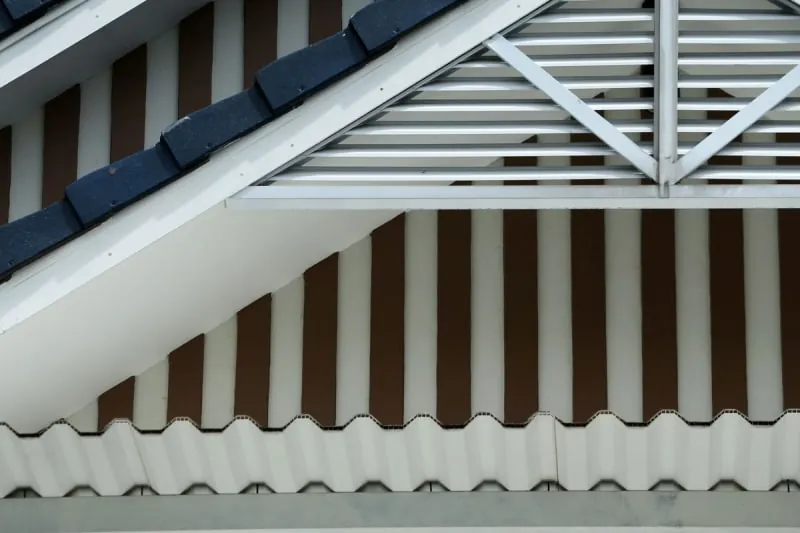
The fascia is the board along the bottom edge of the roof that the gutter brackets screw into. The soffit is the flat board underneath it, closing the gap between the fascia and the wall. Together with the gutter they take the rain off the tiles, carry it to a downpipe, and keep it off the walls. The soffit usually lets air into the loft as well. You can read how we handle the whole assembly on our fascias and soffits page, and the gutter side has its own write-up under guttering and rainwater repairs.
What catches people out here is the weather, or the lack of it. The Met Office station at Watnall, the closest long-run record to Mansfield, averages about 716mm of rain a year, against roughly 1,163mm for the UK as a whole. That’s good news for most of the house. It’s bad news for spotting a gutter fault, because a joint that weeps or a run that has lost its fall gets fewer proper downpours to show itself in. The board behind it gets wet, dries out, gets wet again, and rots in its own time while the front still looks painted and tidy. Plenty of the timber fascias we take down here have been decaying from the back for ten years or more.
What gutter, fascia and soffit work costs in Mansfield
Prices for roofline work move with three things: how many metres of eaves you have, how the job is reached, and what turns up once the old boards come off. These are the ranges we see on typical local houses.
- Gutter clear and check: £80 to £150 on a semi, more if the downpipes and gullies are packed solid too.
- Small gutter repairs (resealing a joint, resetting a few brackets to bring back the fall, replacing a cracked union or outlet): mostly under £300, provided it can be done safely off a ladder.
- New uPVC guttering on a semi: £600 to £1,200, with downpipes.
- A short section of rotten fascia or soffit: a few hundred pounds, depending on access.
- Full roofline on a two-storey semi (fascia, vented soffit, gutters and downpipes): £1,200 to £2,800.
House type moves those figures more than anything. A mid-terrace in Forest Town has one short front run and one back run, sometimes shared with the neighbours. A hipped-roof semi on one of the post-war estates has eaves on three sides and deeper soffits. A detached 1990s house off Oak Tree Lane can have twice the eaves length of either, plus gables with bargeboards. If you need a full scaffold rather than a tower or ladders, expect that to be the largest single item after labour. We’ve broken down repair prices by property style in more detail in our guide to roof repair costs for each kind of Mansfield house.
Rotten timber fascias: replace, or cap over?
There are three ways to deal with tired wooden fascias. You can repaint them if they’re sound. You can strip them out and fit new uPVC boards straight onto the rafter feet. Or you can leave the timber where it is and clip uPVC capping boards over the top, which the trade calls overcladding or capping.
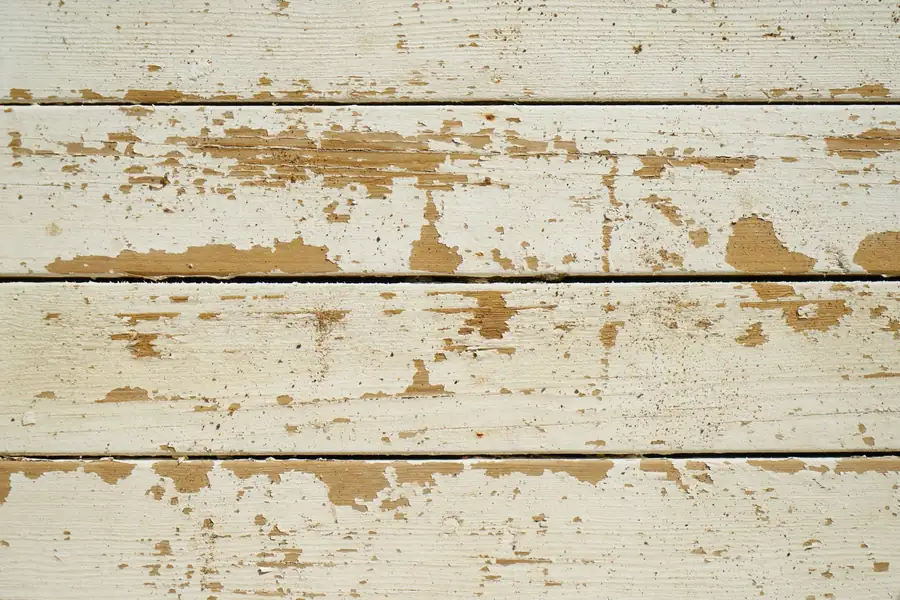
Capping is quicker and cheaper on the day, so it’s often the first price you’re offered. Over timber that’s been probed along its full length and found dry and firm, it’s a reasonable job. Over timber that’s already soft, it’s a false economy. The rot doesn’t stop because you can’t see it. Water still finds its way behind the gutter, now into a sealed space with no air moving through it, and the decay carries on into the rafter ends. The first sign is usually a gutter that starts to sag because the screws holding its brackets have nothing solid left to bite into. By then you’re paying to take the capping off, cut out the rot, splice the rafters and do the full replacement you were trying to avoid.
Before you agree to capping, ask the roofer three things:
- Have you pushed a screwdriver into the existing boards along their whole length, especially at joints and behind gutter outlets?
- What will you do if you find soft timber once you start, and what does that cost per metre?
- How will the loft still get its air once the new boards are on?
A firm that can’t answer the first question hasn’t looked, so whatever it quotes is a guess.
Full replacement takes longer and costs more, but the old boards come off, the rafter feet are in plain view, and any decay gets cut out and spliced before the new uPVC goes up. Modern boards don’t need painting, and on a house where the fascia has rotted once, they remove the reason it happened. If you live in one of Mansfield district’s conservation areas and the house still has its original painted timber at the front, check with the council before changing it to plastic. The district’s conservation area maps and guidance show the boundaries, and Pleasley Park and Vale carries an Article 4 direction that removes some of the usual permitted development rights.
Gutter profiles, and the cast iron on Mansfield’s older terraces
Look up at a street of mixed houses and you’ll see that the gutters aren’t all the same shape. The profile matters, because it decides how much water a run can carry and what you can replace it with.
- Half-round is the rounded channel on most houses built or re-guttered since the 1970s. It’s cheap, easy to match and fine for an ordinary semi.
- Square-line has a flat-bottomed box section. It suits the cleaner lines of later estate houses and carries a little more than half-round of the same width.
- Deep-flow (sometimes called high-capacity) is a deeper, wider half-round. It’s worth fitting where a big roof slope or a valley dumps a lot of water into one stretch of gutter.
- Ogee has a moulded, S-shaped front. It’s the traditional cast iron profile on Victorian and Edwardian terraces, and plastic versions exist to match it.
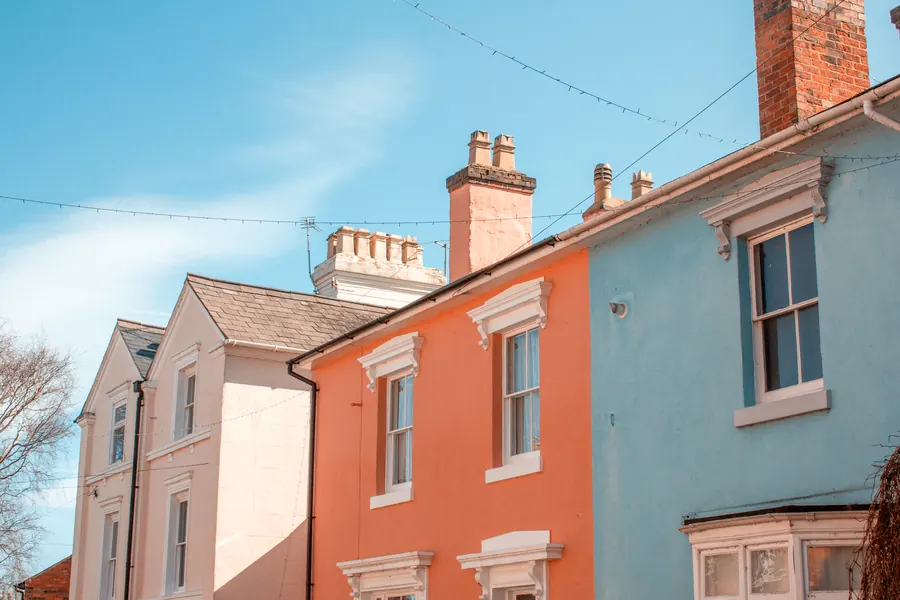
Many of the town’s older rows still carry cast iron, sometimes the original ogee section fixed straight into the brickwork with no timber fascia behind it at all. Cast iron can last a century if it’s painted and its joints are kept sealed. When it fails, it’s usually from the inside: rust works at the bottom of the channel where wet leaves have sat for years, and the bolted joints let go. Patching a single cracked length is often worth doing. Replacing a whole run like for like in cast iron is possible but costs a good deal more than uPVC, and the sections are heavy enough that handling them is a two-person job. Changing to plastic is usually allowed outside the conservation areas, but on a terrace with a shared front run, you need to agree it with the neighbours first. Half a run in cast iron and half in plastic, joined by an adaptor, is where leaks tend to start.
Signs your gutters or fascias are failing
Because Mansfield doesn’t get many heavy downpours, the evidence of a failing roofline tends to sit on the house for months before anyone links it to the gutter. These are the things to look for from the pavement or the garden.
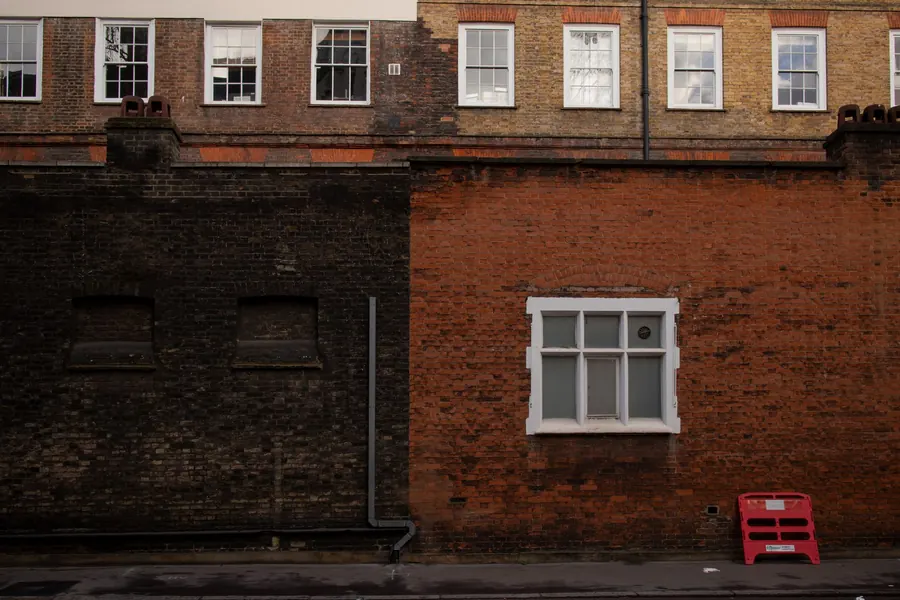
- Drips from one joint after the rain has stopped. The seals in plastic gutter unions harden and shrink with age. A single drip line on the path under the same spot every time it rains is a joint, not a blockage.
- Dark or green streaks on the brick under the gutter line, or a white tide mark of salts. Water is running down the face of the wall rather than into the gutter, which in time can find its way into the cavity or onto an internal wall.
- A run that sags, or water sitting in the middle of the gutter long after the rain has stopped. Either the brackets have dropped or the fascia behind them has softened.
- Paint blistering or flaking off the fascia along the gutter line. Water is coming through the board from behind.
- Soffit boards bowing, cracking or coming away, usually at the corners first.
- Ground that stays wet at the foot of a downpipe, or a stripe of moss growing down it. The downpipe or the gully at its foot is blocked or cracked.
None of these will bring the ceiling down this week. All of them get dearer the longer they’re left, because the cheap fix (a joint or a bracket) slowly turns into the expensive one (timber and rafter ends).
What a roofline replacement actually involves
A full fascia, soffit and gutter job on a semi usually takes two or three days. Most of that time goes on bits you’ll never see from the ground.
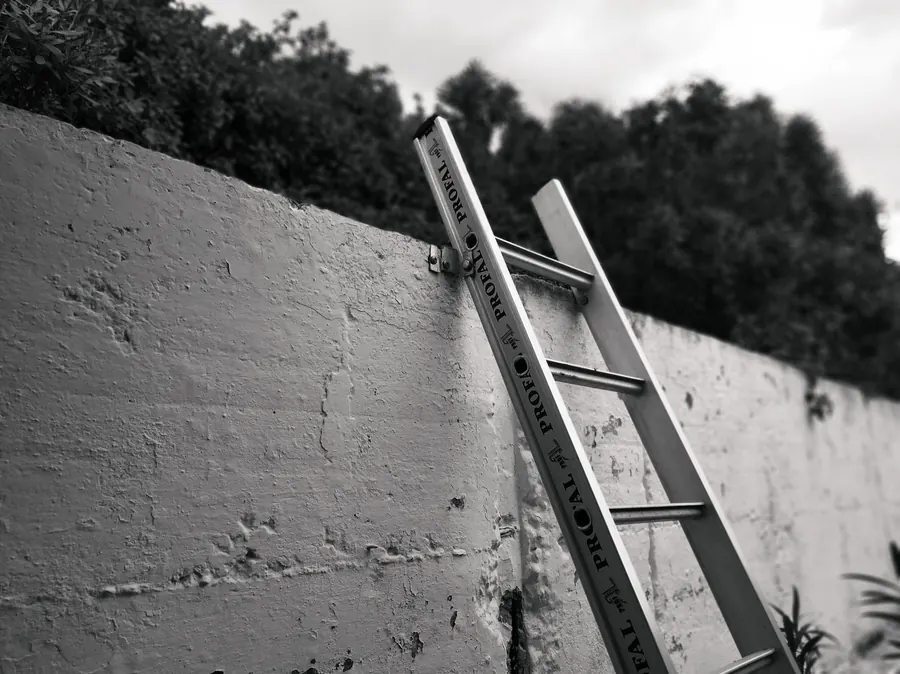
Start with access. A bungalow or a single-storey back extension can sometimes be done from ladders. A two-storey front usually needs a mobile tower or a scaffold, because the work runs along the whole eaves and has to be done safely at height for days, not minutes. A tower is cheaper where the ground is level and the runs are short. Fixed scaffold is the safer choice on longer runs, sloping drives and the stepped streets on the high side of town.
Next comes the bottom row of tiles. To take the old fascia off cleanly and fit the new one properly, the roofer normally lifts the bottom course of tiles or slates. On a roof covered in old concrete interlocking tiles, a few may crack as they come up, so a good quote allows for replacing them. On older slate terraces, any slates that break get swapped for matching seconds.
With that course up, the felt or membrane at the eaves is exposed. Old bitumen felt often sags into a trough behind the fascia, where it holds water and rots both the felt and the board. Current practice is to fit a rigid eaves protection tray (sometimes called a felt support tray) that carries the underlay neatly into the gutter. The trays are cheap. Leaving them out is one of the commonest reasons a new roofline fails early.
Then there’s ventilation. Soffits are usually the loft’s main air supply. The new soffit should be vented, or vents fitted over the fascia, so moisture from the house below can escape. If your loft already shows signs of damp, read our piece on loft condensation and ventilation before choosing boards.
Last, the gutters go back up. New brackets are set to a steady fall towards each outlet, joints sealed, downpipes connected and tested with a hose before anyone leaves.
Bats and nesting birds in Mansfield soffits
Gaps behind tired fascias are perfect nesting spots, and on the edge of Sherwood plenty of wildlife uses them. House sparrows and starlings are the ones you’ll notice, going in and out under the gutter in spring. Bats are quieter, and often the first sign is a scatter of small dark droppings on a windowsill or the patio.
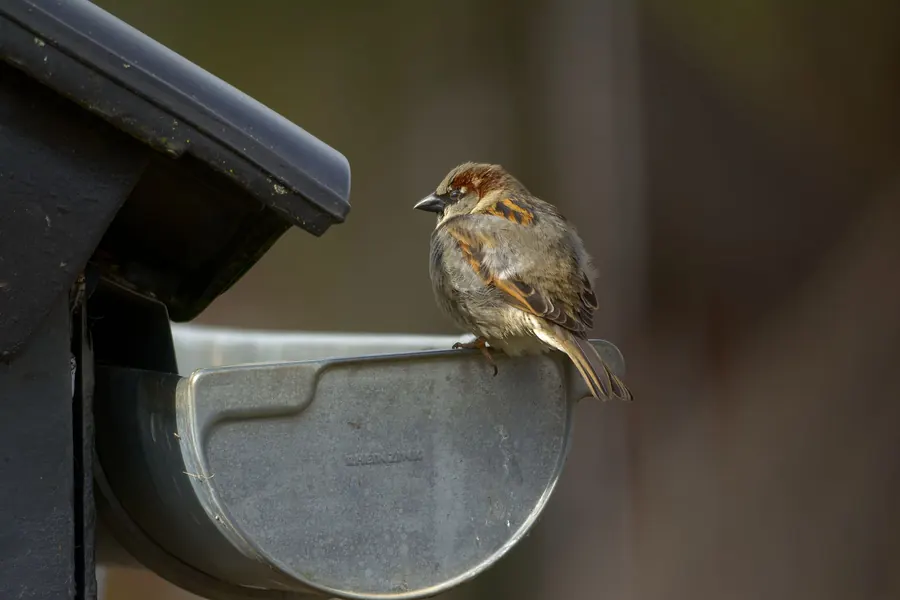
The law here is strict, and it applies to whoever does the work as well as to you. The government’s guidance on protecting wild birds and their nests makes it an offence to take, damage or destroy a nest while it’s being built or used, with an unlimited fine and up to six months in prison for each offence. In practice that means a roofline job on a house with active nests waits until the chicks have fledged. The simplest answer is to book roofline work for autumn or winter, then close the gaps before birds return in spring.
Bats get stronger protection still. Every bat species in England is a European protected species, and the government’s guidance on bats and roosts makes it illegal to disturb bats in a roost, block access to one, or damage or destroy a roost. A roost stays protected even when the bats are elsewhere. If you think bats use your eaves, call the National Bat Helpline, which gives free advice on behalf of Natural England, before any boards come off. Sometimes the job can go ahead with small changes, like leaving an access gap in the new soffit. Sometimes a survey and a Natural England licence come first. If a roofer suggests carrying on and saying nothing, find another roofer.
How Mansfield’s housing changes the job
The town grew in stages, and each one left its own kind of roofline. Knowing which kind you have tells you a lot about what a quote should include.
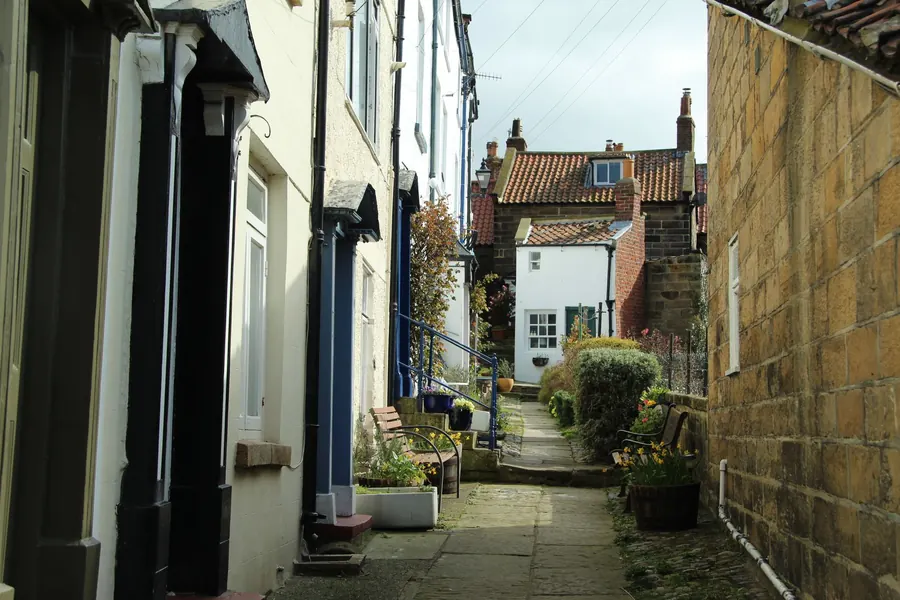
The oldest layer is the Victorian and Edwardian terraces and colliery rows, built as the pits at Crown Farm, Sherwood and Warsop Main pulled workers into the district. Forest Town, the Bolsover Colliery Company’s model village, went up between 1905 and 1911. Expect shallow eaves, narrow or no soffits, cast iron or old plastic on brackets driven into the brick, and gutter runs that cross several front doors. The questions are whose bit leaks, and whether to keep the cast iron.
Then the post-war council semis. Ladybrook began taking families in 1947, and Bull Farm, Bellamy Road and the estates out towards Rainworth and Warsop followed the same pattern: hipped or gabled concrete-tile roofs, deeper timber soffits, and gutters on three sides. Many were bought under Right to Buy, so the roofline is now the owner’s alone. Our post on ex-council and Right to Buy roofs covers who is responsible on a former council house. Rot along the deeper soffits is the usual job on these.
After that came the 1960s to 1990s estates. Oak Tree followed in 1976 and 1977, and the estates built over the next two decades often got uPVC during the 1980s and 1990s, or were built with it. That first generation of plastic is now 30 years old or more. It goes chalky, brittle and yellow, and the soffits were often fitted with little or no ventilation. Here the job is usually full replacement for the sake of the loft as much as the looks, and the timber underneath is often in better condition than you’d expect.
Whatever era your house is from, a proper survey should tell you in writing what the boards are made of, what’s behind them, whether wildlife is involved, and what each part of the job costs. That’s what we do on every roofline visit across Mansfield, Woodhouse, Forest Town and the surrounding villages.
Frequently asked questions
How much does it cost to replace fascias, soffits and gutters on a Mansfield semi?
A full roofline on a typical two-storey semi, meaning the old boards stripped off, the rafter ends checked, new uPVC fascia and vented soffit fitted and new guttering hung, usually comes to between £1,200 and £2,800. Where you land in that range depends on the length of the eaves, whether there are gables with bargeboards, how much rotten timber turns up behind the old boards, and whether the job needs a full scaffold or can be done from a tower. Gutters alone on the same house are more like £600 to £1,200. Get the scaffold, any rafter repairs and the disposal of old boards listed as separate lines so you can compare quotes properly.
Is it fine to have uPVC capping fitted over my old wooden fascias?
Only if the timber underneath is dry and sound all the way along, and someone has actually checked it by probing the boards and looking behind the gutter line. Capping sound wood is a legitimate, cheaper job. Capping wood that is already soft locks the decay into a dark space with no airflow, where it keeps spreading into the rafter ends while the plastic front still looks new. Within a few years the gutter brackets lose their grip and the whole thing has to come off anyway, so you end up paying for the job twice.
Can a roofer remove a bird's nest from my soffit or gutter?
Not while it is being built or used. Under wildlife law it is an offence to intentionally take, damage or destroy the nest of any wild bird while it is in use or under construction, and that includes house sparrows and starlings in a gap under the eaves. In practice, work that would disturb an active nest waits until the young have left, which usually means planning roofline jobs for outside the main nesting season of roughly March to August. Once a nest has been abandoned, the gap can be closed so the birds don't come back next spring.
What happens if a roofer finds bats behind my fascia boards?
The work stops. All bat species in England are protected, and it is illegal to disturb a bat in its roost or to damage or destroy a roost, even when the bats are away. If bats or their droppings are found, or you already know they use the eaves, the National Bat Helpline gives free advice on behalf of Natural England and can usually arrange for a volunteer to visit. Some jobs can carry on with changes such as leaving access gaps or changing the timing. Others need a survey and a licence from Natural England first. Carrying on regardless is a criminal offence for whoever does the work.
Reading done - roof still needs looking at?
Free surveys across Mansfield and the towns around it, with a fixed written quote to follow.