
2 September 2026
You Insulated The Loft And Now It's Wet: Condensation In Mansfield Roofs
Damp rafters and black mould in a loft are rarely a leak. How insulation, blocked eaves and household moisture combine in Mansfield homes - and the fix.
There is a specific complaint that arrives from Mansfield homeowners every winter, and it almost never turns out to be the roof failing. The loft hatch comes off in December, and the underside of the roof is wet. Sometimes there is frost on the nail points. Sometimes the insulation has gone dark and heavy at the edges, or there is black speckling across the felt and along the rafters. The instinct is to ring a roofer about a leak, and the instinct is usually wrong.
Roughly a third of the loft damp we are called out to in and around Mansfield has nothing to do with water getting in. It is water that was already inside the house, rising into a roof space that has been made colder by better insulation and cannot breathe well enough to get rid of it. Given that a properly insulated loft now means about 270mm of material where houses built before the 1980s had almost none, and that a household of four generates several litres of moisture a day just by living, it is a problem the whole town’s older stock has been quietly engineered into.
Why insulating the loft made the roof colder
A roof space is warmed from below. Before insulation, heat leaking out of the bedrooms passed through the ceiling and kept the rafters comparatively warm and dry - wasteful, expensive, but not damp. Insulate the ceiling and that heat stays where you paid for it, which is the whole point of doing it. The consequence upstairs is a roof void sitting at close to outside temperature on a February night. Nothing in that sequence puts a hole in the covering, which is why so few of these calls end up as the roof leak repairs people ring us about.
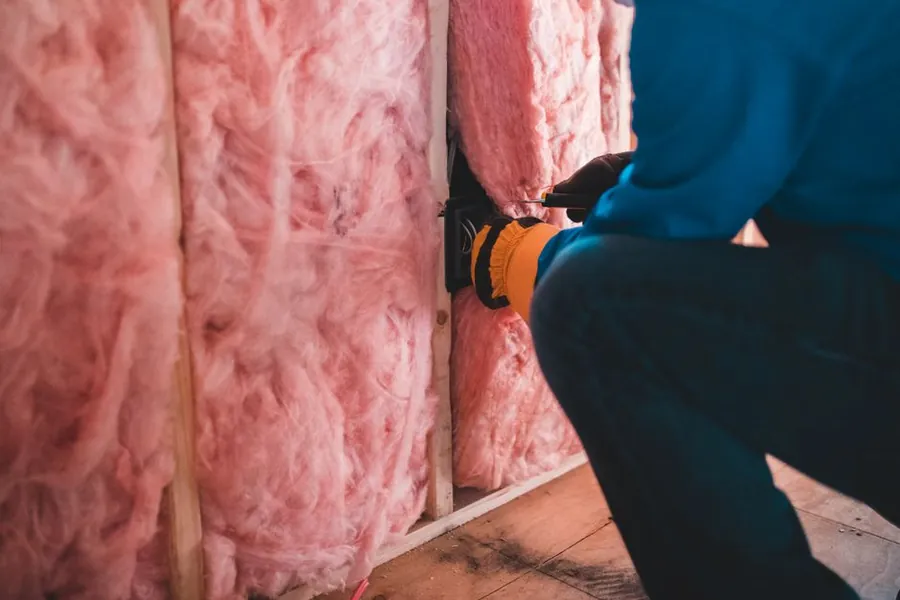
Cold surfaces are where airborne moisture condenses. So the same upgrade that cut the heating bill turned the underside of the felt into the coldest surface in the building, and any warm damp air that finds its way up there now has somewhere to deposit itself.
Mansfield has this in concentrated form. The ex-colliery and council-built housing across Forest Town, Pleasley, Rainworth and the estates ringing the town went through successive rounds of grant-funded insulation, layered onto roofs built in an era when nobody ventilated a loft on purpose. The building regulations covering ventilation, Approved Document F, sets the standard now. It did not exist when most of these roofs went on.
Condensation or a leak? The tests that separate them
You can usually settle this from inside the loft with a torch, and none of it needs a ladder against the gutter.
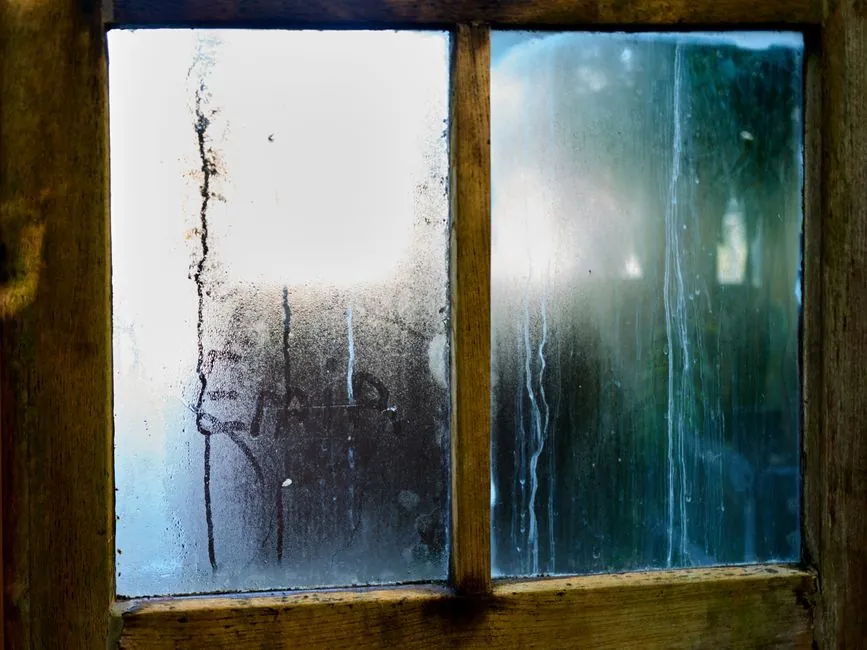
Start with the weather. Rain-driven leaks follow rain. Condensation follows temperature, so it peaks on clear cold nights and will happily show up in the middle of a dry frosty week when nothing has fallen out of the sky for days.
Then look at how the damp is spread. Leaks are local, so damp confined to a metre around a chimney, a valley or a roof window is water coming in. Condensation lies thinly over a whole slope, and it is nearly always worse on the north-facing side, which never gets any sun on it.
The nail points are the giveaway. Where the felt is pierced by nails and where tile fixings poke through, condensation puts beads of water or frost on the cold metal while the felt between stays dry. A leak has no reason to pick out the ironmongery like that.
Last, lift a corner of the insulation at the eaves. Damp matted material at the edges with dry material in the middle means air is carrying moisture about, not that there is a hole above it. Our guide to reading the age and condition of a Mansfield roof covers the other end of that judgement, when a covering really is at the end of its life.
Where the air is supposed to go
A cold pitched roof is designed to be windy. Air enters at the eaves, sweeps up under the felt, and leaves at the ridge or through high-level vents, carrying moisture out with it before it can condense.

The working figure is a continuous gap equivalent to a 10mm slot running the full length of both eaves on a normal pitched roof, widening to 25mm on shallow pitches and on flat roof construction, with additional ventilation at high level on many designs. It is not much air. In a great many Mansfield lofts it is missing altogether.
The two ways it goes missing are both mundane. Insulation gets pushed right out to the wall plate and stuffs the gap solid, which is what happens when someone is being thorough and topping up to the full depth. Or the soffits get replaced with a solid uPVC board, and the old draughty gaps that were doing the job by accident get sealed up in the name of a tidy finish. Either way the airflow stops and the roof starts sweating.
What is over your rafters matters too
Look up at the underside of your roof and you will see one of two things. Older Mansfield roofs, and anything re-covered before roughly the mid-1990s, have bitumen sarking felt - black, heavy, non-breathing, and originally supple. Newer work has a breathable membrane, a lighter grey fabric that lets water vapour pass through it while keeping rain out.
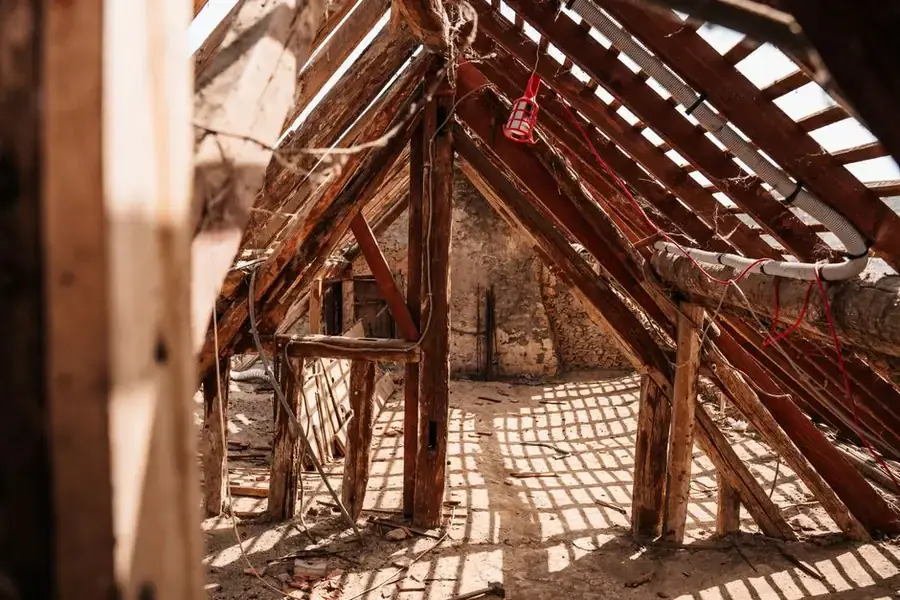
Bitumen felt was never intended to handle moisture from inside. It stops vapour dead, so everything the house produces has to leave via the ventilation route or condense on the felt itself. It also goes brittle with age and tears along the rafter lines, which is a separate problem in its own right.
Breathable membranes remove some of that risk, but they are not a licence to seal a loft up. Plenty of roofs have been re-covered in breathable membrane and still condense, because the membrane was laid over an existing sealed-up eaves detail, or because the moisture load from below was extreme. The membrane helps. Airflow is still the mechanism that does the work.
The moisture is coming from your house
Ventilation deals with moisture. Reducing the moisture deals with it faster and cheaper.

Ordinary living produces a lot of water vapour - showering, cooking, washing, drying clothes indoors and breathing. Most of it should leave through fans and windows. In houses with loft damp, a surprising share of it is being posted directly into the roof space instead, through a handful of routes:
A bathroom or kitchen extractor that terminates in the loft rather than outside, or whose flexible duct has slipped off its outlet. This is the single most common finding and the cheapest to correct.
An unsealed loft hatch, which acts as a chimney for warm damp air whenever the landing is warmer than the void above.
Gaps around downlighters, soil pipes, and where wiring passes through the ceiling. Individually trivial, collectively a substantial air path.
Drying washing on radiators through a wet Nottinghamshire winter, which is understandable and expensive in more ways than one.
The government’s guidance on the health risks of damp and mould in homes is written for landlords but is the clearest plain-English account of how this cycle works in any house.
Black mould on the timbers: what it actually tells you
Black speckling on rafters and on the underside of the felt is a record of how long the space has been damp. It is not, by itself, a structural problem, and treating it without changing anything just restarts the clock.
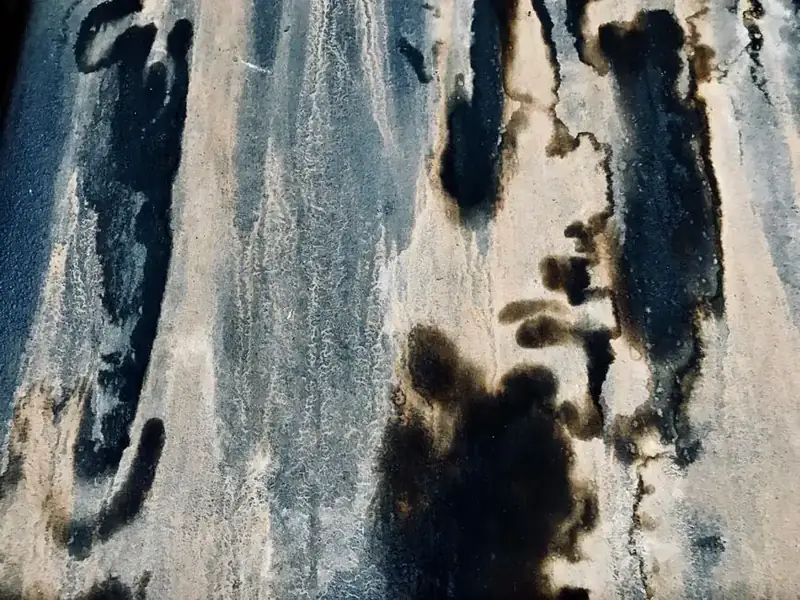
The thing to check is the timber underneath. Press a screwdriver into a rafter, and particularly into the wall plate where the rafter feet sit, since that is the coldest, dampest, least ventilated point in the roof. Sound timber resists. If the blade sinks in, the damp has been going on long enough to have started wet rot, and that is a repair rather than a housekeeping job.
Tenants should note that persistent damp and mould in a rented home is a landlord repair issue, and Citizens Advice sets out the repair obligations and how to escalate if nothing happens.
Fixing it, in the right order
The order matters, because doing the expensive things first often means doing them twice.
First, stop the moisture getting in. Trace every extractor duct to its outside termination and fix any that stop short. Seal and insulate the loft hatch. Fill the gaps around pipes and cables at ceiling level.
Second, restore the airflow at the eaves. Pull the insulation back off the wall plate and fit ventilation trays between the rafters so it cannot be pushed back. Where the soffits are sealed, add soffit vents or over-fascia vents. It is normally a few hundred pounds of work, and in most houses it is the end of the story.
Third, add high-level ventilation if the roof still cannot clear itself - tile vents on the upper slope, or a dry ridge system with ventilation built in, which many Mansfield estate roofs need anyway once the old mortar bedding has failed. Our breakdown of roof repair costs by Mansfield house type puts numbers against that ridge and verge work.
Fourth, and only if the timbers have suffered, deal with the rot and consider whether an ageing bitumen felt is now due for replacement as part of a wider re-cover.
What we would avoid is the sequence that starts with a full re-roof on the assumption that the covering has failed. Plenty of sound Mansfield roofs have been replaced because a loft was wet, and a fair number of them were wet again the following winter.
A short winter checklist
Once a year, ideally in late autumn, put your head through the hatch with a torch. Check that daylight is visible along both eaves. Check that the insulation is level and dry rather than matted at the edges. Follow the bathroom duct with your eyes and confirm it leaves the building. Look at the nail points on a cold morning. Four minutes of looking, once a year, catches this before it becomes rot.

If the loft is already wet and you would rather have someone else work out why, arrange a free roof and loft inspection in Mansfield and we will tell you whether you are dealing with weather or with your own kettle.
Frequently asked questions
How do I know if it is condensation and not a roof leak?
Look at where the water is and when it appears. Condensation spreads itself evenly - a faint dampness across the underside of the felt over a whole slope, frost on nail points on a cold morning, drips that appear during a mild spell rather than during rain. A leak concentrates: one wet rafter, a stained line running down a timber, a patch directly under a valley, a chimney or a roof window, and it worsens when it rains and dries when it does not. If you find damp on a bright cold January morning with no rain for a week, you are looking at condensation.
Did adding loft insulation cause the damp in my Mansfield loft?
It did not cause it, but it very often reveals it. Insulation keeps heat in the house, which makes the roof space above it genuinely colder, and cold surfaces are where moist air gives up its water. Homes across Mansfield's estates and colliery stock had insulation topped up under grant schemes on roofs that were never ventilated for it, and the two changes together turn a previously tolerable roof space into a condensing one. The fault is not the insulation, it is the missing airflow above it and the moisture rising from below.
How much ventilation does a loft actually need?
The working standard for a typical pitched roof is a continuous ventilation gap equivalent to a 10mm slot along both eaves, increased to 25mm on shallow pitches and on flat or nearly flat roofs, with additional high-level ventilation at the ridge on many roofs. That air path only works if it is clear, so insulation must not be pushed hard into the eaves and must not block the gap between the felt and the wall plate. Ventilation trays, fitted between the rafters at the eaves, are the cheap component that keeps that route open.
Is black mould on loft timbers dangerous, and does it need treating?
Surface mould on rafters and felt is a symptom rather than a structural emergency, and killing the mould without changing the conditions simply resets a clock. Treat the cause first: restore the airflow, stop moist air entering from below, and only then clean up. What matters structurally is how long the timbers have been wet - persistently damp softwood eventually invites wet rot, which is a repair job rather than a cleaning one. If a screwdriver pushes easily into a rafter or a wall plate, that has gone past condensation management.
Why does my bathroom fan make the loft damp?
Because in a great many houses it does not actually go outside. Fans are often ducted up through the ceiling and then left venting into the roof space, or connected to a duct that has come apart at a joint. Every shower then dumps warm wet air straight into the coldest part of the house. It is one of the most common causes of loft damp we find, one of the cheapest to fix, and it is worth checking before spending anything on the roof itself: follow the duct from the fan and confirm it terminates at a tile vent, a soffit outlet or a wall grille.
Reading done - roof still needs looking at?
Free surveys across Mansfield and the towns around it, with a fixed written quote to follow.