
21 September 2026
Moss And Roof Cleaning In Mansfield: What's Worth Doing, What Wrecks Tiles
Mansfield sits in one of England's drier corners, so most roofs here need no moss treatment. What's worth paying for, what damages tiles, and real prices.
Someone will knock this autumn and tell you your roof needs treating. Before you agree, one number is worth having in your head. The Met Office climate station nearest Mansfield, at Watnall just south of us, records 716mm of rain a year against a UK average of 1,163mm, and it falls across 126 wet days rather than 159. This corner of Nottinghamshire is one of the drier places in the country, which is why the standard moss pitch lands softer here than the person delivering it would like. We do clean moss off Mansfield roofs when there is a reason to. Plenty of weeks we look at a green north slope, tell the owner it is doing nothing, clear the gutters for a fraction of what they were quoted and leave the rest alone. This post is about telling those two situations apart.
Watch: when a roof here is worth cleaning, and when clearing the gutters will do.
Mansfield does not have the climate the pitch assumes
The moss-treatment industry grew up on the back of Britain’s wet west. In the Lakes, the Pennine fringe and much of Wales, roofs sit damp for weeks at a stretch and moss behaves like a crop. Sell that same script in Nottinghamshire and the arithmetic quietly falls apart. The Met Office long-term averages for Watnall put the local figure at 716mm a year, against 870mm for England as a whole and 1,163mm across the UK. Our wettest month, October, brings 72mm. Our driest, March, brings 46mm. There is no soaking season here, just a fairly even trickle.
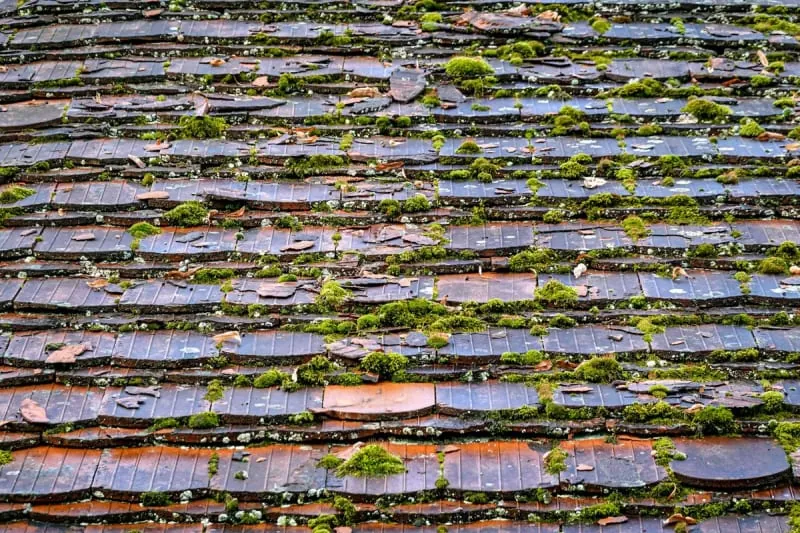
Moss needs a surface that stays wet, not one that merely gets wet. That is the whole difference. A south or west-facing slope in Mansfield Woodhouse dries within hours of a shower for most of the year, and the moss that tries to establish there dies back on its own every summer. We see the same call repeatedly: a homeowner told the whole roof was “at risk” has a faint green film on one elevation and nothing on the other three.
Moss does matter sometimes, and the rest of this post covers when. The default position for most houses round here, though, should be curiosity rather than alarm. If you want a sense of what really goes wrong on roofs in this district, our page on the roof faults we get called out to most is a more useful list than anything a passing van will hand you.
Where moss does get a grip around Mansfield
Rainfall totals are only one input, and not the one that decides most individual roofs. Shade matters more. A slope that never sees direct sun holds moisture long after the rest of the roof has dried out, which is why north-facing elevations on the terraces around the town centre are reliably greener than their southern twins on the same street.
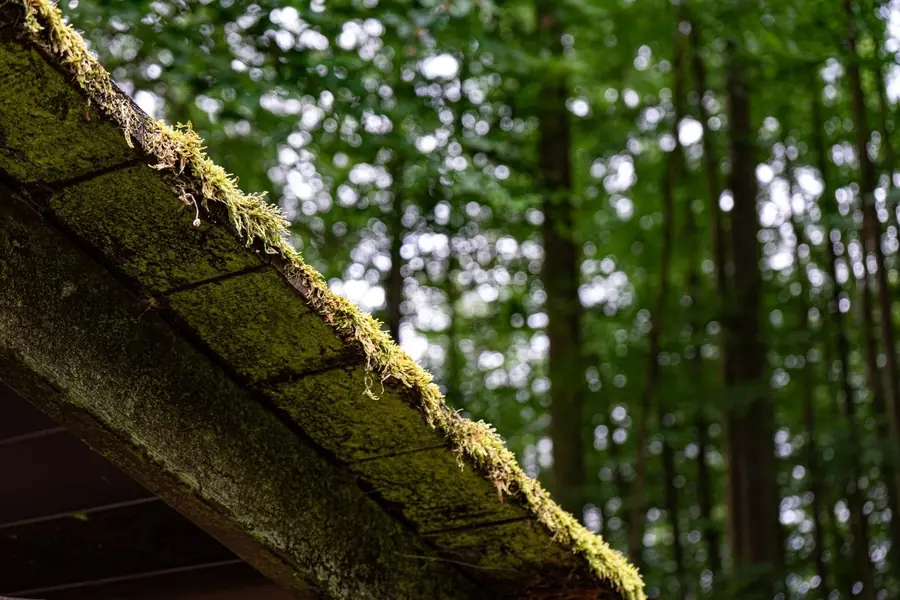
Then there are trees, and this is where Mansfield’s geography stops arguing against moss and starts arguing for it. We sit on the edge of the old Sherwood woodland. Properties backing onto mature oak, sycamore and pine - the fringes of Berry Hill, the plots along Forest Town’s older lanes, the bungalows tucked behind big garden trees - take it from three directions at once. The canopy blocks the drying sun, it keeps dripping long after the rain stops, and it drops leaf litter that rots down into a seedbed in the tile flutes. A house forty yards away with an open aspect can have a spotless roof while its neighbour under the trees is furred green.
Pitch finishes the picture. Concrete interlocking tiles on a shallow postwar roof shed water slowly and hold debris, so the 1950s and 1960s stock on the old colliery estates greens up faster than a steep Victorian slate a mile away. Shade, trees and a lazy pitch together, and you have a roof worth a plan. None of the three, and someone is still quoting you, and you have learned something about the someone.
The moss that actually costs you money
One distinction governs the whole decision. Moss on the tile faces is nearly always cosmetic. Moss in the drainage is not. A slope with green cushions between the courses looks neglected and changes nothing about how the roof performs, but the same moss, washed down into the gutter over a winter, is a different problem with a bill attached.
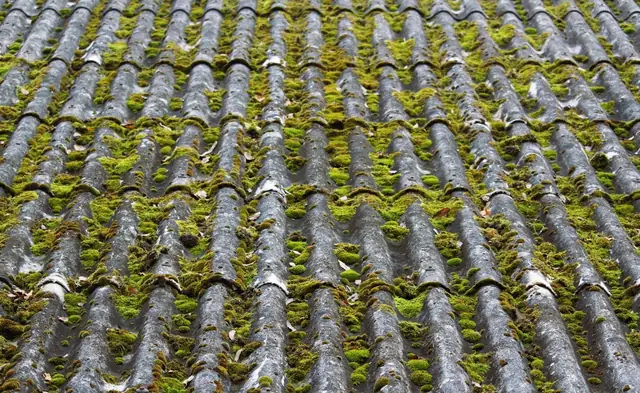
Blocked gutters are where the damage happens. Water that cannot leave the roof runs over the back of the gutter, down the wall and into the fascia timber, and replacing rotten fascia and soffit across a semi runs into four figures. Clearing the gutter costs £80 to £150. Our guttering and rainwater goods work is full of jobs that started as a moss problem nobody connected to the stain spreading down the brickwork. Valleys are the same story with more at stake, because a valley packed with moss and leaf mulch pushes water sideways under the tiles, and that one does put water in a bedroom ceiling.
The other mechanism is slower and only applies to older concrete. Moss holds a reservoir of water against a tile that has already gone porous with age, and when that saturated tile freezes, expanding ice works away at the surface. We get a decent run of frosts most winters, so it happens. Note what it is, though: an accelerant on a covering already near the end of a 50 to 60 year life, not a cause of failure on a sound one. On a twenty-year-old roof it is irrelevant. On a sixty-year-old roof the tiles were going anyway, and scraping them will not buy them back.
Why the jet wash is the warning sign
A concrete interlocking tile is not a solid lump of coloured concrete. It is a fairly absorbent body with a thin factory-applied surface on top, a fine mineral coating that gives the tile its colour and most of its resistance to soaking up water. A few tenths of a millimetre thick. That coating is the only thing standing between the weather and the porous material underneath, and it is the one part of the roof a pressure washer is guaranteed to remove.
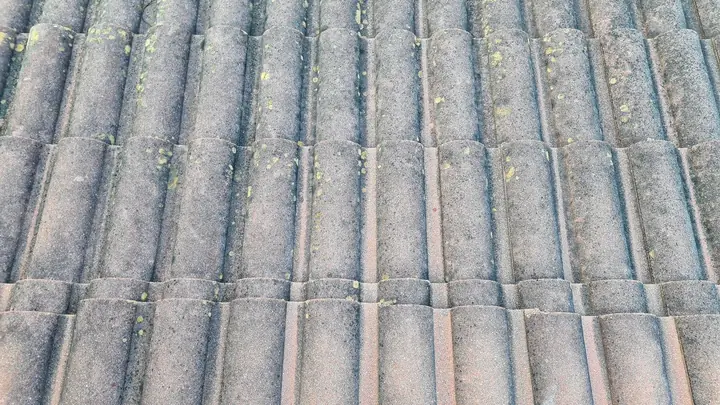
It comes off in whatever pattern the operator swung the lance in. The tile looks startlingly clean the day it is done, which is why the technique sells so well, and then it drinks water for the rest of its shortened life. Jet washed roofs are easy to spot around the estates a few years on, because they weather in stripes and they go green again faster than they ever did before. Bare concrete is a better home for moss than the coating ever was.
There is a second problem nobody raises on the doorstep. A lance at working pressure drives water uphill, under the tile laps and past the nails and clips holding the covering down, and on a roof with tired mortar it shifts bedding that was doing a job. We have been called out to leaks that started the week a roof was cleaned, by a customer who could not see how making something cleaner had made it wetter. Treat the jet wash as a diagnostic, then. A firm that reaches for one first is optimising for how the job looks from the pavement.
What an honest moss job actually involves
A hand clean is unglamorous and slow. Someone gets on the roof, works down it with a scraper, and lifts the moss off the tiles rather than blasting it off them. Quieter than a jet wash, and longer. The roof looks less dramatic afterwards, because a scraped tile keeps the weathering it earned. The job then finishes with the part that mattered all along: gutters, valleys and the bottom two courses cleared of everything that came down.
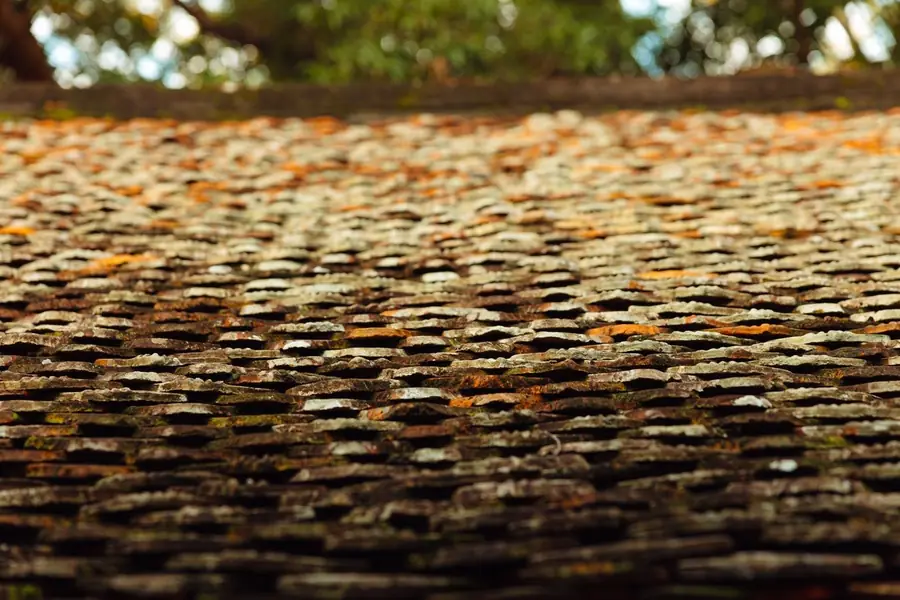
Biocide is the sensible follow-up, as long as you understand the timescale. It goes on a scraped roof and is then left alone. It kills growth slowly, over roughly six to twelve months, while the weather carries the dead material away. Nobody sprays a roof and watches it turn clean. Lichen, the flat orange and grey crusts, is slower still and often never fully leaves, because it bonds hard into the tile face and removing it is harmless vanity. So if a salesman promises a roof like new by next week, he is either using something aggressive or describing a jet wash by another name.
Access is the part of the price people never anticipate, and it is usually the biggest single line. Roof work is fall-from-height work, which is why the HSE’s guidance on working at height exists and why a tower or scaffold appears on quotes for houses where a ladder will not do it safely. It also explains why we would rather combine a moss clean with anything else the roof needs in one visit. Paying for the access twice is the most avoidable money in roofing.
Moss-proofing, copper and the coating pitch
Moss arrives on the wind as spores. That one fact kills most of what gets sold as prevention, because nothing you put on a roof stops spores landing on it. A treatment can make the surface less hospitable for a while. The truthful version of that promise is measured in a few years, not for ever.
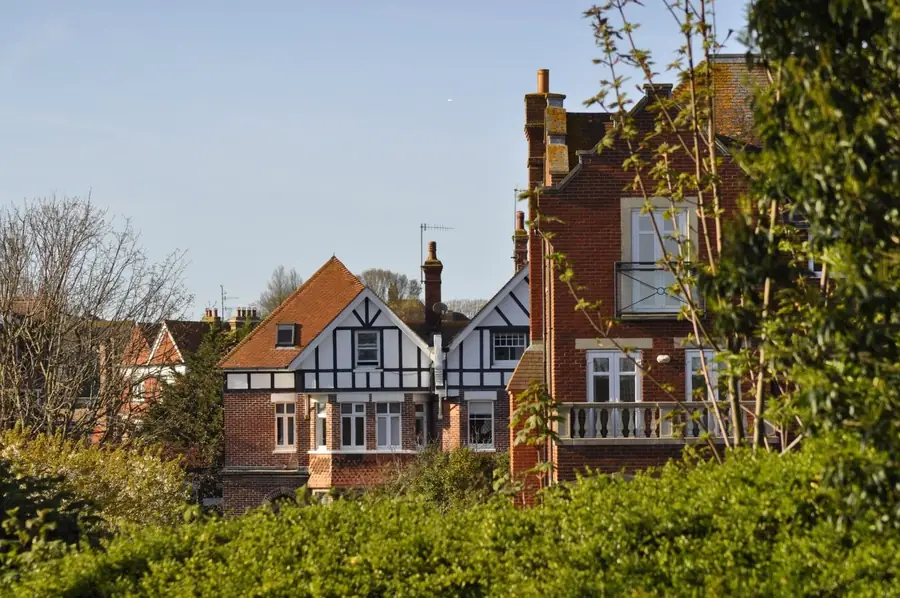
Copper strips at the ridge are the old trick with chemistry behind it. Rain picks up traces of copper as it runs over the strip and carries them down the slope, leaving water that new growth does not much like. The effect is strongest on the upper third of the roof and fades out lower down, and it works over years rather than weeks. As a cheap extra while someone is already up there, fine. As a headline product, oversold.
Sprayed coatings are the pitch to watch. They are marketed as sealing, waterproofing and moss-proofing a roof in one go, usually at £3,000 to £6,000, and on a tiled roof in this part of the country they answer a question most houses have not asked. They also paint over the evidence. A surveyor looking at a coated roof during a sale cannot see the condition of the tiles beneath it, and buyers’ solicitors ask awkward questions about that. Before agreeing to anything of the sort, check the firm against a scheme with a complaints route, such as TrustMark’s register of vetted tradespeople, and weigh the coating price against what a re-cover would cost if the roof really is that far gone.
What it should cost here, and what the door price is
Numbers, for a standard Mansfield semi. A hand scrape with the gutters and valleys cleared behind it, where the work can be done safely from a ladder and roof ladder, is £180 to £400. Add roughly £300 to £700 if a tower or scaffold is needed for a rear elevation or an awkward pitch. A biocide spray afterwards is £150 to £350. Gutters on their own, which is all a lot of houses round here need, is £80 to £150. That is the whole menu.
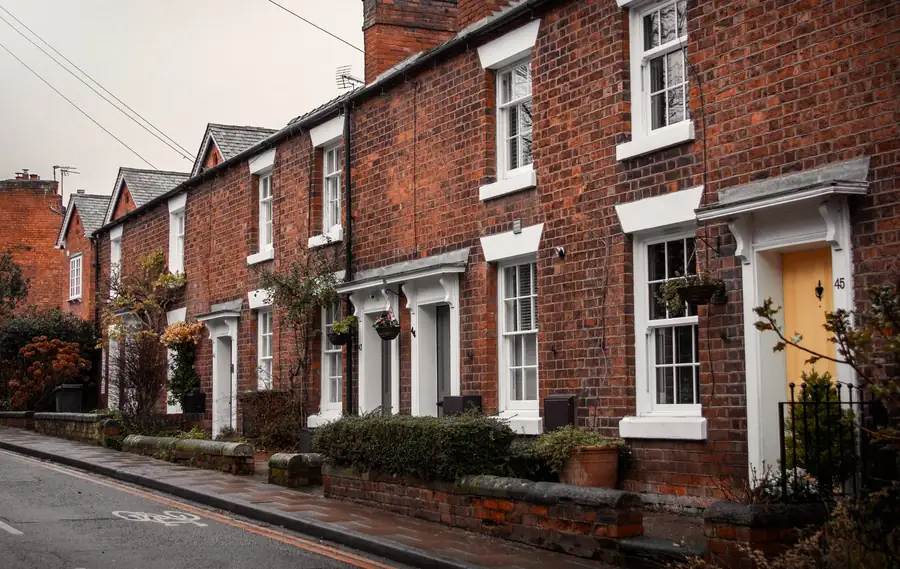
The doorstep version of the same work is usually quoted as a package - clean, treat and seal - somewhere between £2,500 and £5,000, and it arrives with a photograph of somebody’s rotten timber and a price that expires at teatime. The work described is not five times bigger than the work above. The margin is. This is the same crew and the same method we wrote about in our piece on the roofing cold callers who work Mansfield’s estates, and moss is their favourite opener precisely because it is visible from the pavement and impossible for the householder to check.
The test is short. Ask what the moss is doing to your roof, and expect an answer about gutters, valleys or the age of the tiles rather than an answer about appearance. Ask whether a jet wash is going anywhere near it. Ask what the access costs on its own line. Any firm worth using answers all three without hesitating, and a fair share of the time the answer is that your roof is fine and you should keep your money.
If you want a straight opinion on whether yours needs cleaning at all, we will go up, photograph what is there and tell you - including when the honest answer is nothing.
Get a free roof check in Mansfield before you pay anyone to clean it
Frequently asked questions
Does moss on a Mansfield roof actually cause leaks?
On its own, almost never. Water gets into a house through a gap - a slipped tile, a failed flashing, a split valley, a hole in the felt - and moss does not create any of those. What moss can do is make an existing weakness wetter for longer, and fill the gutters and valleys that are supposed to carry water away. So if you have a damp patch and a green roof, the damp patch has its own separate cause, and finding that cause is the job. Treating the moss instead would leave the leak exactly where it is.
Should I let a roofer pressure wash my concrete tiles?
No. Concrete interlocking tiles, which cover most of Mansfield's postwar and ex-council housing, carry a thin factory-applied coloured surface over a much more absorbent body. A lance at working pressure removes that surface along with the moss, and the tile underneath soaks up water far more readily afterwards, which is the opposite of what you were sold. It also forces water up under the laps and past fixings. A roofer who leads with a jet wash is telling you something about how they work, and the answer is worth acting on.
How much should roof moss removal cost in Mansfield?
For a standard two-storey semi where the work can be done safely off a ladder and roof ladder, a hand scrape with the gutters and valleys cleared behind it is usually £180 to £400. If the pitch, height or an awkward rear elevation means a tower or scaffold, add roughly £300 to £700 for the access on its own. A biocide spray afterwards runs another £150 to £350. A quote in the thousands for a house of that size is not a bigger clean, it is a bigger margin.
Do roof coatings stop moss coming back?
There is no coating that permanently stops moss, because moss lands as airborne spores and will settle on any damp surface, painted or not. Sprayed coatings are sold at £3,000 to £6,000 on the promise of sealing and moss-proofing a roof, and they can also hide the ageing underneath and create questions during a sale or a survey. If a roof has reached the point where a coating is being pitched at it, the honest comparison is that money against the cost of the re-cover it may genuinely need.
Reading done - roof still needs looking at?
Free surveys across Mansfield and the towns around it, with a fixed written quote to follow.