
22 October 2026
Roofers In Hucknall And Ravenshead: Terraces, Bungalows And The Ashfield-Gedling Split
Roof repairs in Hucknall and Ravenshead: town-centre slate, pit-era terraces, new-builds and 1960s bungalows, with typical faults, prices and which council to ask.
Hucknall and Ravenshead share a postcode district, NG15, and not much else. One is a town of about 32,000 people built on coal and framework knitting, with a Grade II* church in its market place and terraced streets running off it. The other is a village of about 5,900 that barely existed before the 1950s and spreads out under the trees in detached houses and bungalows. They’re less than four miles apart, they answer to different councils for planning, and a roofer called to one is usually looking at a completely different kind of roof from the other. Permission first, because it trips people up, then the roofs themselves.
Roofers in Hucknall and Ravenshead: two planning councils, one building control office
Planning splits along the old district lines. Hucknall is in Ashfield, which took over when Hucknall Urban District Council was abolished in 1974. Ravenshead is in Gedling Borough. Before 1987, though, most of what is now Ravenshead parish belonged to Blidworth parish in Newark and Sherwood district. If you’re tracing the planning history of an older extension or garage, the original consent may have been issued by Newark and Sherwood rather than Gedling.
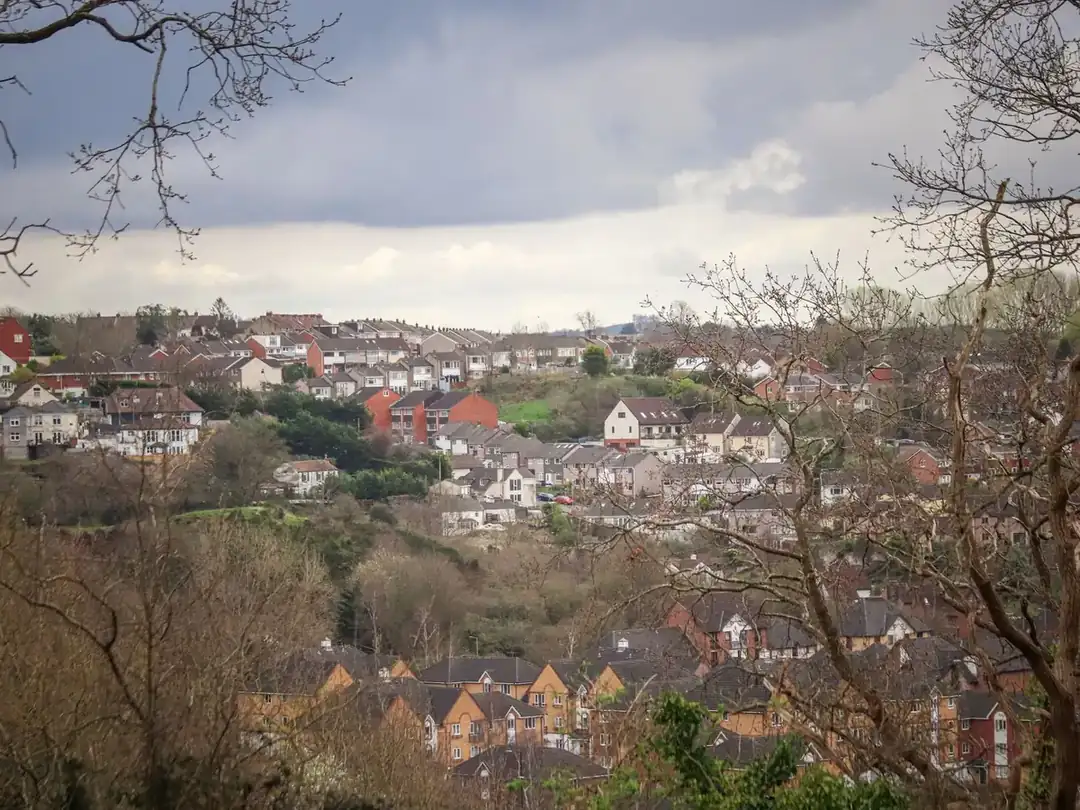
The boundary also cuts across the edge of Hucknall. Linby and Papplewick, both with NG15 8 addresses, are in Gedling, and both are conservation areas. The Top Wighay Farm land on the northern edge of town, where new housing is planned, is in Gedling too. A house on the Hucknall side of that line goes to Ashfield. A cottage in Papplewick goes to Gedling, and to a conservation officer if you want to change its roof.
Building regulations are simpler. Erewash Borough Council already processes building control applications for Ashfield, and Gedling’s building control page confirms that its service moved to the Erewash and West Nottinghamshire Building Consultancy on 1 June 2026. For a re-roof in either town the paperwork ends up with the same people. More often there’s no paperwork at all, because a roofer registered with a competent person scheme can self-certify the job. A small repair needs neither. A strip and re-cover usually needs one or the other, and our roof replacement quotes say which.
Hucknall town centre: chapels, Byron’s church and a conservation area since 2019
Ashfield designated the Hucknall Town Centre Conservation Area on 20 March 2019. It takes in Baker Street, Ogle Street, High Street, West Street, Vine Terrace and Duke Street, and the council named the church of St Mary Magdalene, the town’s nonconformist chapels, the Free Library and a former 1930s cinema on High Street among the buildings that give it its character. The church is Grade II* listed. Lord Byron is buried there, and his daughter Ada Lovelace was laid beside him in 1852.
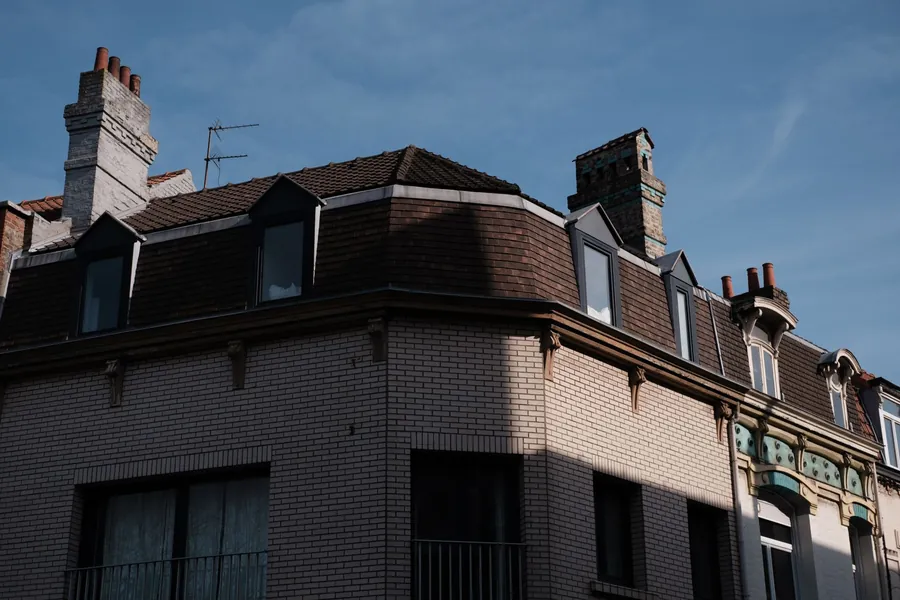
The roofs in that area are mostly Victorian and Edwardian: natural slate, lead valleys, tall stacks, and on the shops a parapet at the front with a gutter hidden behind it. Those hidden parapet gutters cause more damp in town-centre buildings than anything else we see. They fill with silt and leaves, nobody can see them from the street, and the first sign is a stain on an upstairs ceiling, usually well away from the gutter itself.
Ashfield publishes a map of the Hucknall town centre conservation area boundary, and it’s worth checking before you agree to anything that changes how a roof looks. Patching slate with slate, renewing lead in the same place or relining a parapet gutter is fine. Swapping slate for concrete tiles on a frontage, adding rooflights facing the street or taking a chimney down to the ridge are the jobs to discuss with the council first. Shops and flats don’t get the permitted development rights a house does, so the bar is lower than many owners expect.
Hucknall’s pit-era terraces and their back additions
Coal made modern Hucknall. The Hucknall Colliery Company sank its first shaft off Watnall Road in 1861 and a second off Portland Road in 1866. The first pit closed in 1943, the second not until 1986. Most of the older brick terraces around the centre follow the same Victorian and Edwardian pattern: two storeys at the front, a narrower back addition behind, and a chimney stack shared with next door.
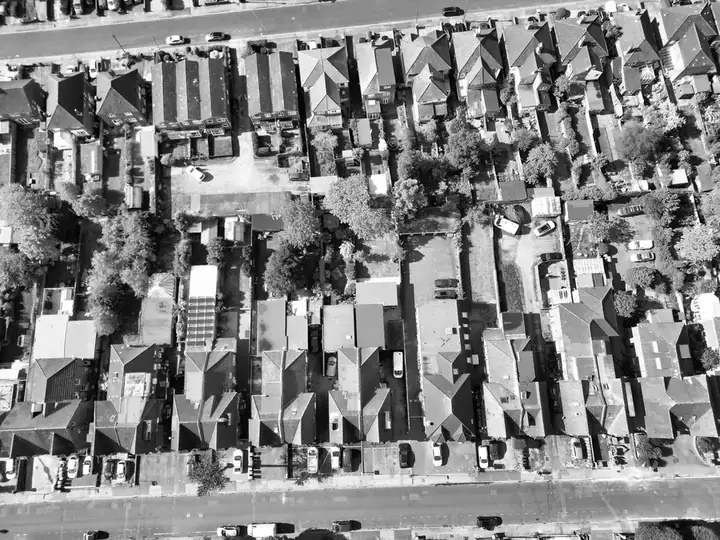
The back addition is where we spend most of our time. Its roof meets the main rear wall in a line of lead, either a stepped flashing or soakers under the slates, and after a century of movement that joint opens. Water then runs down the inside of the wall into the kitchen or bathroom, and owners assume the main roof is leaking. Check the junction first. Fixing it usually costs a few hundred pounds, which is a lot less than the new roof some owners are quoted.
The other common problem is weight. Plenty of these terraces were stripped of their Welsh slate decades ago and re-covered in concrete interlocking tiles, which are considerably heavier, on rafters sized for slate. Look along the ridge from across the street. A dip in the middle, or a roof that sags between the party walls, usually means the timbers are struggling. Shared stacks are their own issue: a leaning or leaking stack usually needs both neighbours to agree, a problem we covered in more detail in our guide to roofers in Warsop, Shirebrook and Clipstone, where the terraces share the same layout.
Harrier Park and Hucknall’s newer estates
Hucknall’s airfield opened in 1916, and Rolls-Royce used it for flight testing from 1927. The old Rolls-Royce site is now Harrier Park, a mixed development by Muse with up to around 900 homes planned and housebuilders including Persimmon and Harron building out parcels of it. Add the postwar council and private estates that pushed the town out west and north, and a fair share of Hucknall’s roofs are newer than the town centre would have you guess.
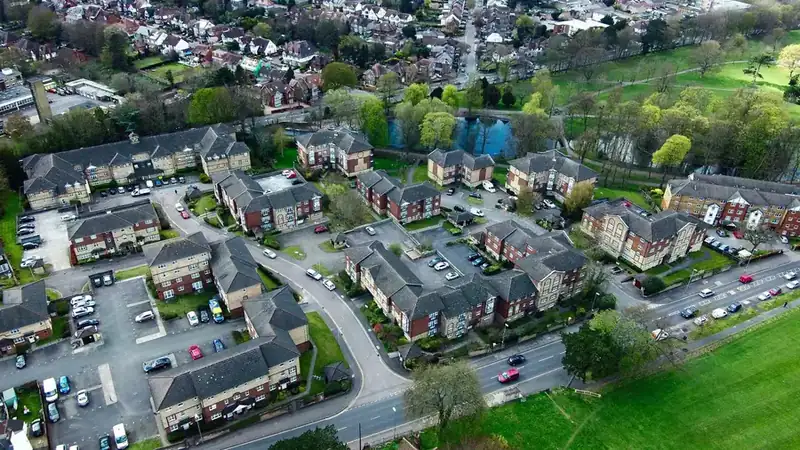
New-build roofs fail in their own ways. Dry verge caps and dry ridge units are clipped or screwed in place rather than bedded in mortar, and a badly fixed one can lift in the first decent gale. Tile clips get missed. Valley troughs sometimes aren’t sealed where they meet the gutter. None of that is a big job, but if your house is less than two years old the builder normally has to put it right, and most new homes carry a structural warranty for ten years. Ring the developer’s customer care line before you pay anyone, us included.
Postwar semis on the older estates are more straightforward: concrete tiles, mortar ridges and verges now 50 to 70 years old, and timber fascias that have often been capped in uPVC rather than replaced. Mortar falling from the ridge or gable is the main warning sign on those.
Ravenshead: big plots, low roofs and the 1960s building boom
Gedling’s own history of the borough calls Ravenshead “comparatively modern”. Large-scale building didn’t start until the early 1950s, and the biggest growth came in the 1960s and 1970s, joining up older settlements around what was once called Fishpool. What went up was mostly detached houses and bungalows on generous plots, with a lot of the original woodland left standing between them. The village sits right next to Newstead Abbey, Byron’s family home, which gives it a link of sorts to the poet buried down the road in Hucknall.
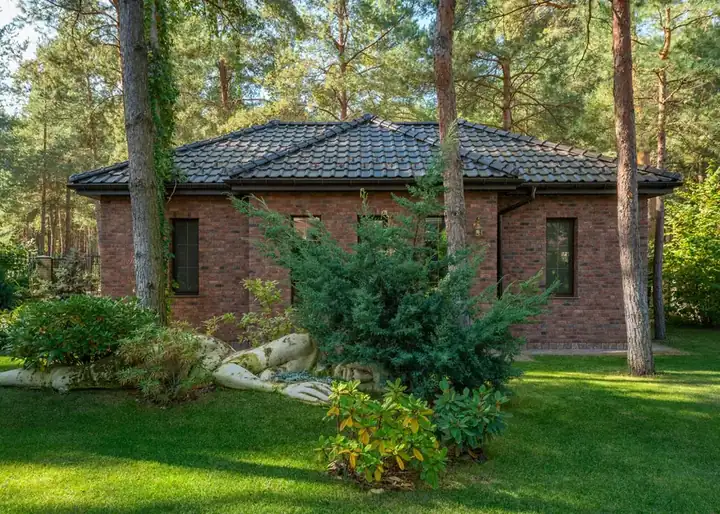
Bungalows of that era have a lot of roof for the size of house. Many are hipped on all four sides, which means four hip lines of mortar-bedded tiles to look after instead of one ridge. Pitches are often shallow, close to the lowest angle the tile manufacturer allowed, and on a shallow pitch wind-driven rain gets further up under the laps. A good number have since had dormers or loft conversions added, and the joint where a later dormer cheek meets the original roof is a regular leak point.
Then there are the flat roofs. Linked garages, porches and side extensions from the 1960s and 70s were usually felted, and a felt roof that age has either been replaced already or is overdue. Our flat roof repairs page explains when patching a garage roof is still worth it and when re-covering in EPDM or GRP makes more sense.
What wears out a Ravenshead roof
The ground is the first clue. Ravenshead’s soil is too sandy for most crops, and for much of the last century sand quarrying was about the only industry the village had. The first quarry opened in 1919. The trees that like that soil are pine, birch and oak, and plenty of Ravenshead gardens have all three within reach of the roof.
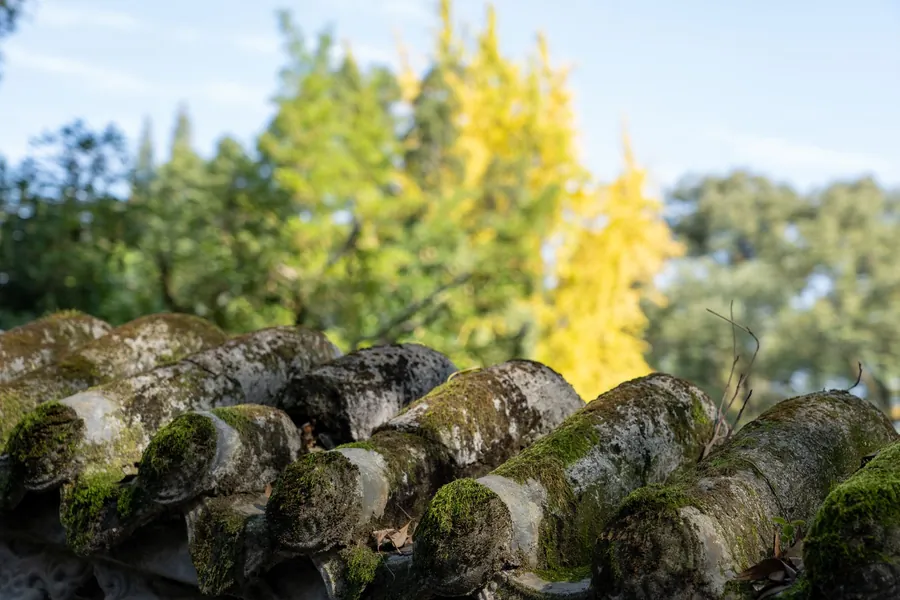
Pine needles are the real nuisance. They’re small enough to slide under tile laps, they mat together in valleys and gutters, and they hold water against the tiles long after the rest of the roof has dried. On a shaded north slope that means moss, and on a low-pitched roof moss can dam water back up beneath the tiles. A yearly gutter and valley clear does more good on a Ravenshead bungalow than almost any repair. The timber fascias and boarded soffits on houses this age also stay damp under the trees, so rot along the eaves is common. We deal with that on our fascias and soffits jobs.
Access on these plots is usually easy, with wide drives and no shared walls, which helps keep scaffold costs down. The catch is the trees. Many in Ravenshead are covered by tree preservation orders, so if a branch needs cutting back to get to the roof, check with Gedling before anyone picks up a saw.
What roof repairs cost in Hucknall and Ravenshead
These are the same bands we quote across the whole area, set against the jobs that come up most in each town. Your survey price depends on what we find up there. It shouldn’t land far outside these.
| Job | Where it comes up most | Typical price |
|---|---|---|
| Refix or replace a slipped tile or slate | Hucknall terraces, Ravenshead hips | £100 - £240 |
| Leak traced and repaired, e.g. a back-addition abutment | Hucknall terraces | £150 - £900 |
| Ridge or hip line rebedded | Postwar semis in Hucknall, hipped bungalows in Ravenshead | £400 - £1,100 |
| Chimney repoint, reflaunch and cap | Shared stacks in Hucknall | £800 - £2,200 |
| Garage or extension flat roof re-covered | Ravenshead’s 1960s and 70s homes | £1,500 - £4,200 |
| Fascias, soffits and gutters renewed | Ravenshead bungalows under trees | £1,200 - £2,800 |
| Complete re-roof, typical semi | Either town | £6,000 - £13,000 |
| Scaffold, per elevation | Two-storey jobs; bungalows often need less | £450 - £1,100 |
A town-centre building inside the conservation area, with slate, lead valleys and a parapet gutter, is priced after a survey rather than from a table. Our roof repair cost guide explains what moves each figure. Whichever town you’re in, ask for any scaffold to be shown as its own line, and if you’ve been quoted for a full re-roof on a terrace that only leaks at the back addition, get a second opinion before you sign.
Frequently asked questions
Is Hucknall in Ashfield or Gedling for planning?
Hucknall itself is in Ashfield, so planning questions go to Ashfield District Council. The villages on its north-eastern edge are a different story: Linby, Papplewick and the Top Wighay Farm land all sit in Gedling Borough, and Linby and Papplewick are both Gedling conservation areas. If your address is on the edge of town, check your council tax bill before assuming.
Does Ravenshead have a conservation area?
No. Gedling Borough Council lists seven conservation areas - Bestwood Village, Calverton, Gedling Village, Lambley, Linby, Papplewick and Woodborough - and Ravenshead isn't one of them. Like-for-like roof repairs on an ordinary house there need no planning permission. A listed building, or a big change such as a dormer, is still worth raising with Gedling's planners first, and many of the village's trees are protected, which matters if one needs cutting back to reach the roof.
Who handles building regulations for a re-roof in Hucknall or Ravenshead?
Erewash Borough Council processes building control applications for Ashfield, and since 1 June 2026 it has done the same for Gedling through the Erewash and West Nottinghamshire Building Consultancy. So the planning councils differ but the building control office is the same for both towns. A roofer in a competent person scheme can self-certify a re-roof instead, which means no application is needed at all.
How much does a roof repair cost in Hucknall or Ravenshead?
Refixing or replacing a slipped tile or slate is usually £100 to £240 where a ladder reaches. Rebedding a ridge or hip line tends to run £400 to £1,100, a chimney repoint with new flaunching and a cap £800 to £2,200, and re-covering a flat-roofed garage or extension £1,500 to £4,200. A full re-roof of a typical semi is generally £6,000 to £13,000, and scaffolding, where it's needed, is £450 to £1,100 per elevation and shown as its own line.
Reading done - roof still needs looking at?
Free surveys across Mansfield and the towns around it, with a fixed written quote to follow.