
30 September 2026
Emergency Roof Repairs In Mansfield: What Gets Fixed Tonight And What Waits
Water coming through the ceiling in Mansfield? What to do before help arrives, what a roofer can fix the same day, what has to wait for dry weather, and what it costs.
Most Mansfield roofing emergencies start in the same spot: a brown ring on the ceiling that wasn’t there at teatime, or a clatter in the night followed by a draught you can suddenly hear. The next few hours come down to three questions. What do you do yourself, what can a roofer honestly fix before bedtime, and what has to wait until the weather lets it be done properly? Emergency roof repairs in Mansfield are mostly about the second question, and they are cheaper and less dramatic than people fear. In our own call log, a big share of after-dark visits finish with a cleared outlet, a re-seated tile or a sheet over a gap, well under an hour of work on the roof. The permanent fix nearly always comes later. Mortar needs dry weather to set properly, lead has to be dressed onto a dry surface, and no sensible roofer climbs onto wet tiles in a 40mph gust.
Your part: the house, not the roof
Start with the electrics. If water is anywhere near a light fitting, a ceiling rose or a socket, switch that circuit off at the consumer unit, and if you can’t tell which one it is, turn off the whole board. Water runs along cables, so the fitting that’s dripping may be nowhere near the actual hole.
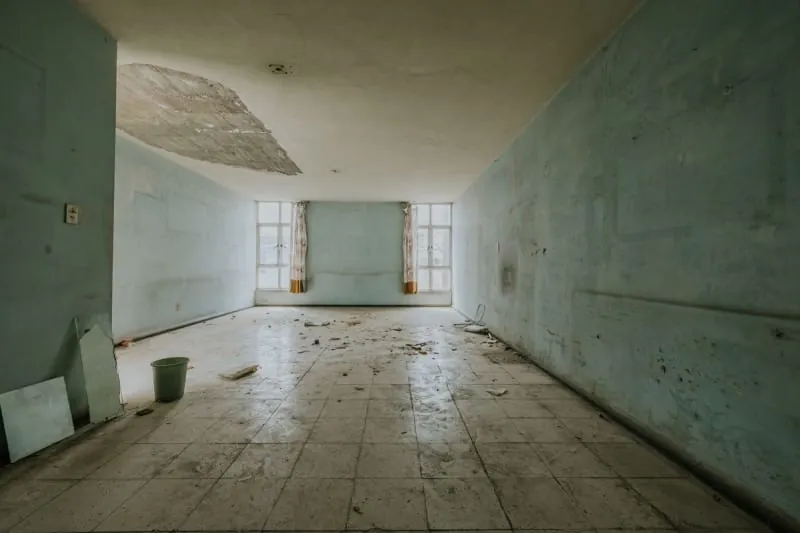
Next, get people and valuables out of the way. Move beds, laptops and anything you’d miss, put buckets and towels down, and if the plasterboard has started to sag, keep everyone clear of the bulge. Water pooling on the upper side of a ceiling is heavy, and plasterboard tends to give way all at once. A small hole at the lowest point, made with a screwdriver while you stand to one side, lets it drain into a bucket in a controlled way.
Then take photographs: the stain, the drip, any tiles on the lawn, all of it from the ground or from inside. That’s as much insurance admin as tonight needs. Our guide to storm damage insurance claims in Mansfield covers the rest once things are dry. After that, ring for help. Our emergency roof repairs service triages by whether water is actively getting in, not by who rang first, so tell whoever answers exactly what you’re seeing.
And stay off the ladder, however easy it looks from the garden.
What emergency roof repairs in Mansfield can achieve the same day
A same-day visit has one job, which is stopping water. The list of things that do that on a wet evening is short.

Sheeting over the gap
A heavy-duty tarpaulin or polythene sheet laid over the damaged area, run up and over the ridge where possible so water can’t get in behind it, and held with battens screwed through the sheet’s edges or weighted down. It should never be nailed through sound tiles, which just makes more holes. A tarp that is only held down with a few bricks on a sloping roof won’t last the night.
Pushing slipped tiles back
Slipped tiles and slates that are still whole can often be pushed back up and held with a tile clip or a slate hook in a few minutes. It isn’t a permanent fix for nail sickness, but it closes the gap.
Anything that could fall
A ridge tile rocking on its old mortar, a cracked chimney pot, a length of gutter hanging off its brackets. Anything that could fall onto a path gets taken down or fixed in place first, before anyone looks at the leak.
Blocked outlets and valleys
Plenty of “roof leaks” are really a gutter outlet blocked with leaves and moss, or a valley packed with debris pushing water sideways under the tiles. Clearing it costs very little, and the leak often stops almost straight away.
The work that waits for a dry spell
Some jobs can’t be done well in the wet, and if a firm offers to do them in the rain, you’ll be paying for them twice.
Mortar is the main one. Rebedding a ridge, repointing a verge or flaunching round a chimney pot all rely on sand and cement curing, and rain washes the fines out before it sets. Frost is worse, because it freezes the water in fresh mortar and leaves it crumbly. Most roofers won’t lay mortar at around 3°C and falling. On a lot of roofs the better answer anyway is a dry-fix ridge or verge system screwed down mechanically, which is what current fixing standards push towards.
Lead flashing needs a dry chase and a dry surface to dress onto. Felt-and-batten repairs mean stripping tiles back, which leaves a bigger hole open, and that’s the last thing you want in a week of showers. Flat roof membranes are fussier again. Torch-on felt and the adhesives used for rubber roofs both need a dry deck or they won’t bond, and a patch stuck down on a damp deck can look fine for a month before it lifts.
So the pattern is to make it safe tonight, inspect properly in daylight, and do the permanent job when the forecast gives you a couple of dry days. In a dry corner of the country like ours, that wait is usually days rather than weeks.
Why the same streets ring us after every storm
After a few storms you can almost guess the address from the fault.

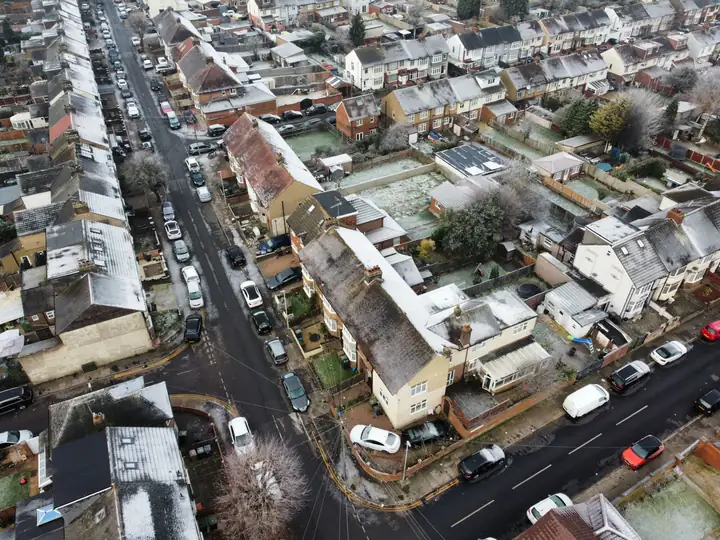
On the ex-council estates, Ladybrook, Bull Farm, Oak Tree, Bellamy Road and their equivalents out towards Rainworth and Warsop, most roofs are in concrete interlocking tiles that went on decades ago, when not every tile had to be nailed or clipped. Before the 2014 revision of BS 5534, it was normal to fix only some courses, with the ridge sitting on nothing but mortar. When a gust gets under an unfixed tile it lifts that one first, then its neighbours, and most emergency calls from these estates start at the verge or the ridge. After Right to Buy, a lot of pairs of semis are also half privately owned and half still council, with one ridge running across both. It’s common to find one half has been done and the other hasn’t.
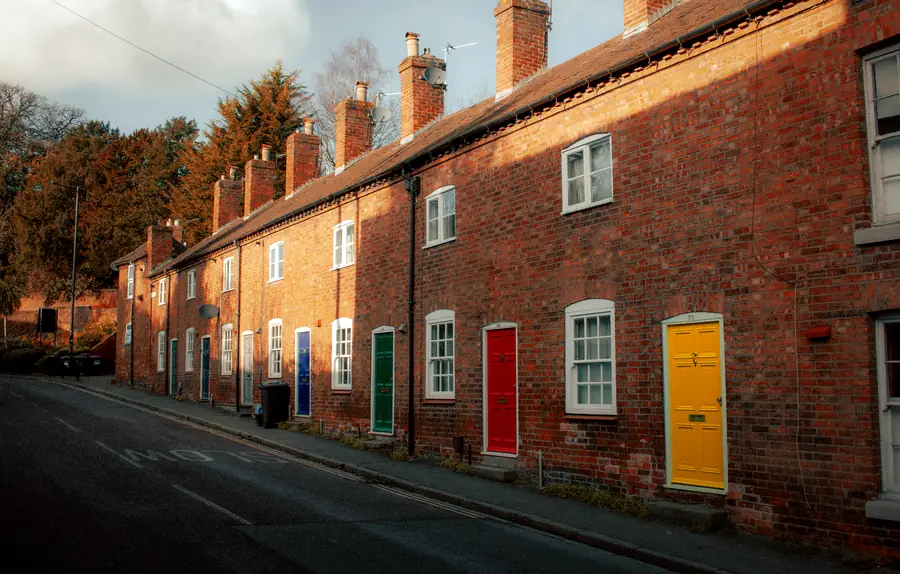
The colliery housing is a different case. Forest Town was laid out from 1905 by the Bolsover Colliery Company for the new Mansfield pit, with its first streets built in a grid and still known as the Avenues. Homes of that age tend to have slate or old clay roofs, back additions and chimney stacks shared with the neighbours. Their emergencies are more often a pot coming down, a run of slates sliding off rusted nails, or a flashing letting go where the back extension meets the main wall. Where the ground has moved, as it has in places across the coalfield, cracked verges and twisted ridges give wind and rain a head start.
Emergency roof repair costs in Mansfield
There are three separate bills hiding in an emergency call - turning up, making safe, and the repair proper - and it pays to ask about each on its own.
Start with attendance. Plenty of firms charge a call-out or attendance fee before they’ve done anything, and after dark or at the weekend that fee often doubles. We don’t charge one, and we don’t have an out-of-hours rate, but ask anyone you ring what theirs is before they set off.
The make-safe itself is where the real money goes, and not much of it. Clearing a blocked outlet or clipping a couple of slipped tiles is normally a small bill, somewhere under £150. Sheeting a damaged section from a ladder usually comes to somewhere around £150 to £350, depending on the size and how awkward it is. If the damage is above a conservatory, on a three-storey gable or anywhere a ladder can’t safely go, access costs apply, typically £300 to £700 for a tower or scaffold. That’s the same money you’d spend on access for the permanent repair, so a firm that puts up scaffold for the make-safe should leave it there for the proper job.
The permanent repair should be quoted separately, in writing, after a daylight inspection. For a sense of typical figures by house type, our guide to roof repair costs across Mansfield’s housing has the ranges we see locally.
Choosing a firm at 10pm without getting stung
The weakest decisions tend to get made late at night with a bucket filling in the back bedroom, and some operators build their business around that.

Be careful with the top search results. Some “local” emergency numbers are call centres that sell your job to whoever picks it up, and the van that turns up may have travelled from two counties away. Ask for the firm’s name and trading address while you’re on the phone, then look them up while they’re driving over. Nottinghamshire County Council’s Trading Standards team advises people not to rely on a number the trader gives them to check who they are. Its page on the Buy With Confidence approved trader scheme explains how to find vetted local businesses instead.
On the night, agree to pay for the make-safe and nothing else. Pay by card, get a written note of what was done, and don’t agree to a full re-roof while you’re standing in your dressing gown. There’s also a legal point most people don’t know about. The Consumer Contracts Regulations, regulation 28, take away the usual 14-day cancellation right when you’ve called someone out for urgent repairs, but extra work they sell you during that same visit keeps its cooling-off period. Doorstep crews after a storm work in a different way again, and we covered them in our post on roofing cold callers in Mansfield.
Once the storm has passed
The day after, check the whole house.
Go up into the loft with a torch if it’s safe to. Look for wet insulation, which stops working when it’s soaked and should be lifted and dried or replaced, and for staining along the rafters that shows where the water actually got in. Check the sheet again after every windy night until the permanent repair is done. Leave the ceiling alone for now. Wet plasterboard needs days or weeks to dry out, depending on how soaked it got, and filling and painting too early just seals the damp in, so the stain comes back through the new paint. A dehumidifier and some patience cost less than decorating the room twice.
Last, get the permanent repair booked. A sheet with no end date tends to get forgotten until the next storm pulls it off.
If you’re dealing with a leak or storm damage right now, ring or book an emergency visit in Mansfield and we’ll tell you honestly whether it needs doing tonight.
Frequently asked questions
Can a roofer fix my ridge properly on the same night it blew off?
Usually not, and you should be wary of anyone who says otherwise in the rain. A mortar-bedded ridge needs a dry bed and a few frost-free days to cure, so on the night the job is to cover the gap and stop the water. Refixing the ridge, ideally with a mechanical dry-ridge system rather than more mortar, is booked for the first reliable dry spell.
How long can a tarpaulin stay on my roof?
A properly battened and weighted sheet will cope with several weeks of normal weather, but every windy night works at it. Treat it as a bridge measured in days or weeks, not months. If yours is still up with no date for the permanent repair, chase the firm, because UV and wind will eventually shred it and put you back where you started.
Do I have 14 days to cancel an emergency roof repair I called someone out for?
Not for the urgent repair itself. Under the Consumer Contracts Regulations there is no cancellation right where you specifically asked a trader to visit to carry out urgent repairs. That exemption does not stretch to extra work sold to you during the same visit, so if a make-safe call turns into a quote for a new roof, the normal 14-day cooling-off period applies to that part.
My neighbour's ridge came off, not mine. Can you still sheet over the gap?
On semis and terraces the ridge runs straight across the party line, so a gap on their side will often let water into your loft too. We can make the whole run safe in one visit, but we need the neighbour's agreement to work on their half, and they will need to sort their own insurance and payment for it. A quick knock on the door before we arrive saves a lot of awkwardness.
Reading done - roof still needs looking at?
Free surveys across Mansfield and the towns around it, with a fixed written quote to follow.