
8 September 2026
Can You Fix Your Own Roof? A Straight Answer For Mansfield Homeowners
Thinking of going up a ladder to sort a slipped tile in Mansfield? What is genuinely safe to do yourself, what is not, and what DIY roof work does to your insurance.
Every roofer in Mansfield has a version of the same story. A phone call on a Monday about a slipped tile that the homeowner nearly sorted themselves on Sunday, until the ladder shifted, or the tile next to it cracked under a foot, or they got to the top and looked down and thought better of it. Sometimes the story ends in A&E at King’s Mill. Most of the time it just ends in a phone call, which is the good version.
So this post is not going to tell you never to touch your own roof. Plenty of people round here grew up in families where you fixed things yourself, and a lot of the houses in Forest Town and the Woodhouse were maintained for decades by the men who lived in them. What it will do is draw the line where we think it honestly sits, based on the falls we have seen and the repairs we have redone, so whatever you decide, you decide it knowing the odds.
Watch: where the line sits between a job you can do and one you should not.
Why the ladder comes out so often round here
Mansfield’s housing is well suited to tempting people upwards. A huge share of the stock is two-storey brick semis and terraces with a plain pitched roof and an eaves line at about five metres. Not bungalow height, but not so high that it looks daft to prop a ladder against it. Add a shed with an extension ladder in it, a roof covered in 1970s concrete tiles that shed a piece or two every winter, and a repair quote for a job that looks like ten minutes, and you have the conditions for a Sunday afternoon that goes wrong.
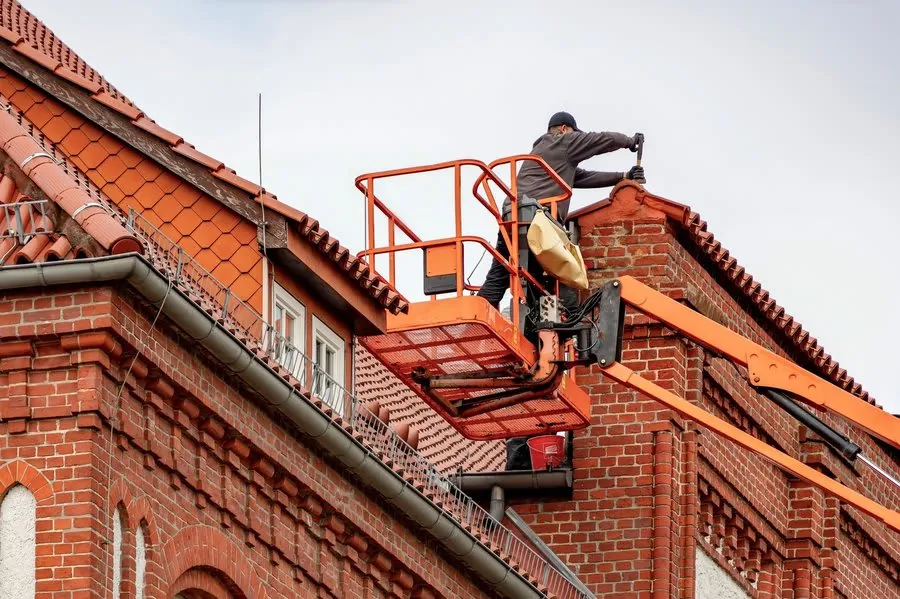
Money is the other half of it. If a roofer wants £180 to refit a tile and the tile itself costs £3 at the merchants, doing it yourself feels like the obvious call. We understand that. Our own roof leak repairs page says as much: a lot of what we fix is small. The problem is that the £180 is not really paying for the tile. It is paying for someone who knows how to get up there and back down, and who can tell why the tile moved, and both of those turn out to matter more than the tile does.
The falling numbers, without the lecture
The Health and Safety Executive publishes a count of people killed at work every year, and falls from height sit at the top of the list every single time, usually a quarter to a third of all workplace deaths. Those are people who do it for a living, on sites with rules, with equipment, often with someone watching. The HSE’s fatal injury statistics are dry reading but they make the point better than any roofer can.
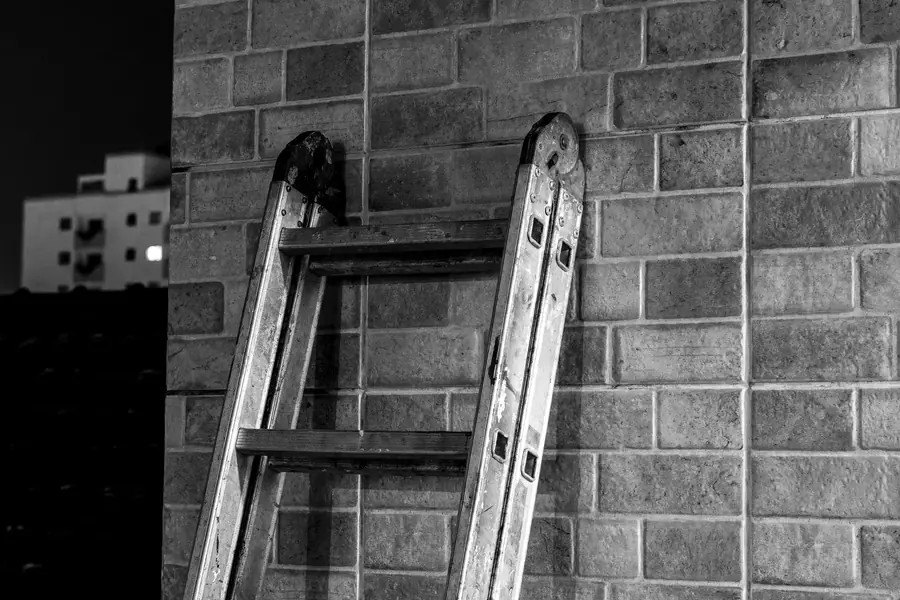
What those figures do not capture is the far larger number of falls that break something rather than kill. Ladders are involved in more of these than any other bit of kit, and the pattern is always the same. The ladder is set too steep or too shallow, it is footed on a patio slab or a lawn that gives, nobody is holding the bottom, and the person at the top leans sideways to reach a tile that is just out of range. Two storeys is enough. The Ladder Association has a free guide on setting a ladder correctly, and if you take one thing from this post, take the part about the angle: one out for every four up, and both feet on solid ground.
Roof surfaces are the second problem and the one people underestimate. A concrete interlocking tile that has spent forty years on a Mansfield roof has a surface like a digestive biscuit. Step on the middle of one and it cracks. Moss makes tiles slippery in a way that does not look slippery. Slate is worse. And a flat garage roof, which feels like the safe option, is the one that gives way under a foot when the decking has rotted beneath a felt that looks fine from above.
What you can do yourself, and should
Here is the list we would genuinely encourage, because it makes you a better customer and costs nothing.
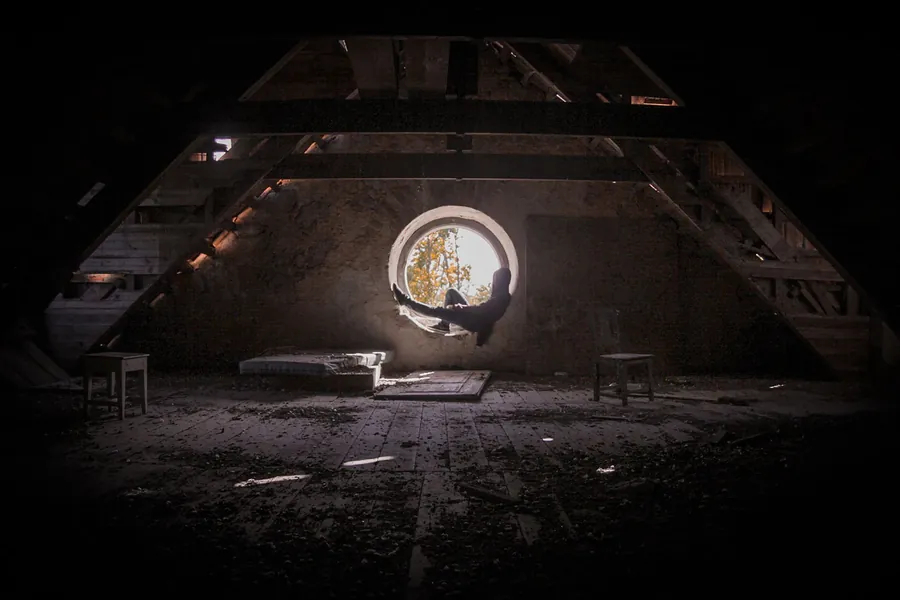
Get into the loft with a torch on a bright day and turn the torch off. Pinpricks of daylight are gaps in the covering. Then turn it back on and look at the felt for staining, at the timbers for dark patches, and at the nail points for rust. Do it after heavy rain and you will see any active leak as a fresh wet mark. This single check tells us more on the phone than a description of the roof from the pavement ever does, and it needs no ladder. If what you find looks like general dampness across a whole slope rather than one wet spot, read our post on loft condensation in Mansfield roofs before you ring anyone, because that is a different problem with a different fix.
Walk round the outside after every big wind. Look for tiles on the lawn, for a gap where the pattern breaks, for a ridge tile sitting proud. Use your phone camera zoomed in from across the road. Look at the gutters from underneath for green streaks or drips on a dry day, which means a blocked or leaking joint.
Clear the gutters on a bungalow or a single-storey extension if you are steady, the ladder is footed and held, and you keep your hips between the stiles. On a two-storey house, a gutter scoop on a telescopic pole from the ground does a decent job and keeps your feet where they belong.
Cut back trees and ivy that are touching the roof, from the ground. Fit a hose extension and clear the downpipe outlet at the bottom. Keep the record of what you have done and when, because an insurer asking about maintenance likes a dated answer.
The jobs that look like ten minutes and aren’t
The slipped tile is the classic. It looks like a case of pushing it back up and it is almost never that. Tiles slip because the nail holding them rusted through, or the batten under them rotted, or the tile below cracked and let it drop. Pushed back without fixing the cause, it slips again, and the second time it tends to take its neighbour with it.

Sealant is the second one. A tube of roof-and-gutter silicone or a roll of self-adhesive flashing tape feels like a fix for a leaking flashing at the chimney. It is a fix for a fortnight. Water that used to run off now runs under the tape and sits, the leak moves rather than stops, and the roofer who eventually does it properly has to scrape the lot off first. We have lost count of the chimneys in this town wearing three layers of tape from three different Sundays.
Moss scraping from a ladder is the third. It feels like tidying. What it does is push moss into the laps between tiles, crack the ones you lean on, and fill the gutter with the lot in one go. The moss on a north-facing Mansfield slope is annoying but it is rarely the thing letting water in, and a pressure washer on old concrete tiles takes the surface off with the moss.
Flat roof coatings deserve a mention because the tins say anyone can do them. On a shed or a small garage with a sound deck, fine. On a house extension where the felt has blistered and the deck may have softened, a coating seals the moisture in and hides the problem until the ceiling below tells you about it.
What it does to your insurance and your warranty
Read the exclusions on your buildings policy. Most of them say something close to this: no cover for damage caused by faulty workmanship or by the policyholder’s own work, and no cover for gradual deterioration or lack of maintenance. A DIY repair that goes wrong is the first one. A DIY repair that hides a problem for two years until it becomes a rotten ceiling is the second.

The part people miss is how it affects unrelated claims. Storm cover on most policies depends on the roof having been kept in reasonable repair. When the loss adjuster’s surveyor climbs up after a gale and finds a stack sealed with tape and tiles wedged with offcuts of lead, the argument becomes whether the storm caused the damage or merely found it, and you will not enjoy that argument. Injury to yourself is not covered by a buildings policy at all, whatever the outcome.
If the house is under ten years old, there is a second layer. The estates around Berry Hill and the new phases off Abbott Road are still inside their new-home warranty, and the NHBC’s Buildmark cover in years three to ten pays for structural and weatherproofing defects. It does not pay for the results of the homeowner’s own alterations, and a roof that has been climbed on and patched is an easy thing for a claims inspector to point at. On a warranted house, the sensible order is warranty first, roofer second, ladder never.
Getting on a roof properly costs less than you’d think
A professional can do a small job safely because of kit and habit, nothing braver than that. A roof ladder that hooks over the ridge and spreads the load across the tiles. A tower or a short scaffold lift at the eaves for anything that takes more than a few minutes. Soft-soled boots, a harness where the pitch calls for it, and someone else on site. None of that is exotic, but all of it is expensive to buy for one afternoon.
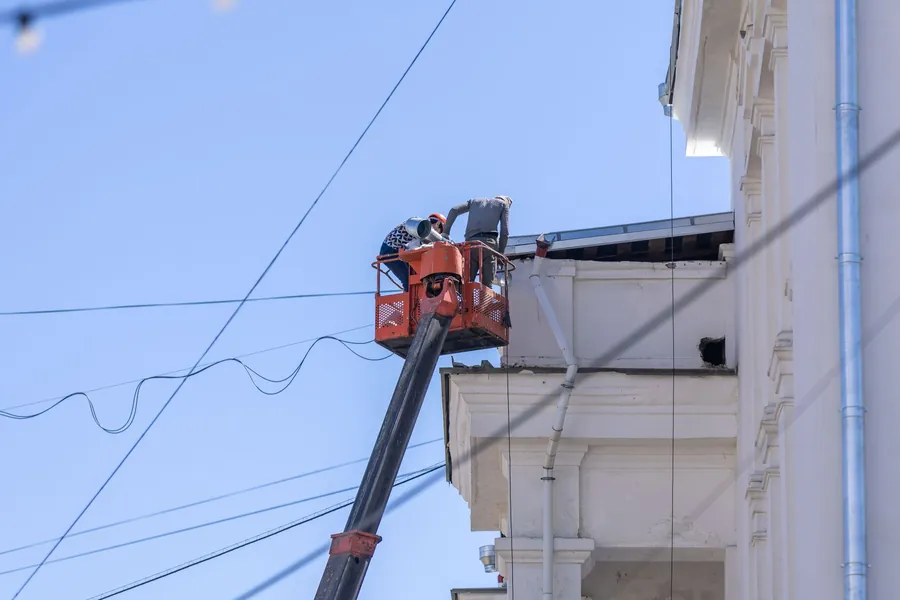
The prices are less frightening than people expect. Most of our small repairs on a two-storey semi in Mansfield are between £100 and £300, and that includes the access. A tower hire from a Mansfield plant yard for a week, for comparison, is £120 to £200 before you have learned how to build it. If a job genuinely needs scaffold, we say so, and we say what it costs on its own line.
And a look is free. If you have done the loft check and the walk round and you are still not sure what you are dealing with, the sensible next step is a set of eyes that has seen a thousand roofs in this town, not a ladder from the shed. We will tell you if it is nothing. Quite often it is.
A fair split: your list and ours
Yours: the loft torch check, the walk round after wind, gutters on single-storey roofs with a footed ladder and a second person, the gutter pole from the ground, trees and ivy cut back from ground level, downpipe outlets, and a dated note of all of it.
Ours: anything that means a foot on the tiles of a two-storey house, anything at a chimney, anything involving lead, anything on a flat roof over a room you live in, and anything where the cause of the problem is not obvious from the ground. Also anything after a storm, because that is when the roof is at its most fragile and the ladder at its most tempting.
There is no shame in either list. The best-maintained roofs in Mansfield belong to people who do the first list religiously and pick up the phone for the second. That is the whole trick.
Frequently asked questions
Is it legal to work on my own roof in Mansfield?
Yes. The Work at Height Regulations apply to people at work, not to a homeowner on their own house, so nobody will stop you. That is not the same as it being sensible. The regulations exist because falls from height kill more people at work than anything else, and the physics do not change because it is your own gutter. If you do go up, treat the rules as the minimum a trained person is held to and ask yourself honestly whether you are meeting them.
Can I replace one slipped tile myself?
On a bungalow or a single-storey extension, with a properly footed ladder and someone holding it, a tile at the eaves is within reach of a careful person. On a two-storey semi it means standing on the roof, and standing on concrete tiles that are forty years old cracks them. You also need to know why it slipped, because a tile rarely moves on its own. Most of the time it is a rusted nail or a rotten batten, and a tile pushed back into place without fixing that will be back in the garden after the next windy night.
Will my home insurance pay out if I damage the roof doing DIY?
Usually not. Most buildings policies exclude damage caused by faulty workmanship and damage caused by the policyholder's own work, and an insurer who finds amateur repairs at the point of a later leak claim will use them. Storm damage cover also tends to hinge on the roof having been maintained, so a botched repair can undermine a claim for something unrelated. Injury to you is not covered by your buildings policy at all. Check the exclusions before you go up, not after.
What is the safest way to check my roof after a storm in Mansfield?
From the ground and from inside. Walk the garden and the street side and look for tiles on the lawn, a broken line along the ridge, or a gap where the pattern of the tiles changes. Zoom in with your phone camera from across the road. Then go into the loft with a torch in daylight and look for pinpricks of light and for wet patches on the felt. That tells you nearly everything a roofer needs to hear on the phone, and none of it involves a ladder.
Reading done - roof still needs looking at?
Free surveys across Mansfield and the towns around it, with a fixed written quote to follow.