
27 September 2026
Chimney Repairs In Mansfield: Repoint, Rebuild Or Remove?
Three options, one stack. How Mansfield chimneys are assessed, what repointing, rebuilding and removal each involve, what they cost locally, and the rules that apply.
A chimney is the only part of a Mansfield house expected to stand in the weather with no roof over it, no heating behind it and, on most streets here, no working fire underneath it either. It gets looked at roughly never. Then a damp patch appears on a bedroom wall, someone finally goes up, and the homeowner is handed three options with no way of telling which one they are being sold. This is an attempt to level that up. Two local facts shape the answer more than most people expect: the district has eleven conservation areas, and the whole of Mansfield sits inside a smoke control area. Neither usually comes up until the decision is already made. Add to that the housing stock itself - two and often three flues to a stack on the older terraces, one stack shared between neighbours - and you have a repair that is rarely as simple as the quote makes it look.
Start with the dull question: what is the flue still doing?
Before anyone talks about brickwork, establish what the chimney is connected to. There are three answers and they lead to three different jobs. If a gas fire, a gas back boiler or a solid fuel stove is still using that flue, then any work at the top of it is not purely a roofing job - the appliance has to be isolated, and a Gas Safe registered engineer or a competent solid fuel installer needs to sign off the flue before it goes back into service. That is not box-ticking. A flue that gets altered and recommissioned badly is how carbon monoxide gets into a house.
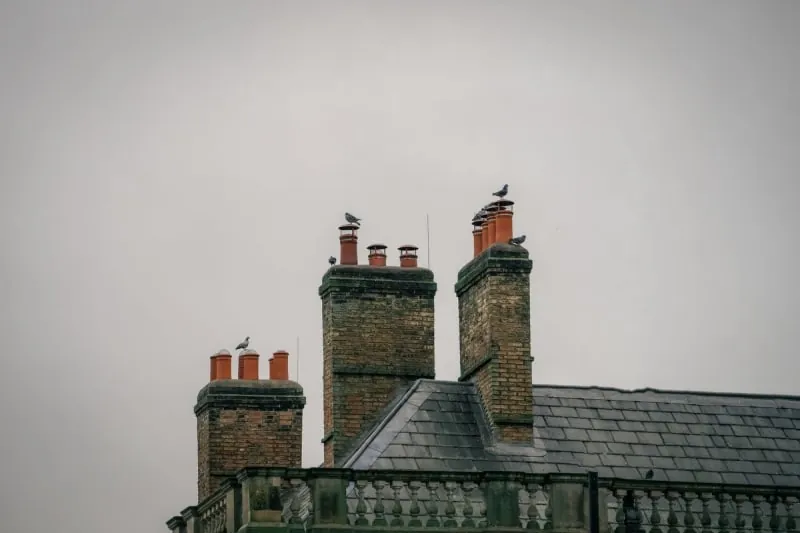
The second answer is that the flue is dead and capped, which is where most of the town’s chimneys sit. The third, and the one that does the most damage, is that it is dead but still wide open at the top, taking rain down the middle of the stack week after week.
One more thing to settle while you are at it. If part of the plan is bringing an old fireplace back into use, the smoke control rules bite: across Mansfield district it is an offence to emit smoke from a chimney, so an open fire burning ordinary house coal or logs is not on the table. You would need an exempt appliance and authorised fuel, which puts HETAS, the body that registers solid fuel installers and approves appliances, in the picture before any bricklayer is. Our own chimney repairs page covers the survey side in more detail.
Why stacks around here wear out before the roof under them
A working flue keeps its own stack dry from the inside. Warm gases pass up the middle, the brickwork stays above the dew point, and rain that lands on it dries out again. Take the fire away and that stops. The stack becomes a cold, absorbent chunk of masonry standing in the wind with nothing drying it, and every frost that follows a wet week does a little damage that never gets reversed.
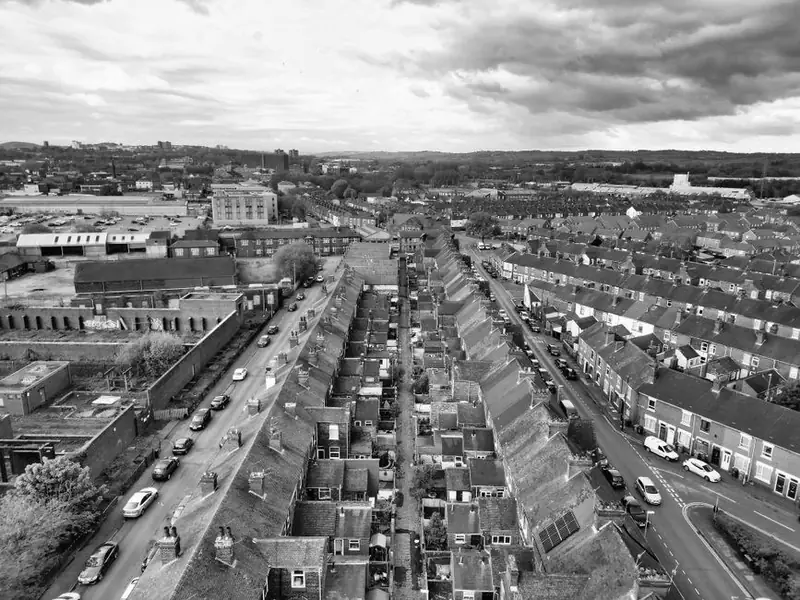
On top of that, Mansfield’s chimneys spent decades doing heavy duty. The red brick terraces around the town centre and the colliery-built rows further out were designed around the fireplace, and in a pit town where the fuel arrived cheap off the back of a lorry, those grates worked hard for most of the year. Coal smoke leaves sulphates behind in the flue lining, and those sulphates keep attacking the mortar for years after the last fire went out. It is also why one face of a stack often decays faster than the others and the whole thing gradually curls. If your stack looks like it is leaning, that is worth taking seriously, though it is not automatically the ground’s fault - we went through the difference between old settlement and live movement in our piece on mining subsidence and Mansfield roofs, and the short version is that a lean wants measuring, not a verdict from the pavement.
The five things that actually fail
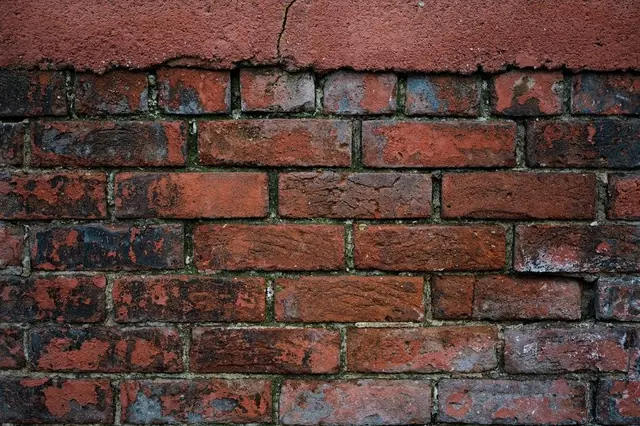
Nearly every chimney quote you will ever be shown comes back to one or more of five failures. Open mortar joints are the first, and usually the cheapest to catch - if you can rake a joint out with a key, water has a route into the core of the stack. Spalled brick is the second: frost gets into a saturated brick, the face pops off, and once a few faces have gone the stack starts losing its shape rather than just its pointing.
Third is the flaunching - the sloped mortar crown at the top that beds the pots and throws water off. It fails more often than anything else on a chimney and is invisible from the pavement, so it is the item most often missing from a quote. Bits of mortar in the gutter below the stack are usually flaunching, not pointing. The pots go with it: old clay cracks, and a split pot sitting in a crumbling crown is a falling hazard as much as a leak.
The last one is the lead where the stack passes through the roof - front apron, stepped flashing up the sides, back gutter behind. Cut into the brickwork properly and clipped home, that lead will outlive everything around it. Smeared on as a cement fillet or a line of mastic, it cracks within a few winters. Lead also gets blamed for leaks that are really coming from the crown, which is why any survey worth paying attention to looks at the top of the stack before it quotes for flashing.
Repointing: the answer most Mansfield stacks deserve
If the bricks themselves are sound and only the joints have gone, repointing is the right answer and it is not a compromise. The joints are raked out to roughly twice their width so the new mortar has something to grip, brushed clean, and refilled with a mix matched to the brick. On pre-war brickwork that means a lime-based mortar, and on the softer reds found on the older terraces it matters a great deal.
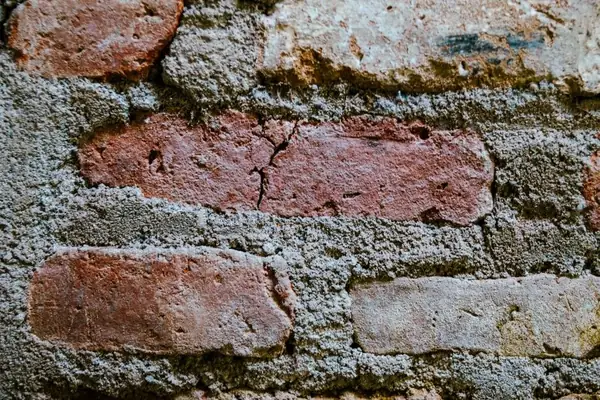
The failure mode to watch for is the opposite: a strong sand-and-cement mix slapped onto soft Victorian brick. Cement is harder and less permeable than the brick around it, so moisture that used to evaporate through the joints is forced out through the brick faces instead, and the faces blow off. A depressing number of the stacks we survey were treated that way fifteen or twenty years ago and are now in worse shape than if they had been left alone.
A sensible repointing visit does the whole top of the chimney at once, because the access is the expensive part. New flaunching, pots rebedded or replaced, joints repointed, lead checked and re-dressed where it needs it. Doing three of those four and coming back for the fourth next year is how a cheap quote becomes an expensive one.
Rebuilding: from the flashing up, or further down
Rebuilding is what you do when the brick has gone rather than the mortar. The usual version takes the stack down to just below the roof line and rebuilds from there, reusing sound bricks where possible and bringing in reclaimed ones to match where not. A properly rebuilt stack gets a damp-proof tray built into the courses just above the roof, an oversailing course to throw water clear, fresh flaunching and either the original pots or new ones.
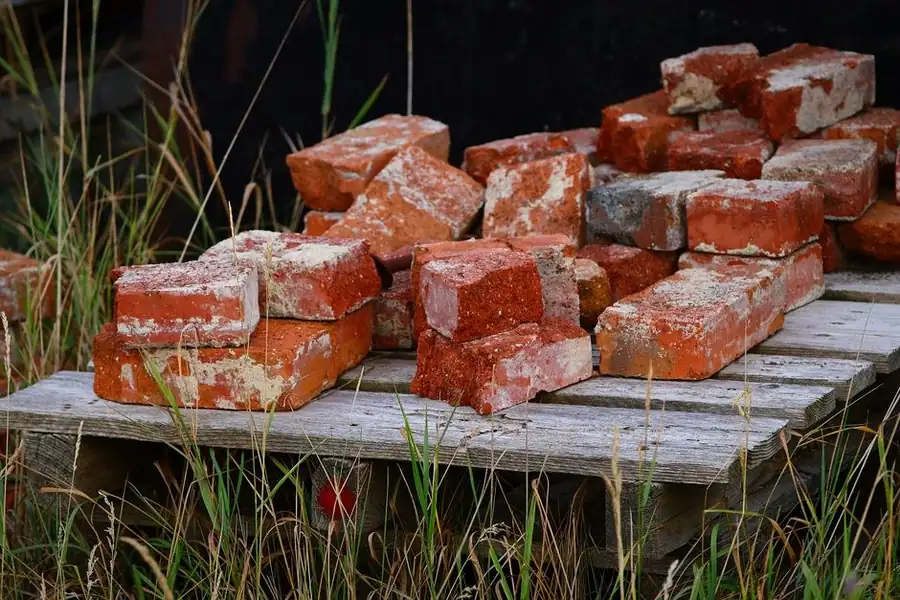
Matching is the part people underestimate. A rebuilt stack in crisp modern facings sitting on a 1900s terrace announces itself from the end of the street, and on the ex-council and right-to-buy semis around the district the original brick is often a specific local product that the merchants no longer stock. Reclaimed brick costs more and takes longer to source, and it is almost always worth it.
Rebuilding below the roof line is a bigger and rarer job, usually triggered by a crack running down through the flue or a stack that has actually moved. Now you are working inside the roof space as well as above it, and the cost steps up accordingly. It is also the point where comparing the rebuild against simply removing the thing stops being a silly question.
Taking it down: to the roof line, or all the way through
Removal is two different jobs with the same name. The common one takes the stack off above the roof and stops there. The masonry comes down to a course or two below the tiles, new timber is fitted where the stack passed through, the opening is felted and battened, and the slope is tiled in with matching tiles - reclaimed ones, ideally, because a patch of new tiles in an old roof is as obvious as a new stack. What remains below is a dead flue inside the house, and it still needs air moving through it or the breast will sweat.
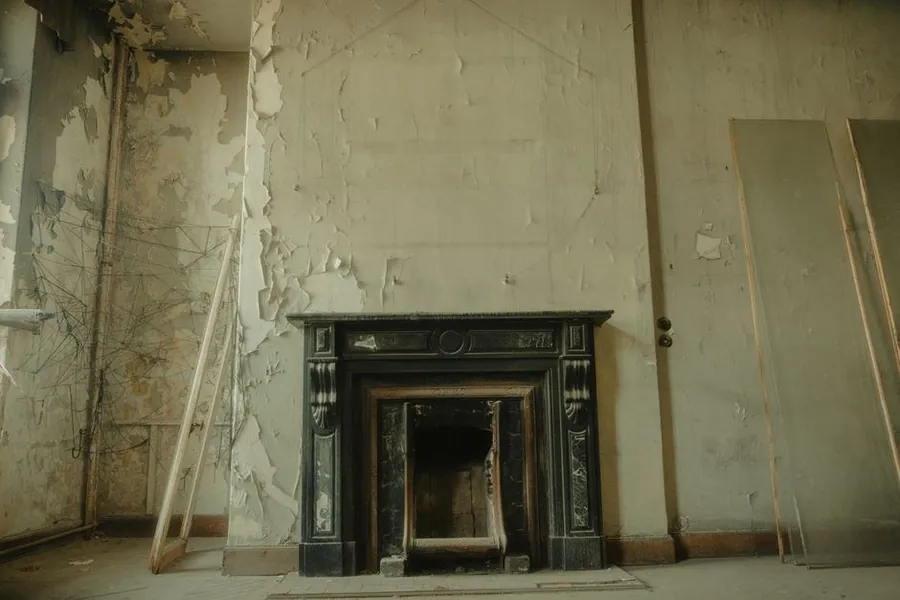
The bigger version takes the breast out of the rooms below too, which is where the structural questions start. Whatever sat on that masonry - floor joists, the breast in the bedroom above, sometimes part of the roof load - has to be carried by something else. Gallows brackets get suggested a lot and are not automatically acceptable; whether they will do depends on the wall they are bolted to and the load above, and that is a judgement for a structural engineer rather than a rule of thumb. On a shared stack you cannot take the whole thing anyway, because half of it belongs to next door.
Worth saying plainly: removal is permanent. Putting a stack back later is not a small project, and on a street where every other house still has its chimneys, a gap in the roofline is noticeable to buyers. That is not an argument against it, just a reason to be sure.
What it costs around Mansfield, and what moves the number
At the cheap end, rebedding pots and putting a fresh crown on the stack is usually a low-hundreds job where the roof is easy to get to. A full repoint of a stack with new flaunching and lead attention usually lands somewhere in the high hundreds to low thousands. A rebuild above the roof line runs higher again, and removals sit anywhere from around a thousand for a simple take-down and tile-in to several thousand once the breast comes out and structural support is involved.
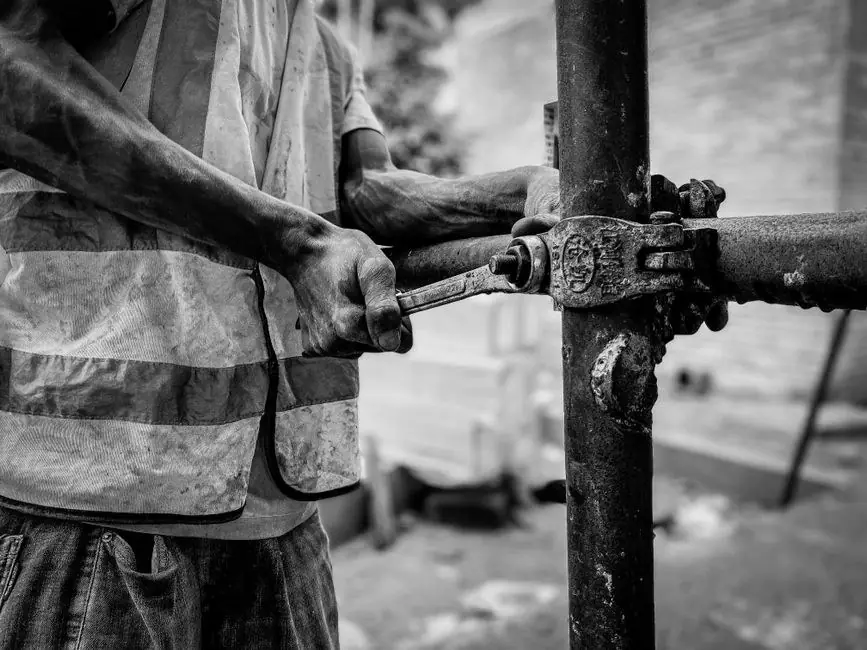
Access is the single biggest swing factor and it has almost nothing to do with the chimney. One stack on a Forest Town bungalow and an identical one on a three-storey Victorian frontage in the older part of town are different prices, because the first wants a tower and the second wants a full scaffold with a boarded platform at ridge height. Terraced streets with no rear access add cost again, because everything goes through the house or over the front. Stack height above the ridge, the number of flues and pots, and whether bricks or tiles have to be matched all move the figure too.
So if scaffold is going up for other roof work anyway, that is the cheapest the chimney will ever be. Added to a scaffold already standing, it costs labour and materials and nothing else. Leave it and come back in two years and you pay for the access twice.
The paperwork nobody mentions at the quote stage
Repointing, reflaunching and reflashing need no permissions at all. Removal is a different matter. Taking a stack down is structural work, and Mansfield District Council’s building control is delivered through the Erewash and West Nottinghamshire Building Consultancy, with applications and payments handled by Erewash Borough Council on Mansfield’s behalf - so that is where a building notice or full plans application goes. Their building regulation approval pages set out the routes. Anything touching a live flue also engages Part J, the approved document covering combustion appliances and flues.

Planning permission is usually not needed, because removing a chimney is generally permitted development. Usually is doing work in that sentence. The district has eleven conservation areas - The Park, Market Place, Bridge Street, West Gate, Crow Hill Drive, Terrace Road, Nottingham Road, Mansfield Woodhouse, Pleasley Park and Vale, Church Warsop and Market Warsop - and permitted development rights are narrower inside them. Pleasley Park and Vale carries an Article 4 direction on top of that, which strips out rights that apply elsewhere. If your address is in any of those, check before you book anything.
Then there is next door. A large share of the stacks on the town’s Victorian and colliery-era rows are party stacks, split down the middle between two addresses. Repointing and maintaining your own side is yours to decide. Anything structural is work to a party structure, so the Party Wall etc. Act 1996 applies, which means written notice and, in practice, a survey both households can read. Sort that early and the chat over the fence stays friendly.
If you are looking up at a stack and cannot tell which of the three answers yours needs, that is the normal position to be in. You cannot see the two worst faces from the ground. Neither can anybody quoting from the pavement. Book a free survey and you will at least be choosing between three real options instead of the one somebody else picked for you.
Frequently asked questions
Does taking a chimney stack down need building control sign-off?
For anything more than lifting the top few courses, yes. Removing a stack changes how load travels through the building, and once you are into the breast inside the house you are altering structure, which brings Part A into play. Mansfield District Council's building regulations applications are processed by Erewash Borough Council on its behalf, under the Erewash and West Nottinghamshire Building Consultancy, so that is who your application or building notice goes to. Skipping it tends to surface later, when a buyer's solicitor asks for the completion certificate and there isn't one.
We capped the chimney and now the chimney breast is damp. Why?
Almost certainly because the cap was sealed solid rather than vented. A flue that cannot move air becomes a cold, closed shaft with a warm room at one end, and moisture condenses inside it and soaks outward through the plaster. The staining is often brownish rather than grey, because old coal soot dissolves and travels with the water. The fix is a vented cap or capping cowl at the top and an air brick or vent at the bottom, so the flue is protected from rain but still breathing.
Can I take my half of a shared stack down without the neighbour?
Not in the way most people hope. On a party stack the two halves are one piece of masonry, so removing your side above the roof leaves the neighbour's half standing on its own with a raw exposed face that then needs weathering. It is work to a party structure, which means the Party Wall etc. Act 1996 applies and notice has to be served. Plenty of these jobs go ahead perfectly amicably, but they start with a conversation and a written survey, not a skip on the drive.
Is removing the chimney cheaper than keeping it repaired?
Over a long enough horizon it can be, because a removed stack never needs anything again. Day one it is usually the more expensive choice: careful take-down, roofing in, and making good inside all cost more than pointing and reflaunching a sound stack. The honest test is the condition of the brickwork. A stack with solid bricks and tired joints is a repointing job and taking it down is money wasted. A stack with blown faces, a crack through the flue and a lean nobody can explain is a different conversation.
Reading done - roof still needs looking at?
Free surveys across Mansfield and the towns around it, with a fixed written quote to follow.